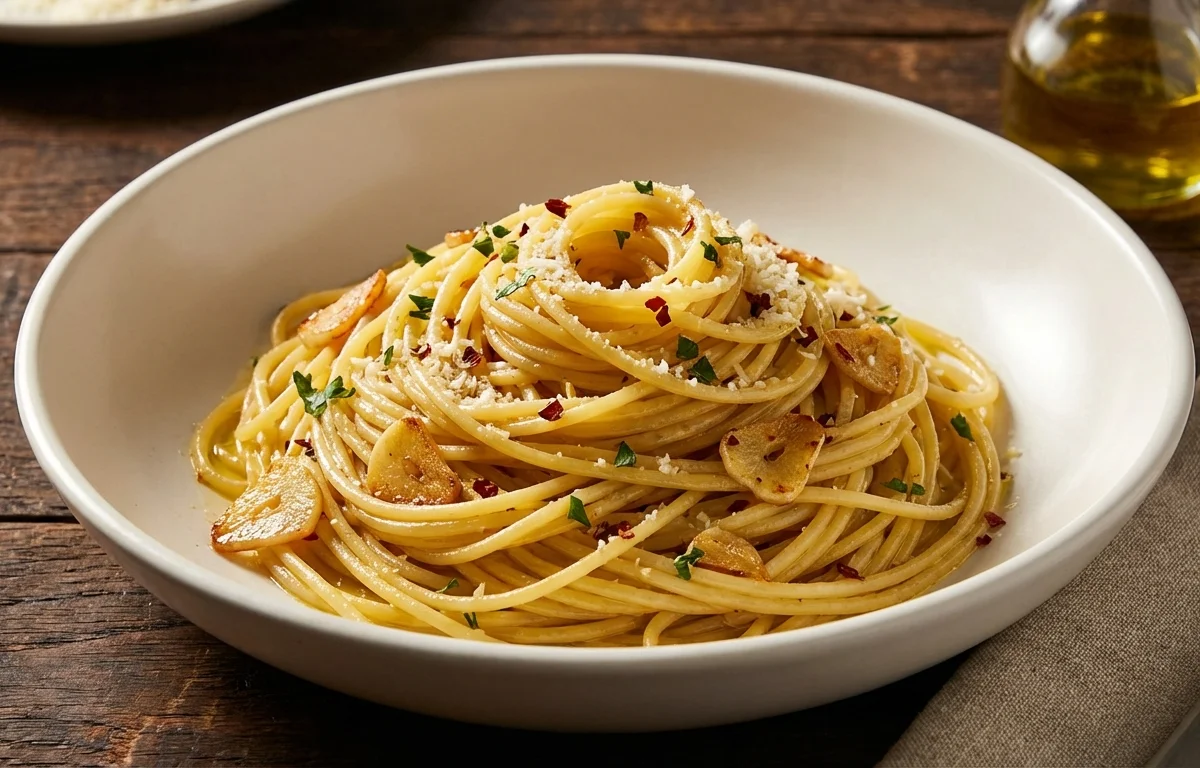
Aglio e Olio
Al dente spaghetti tossed in a glistening sauce of golden garlic slivers, fruity olive oil, and a gentle kick of red pepper flakes. A classic Roman pasta that comes together in the time it takes to boil water—simple, elegant, and deeply satisfying.
For 4 servings
- boil
Bring a large pot of salted water to a rolling boil.
Fill a large pot with 4 liters of water and bring to a boil over high heat. Once boiling, add 1 tablespoon of salt.
- boil · ~10 min
Cook the spaghetti until al dente.
Drop the spaghetti into the boiling water and cook according to package directions until al dente, usually 8–10 minutes. Reserve 1 cup of the starchy pasta water before draining.
TIPSave the pasta water—it’s the secret to a silky, emulsified sauce. - saute · ~4 min
Gently toast the garlic in olive oil.
While the pasta cooks, combine 4 tablespoons of olive oil, the sliced garlic, and red chili flakes in a large cold skillet. Place over medium-low heat and cook slowly, stirring often, until the garlic turns pale golden—about 3 to 4 minutes. Do not let it brown.
TIPStarting in a cold pan lets the garlic infuse the oil without burning. - mix · ~2 min
Toss the spaghetti with the garlic oil.
Add the drained spaghetti directly into the skillet with the garlic oil. Pour in a splash of reserved pasta water and toss vigorously with tongs for 1 to 2 minutes until the pasta is well coated and glossy. Add more pasta water a little at a time if it looks dry.
TIPVigorous tossing helps the oil and starchy water emulsify into a light sauce that clings to every strand. - garnish
Finish with fresh parsley and serve immediately.
Remove from heat. Drizzle with the remaining 1 tablespoon of olive oil, scatter the fresh parsley over the top, and add a pinch of salt. Toss once more and serve right away in warm bowls.
What to keep in mind.
6 tips from the recipe — small details that make a real difference to the final dish.
- 1Start the garlic in a cold pan to coax out maximum flavor without scorching.
- 2Reserve at least 1 cup of pasta water—its starch is key to a creamy emulsion.
- 3Cook garlic only until pale golden; burnt garlic turns bitter and ruins the dish.
- 4Toss the spaghetti vigorously in the skillet to marry oil and water into a sauce.
- 5Use a high-quality extra virgin olive oil, as its fruitiness is the star of the dish.
- 6Finish with a drizzle of raw olive oil for a fresh, peppery note at the end.
Adapt it for your goals.
Lemony-herb
Add the zest of 1 lemon and a squeeze of juice when tossing the pasta, plus extra parsley. This brightens the dish with acidity and freshness.
seafoodSeafood
Fold in sautéed shrimp or canned anchovies for a protein boost. The anchovies melt into the oil, adding umami depth.
veganVegan
The classic recipe is already vegan. For extra richness, stir in 1 tablespoon of nutritional yeast with the pasta water for a cheesy savoriness.
spicy garlic breadcrumbSpicy-garlic-breadcrumb
Toast 1/4 cup of panko breadcrumbs in olive oil until golden and sprinkle over the finished pasta for a crunchy, garlicky topping.
Why this is on our healthy list.
Rich in Heart-Healthy Fats
Extra virgin olive oil is packed with monounsaturated fats and polyphenols that support cardiovascular health.
Natural Anti-Inflammatory
Garlic and red chili flakes both contain compounds that can help reduce inflammation in the body.
Low in Saturated Fat
This dish relies on olive oil rather than butter or cream, keeping saturated fat content minimal.
Simple, Whole-Food Base
Made with just a few unprocessed ingredients—pasta, olive oil, garlic, chili, and parsley—offering a clean, uncomplicated meal.
Frequently asked questions
Yes, any long pasta like linguine or bucatini works. Short shapes like penne are fine too, but the classic is spaghetti for its delicate coating.