
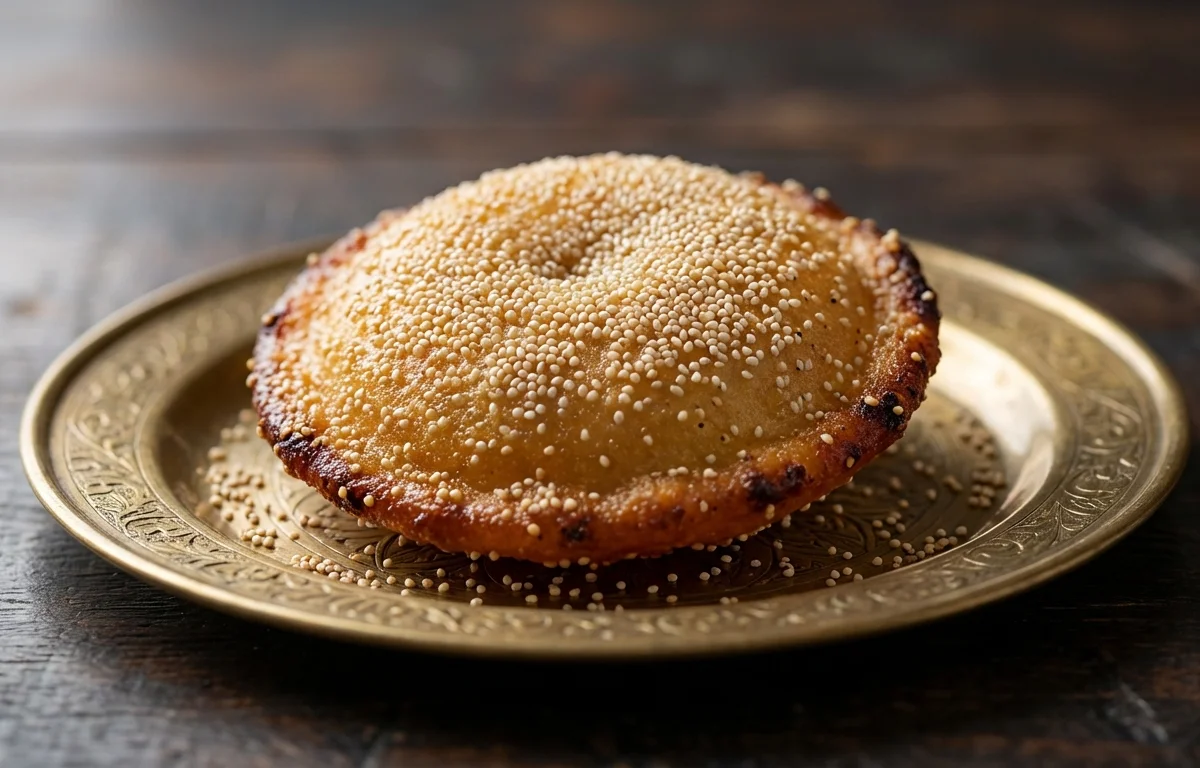
Anarsa
Deep-fried, disc-shaped sweet fritters from the heart of Maharashtra and Bihar, with a delightfully crisp, sugar-dusted exterior and a soft, airy interior. Made from a fermented rice-jaggery dough and rolled in poppy seeds, these festive treats melt in your mouth and are a cherished part of Diwali celebrations.
For 4 servings
- prep · ~360 min
Soak the rice.
1.Wash 1 cup basmati rice thoroughly under running water until water runs clear.2.Soak the rice in 1.5 cups of water for 6 to 7 hours, or overnight.TIPAged, long-grain basmati rice yields the best texture. Do not use parboiled or idli rice. - prep · ~40 min
Drain and dry the rice.
Drain the soaked rice completely in a colander. Spread the rice on a clean, dry muslin cloth and let it air-dry for about 30 to 40 minutes, until no visible moisture remains.
TIPThe rice must be completely moisture-free before grinding, otherwise the dough will absorb too much oil while frying. - mix · ~5 min
Grind rice to a fine powder.
Transfer the dried rice to a mixer grinder and pulverize it into a very fine powder. Pass the flour through a fine-mesh sieve to ensure uniform texture. Set aside.
- mix · ~10 min
Blend jaggery into the rice flour.
In a large flat mixing bowl, combine the finely ground rice flour and 0.75 cup grated jaggery. Rub the jaggery into the flour with your fingertips until the mixture becomes uniform in color and resembles wet sand.
TIPUse the friction from your palms to incorporate the jaggery — it will start melting slightly and bind the flour. Do not add water. - knead · ~12 min
Knead into a stiff dough with ghee.
Add 2 tablespoons of ghee (at room temperature) to the jaggery-flour mix. Knead firmly for 10-12 minutes until the dough comes together into a smooth, stiff ball. The natural moisture from the jaggery should be enough; avoid adding water.
TIPThe dough should be tight and crack slightly when pressed. If it's too dry, add a teaspoon of softened ghee — not water. - rest · ~1440 min
Ferment the dough.
Transfer the dough to a covered bowl. Let it rest at room temperature in a cool, dark place for 24 hours to ferment slightly. This develops the signature sour-sweet flavor and airy texture.
TIPIn cold weather, the fermentation might take longer. Keep the bowl near a warm spot like an oven with the pilot light on, but do not overheat. - prep · ~1 min
Prepare the poppy seed coating.
Spread the poppy seeds evenly on a flat plate. Keep it next to your shaping station.
- prep · ~10 min
Shape the anarsa discs.
1.Take a small ball of dough, roughly the size of a small lemon (25 g).2.Flatten it gently with your fingers into a 2.5-inch round disc on a lightly greased banana leaf or plastic sheet.3.Using your thumb, round out the edges and ensure the thickness is even throughout, about 0.25 inches.4.Gently lift the disc and place it on the bed of poppy seeds. Press lightly.5.Flip and coat the other side lightly with poppy seeds.TIPCoat only the outer rim and a bit of the surface, not a thick blanket of seeds — too many poppy seeds will burn in the ghee. - fry · ~8 min
Deep fry the anarsa in ghee.
1.Heat 1.5 cups of ghee in a deep, heavy-bottomed kadhai over low-medium flame.2.To test the temperature, drop a tiny piece of dough in — it should rise slowly to the surface without sizzling violently.3.Gently slide 2 or 3 shaped anarsa discs into the ghee.4.Fry them on the lowest possible heat for about 3-4 minutes, constantly spooning hot ghee over the top surface.5.Once the underside turns a light golden brown, flip carefully with a slotted spoon and cook the other side for 2 more minutes.TIPAnarsa must be fried on very low heat. If the ghee is too hot, they will brown quickly on the outside while remaining raw and greasy inside. - fry · ~2 min
Drain excess ghee.
Remove the fried anarsa with a slotted spoon and place them on a plate lined with absorbent kitchen paper to soak up extra ghee. Let them cool completely.
TIPDo not stack hot anarsas — they will become soggy. Keep them in a single layer until cool. - serve
Store and serve.
Once completely cooled, store the anarsa in an airtight container. They stay fresh for up to 2 weeks at room temperature. Serve at room temperature as a festive snack.
TIPAnarsas develop a better, more complex flavor after resting for a day or two. The crisp exterior softens just a touch, making them unbelievably tender inside.
What to keep in mind.
7 tips from the recipe — small details that make a real difference to the final dish.
- 1Use aged basmati rice for a lighter, fluffier texture after fermentation.
- 2Do not skip the 24-hour fermentation; it's crucial for the signature airy interior.
- 3Grind the dried rice to a very fine powder, then sift it to avoid gritty anarsa.
- 4Fry on the lowest possible heat to ensure even cooking without burning the poppy seeds.
- 5Cool anarsa completely in a single layer before storing to keep them crisp.
- 6If the dough cracks while shaping, add a teaspoon of softened ghee—never water.
- 7Coat poppy seeds only lightly on the surface; too many will burn and turn bitter.
Adapt it for your goals.
Vegan
Replace the ghee in the dough and for frying with a neutral vegetable oil or coconut oil. The texture will be slightly different, but the anarsa will remain delicious and suitable for plant-based diets.
oil freeOil-free
Use roasted poppy seeds and skip the ghee in the dough; instead of deep-frying, brush a tawa with minimal oil and cook the discs on low heat like a flatbread. The result is a chewier, less crispy version with fewer calories.
chocolateChocolate
Add 1 tablespoon of cocoa powder to the rice-jaggery mix before kneading. The chocolate complements the jaggery beautifully, giving a modern, festive twist that kids love.
cardamom scentedCardamom-scented
Crush 2 to 3 green cardamom pods and knead the seeds into the dough along with the ghee. The floral, aromatic cardamom elevates the sweet-sour flavor profile and adds a fragrant note.
Why this is on our healthy list.
Rich in Iron
Jaggery is an unrefined sugar that retains iron and other minerals, supporting healthy blood and energy levels.
Good Source of Calcium
Poppy seeds provide calcium, which is essential for strong bones and teeth.
Contains Healthy Fats
Ghee is rich in butyrate and fat-soluble vitamins, supporting digestion and nutrient absorption.
Gluten-Free
This snack is made entirely from rice flour and jaggery, making it naturally safe for those with gluten intolerance.
Frequently asked questions
Yes, but brown rice will give a denser, nuttier texture and may require a shorter fermentation time since whole grains ferment differently. The traditional taste is best with aged basmati.


