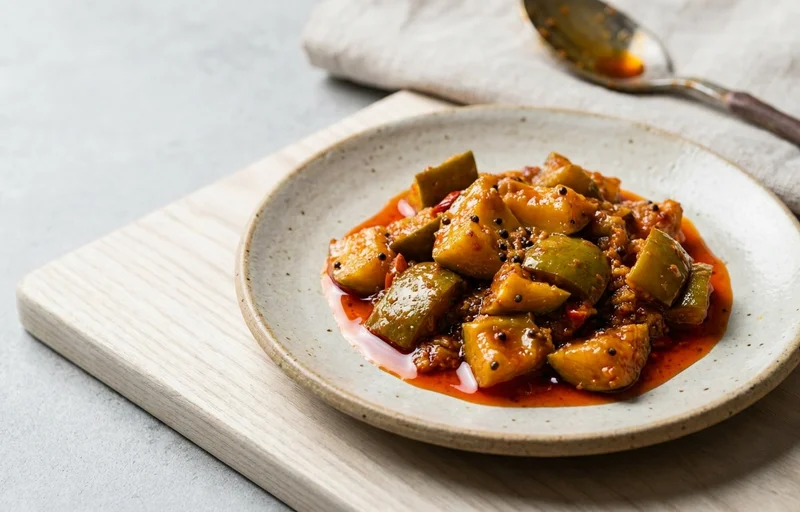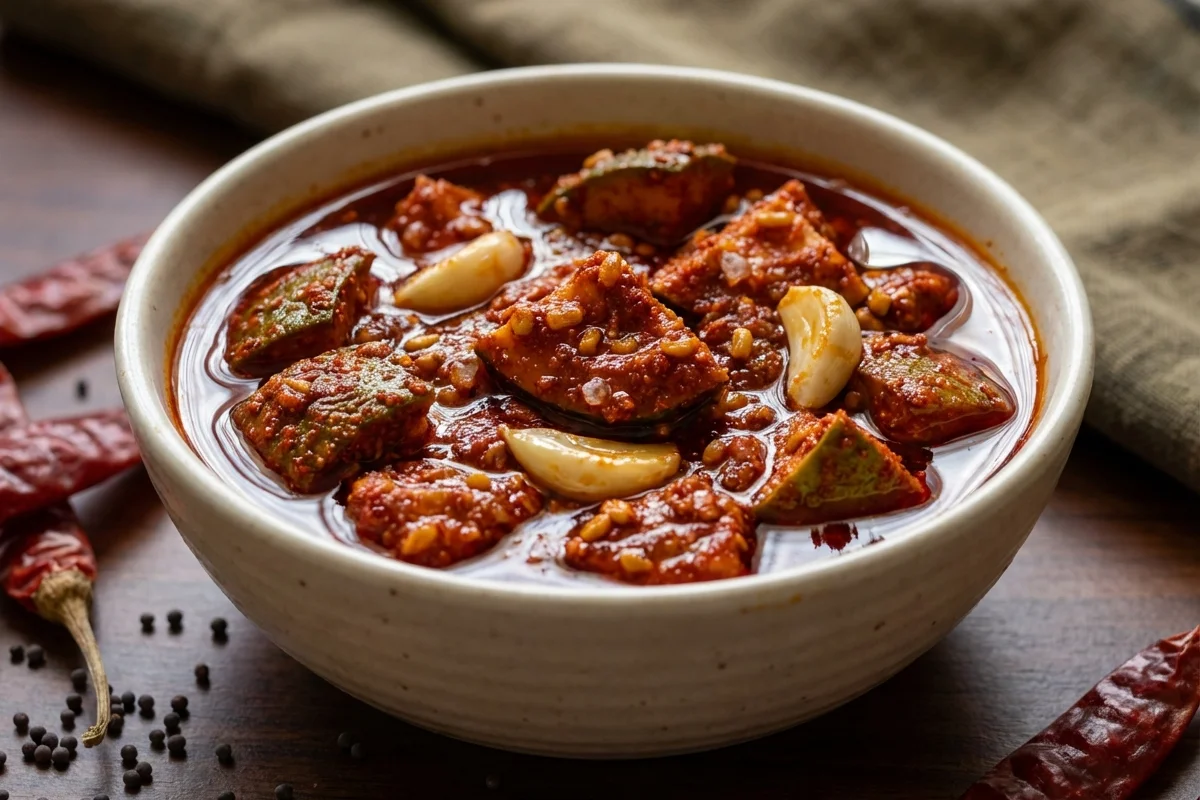
Avakkai Pickle
A fiery Andhra mango pickle made with raw sour mango, mustard powder, red chili powder, and sesame oil. It develops bold, deep flavor as it rests, and a small spoonful can brighten any simple meal of rice, dal, or curd rice.
For 24 servings
- prep · ~25 min
Prepare the mango pieces.
1.Wash the raw mango well and wipe it completely dry.2.Cut the mango into small bite-size pieces, keeping some flesh on each piece.3.Spread the pieces on a clean cloth for 10-15 minutes so no surface moisture remains.TIPAny moisture on the mango or knife can shorten the shelf life of the pickle. - roast · ~2 min
Roast and grind the fenugreek.
Warm the fenugreek seeds in a small dry pan over low heat until lightly aromatic, about 1 minute. Cool and grind to a fine powder.
- mix · ~3 min
Make the spice mix.
In a large dry bowl, combine the ground mustard seeds, red chili powder, salt, ground fenugreek, and turmeric powder. Mix well so the spices are evenly blended.
- assemble · ~5 min
Coat the mango with spices and oil.
1.Add the dried mango pieces and garlic cloves to the spice mix.2.Pour in the sesame oil.3.Mix with a clean dry spoon until every mango piece is well coated and the spices look glossy. - rest · ~4320 min
Rest the pickle in a clean jar.
Transfer the pickle to a clean, completely dry glass or ceramic jar. Cover tightly and let it rest at room temperature for 3 days, stirring once daily with a dry spoon.
TIPThe mango will release juices as it rests, and the spice mix will loosen into a thick pickle masala. - serve
Serve after the flavors develop.
Taste after 3 days and rest 1-2 more days if you want a softer mango texture and deeper flavor. Serve in small amounts with hot rice, dal rice, curd rice, or chapati.
What to keep in mind.
7 tips from the recipe — small details that make a real difference to the final dish.
- 1Dry the mango, knife, bowl, and jar thoroughly; even a little water can make the pickle spoil faster.
- 2Use a clean, dry spoon every time you stir during the resting days to keep the pickle stable.
- 3If your sesame oil is cold and thick, warm it very gently and cool slightly before mixing so it coats evenly.
- 4Taste only after at least 3 days; the salt, chili, and mustard need time to draw out mango juices and mellow together.
- 5Keep the mango pieces fairly uniform so they soften at the same rate while resting in the masala.
- 6If the top looks dry in the jar, add a little more sesame oil so the pickle stays well covered.
- 7Store the jar in a cool spot away from sunlight, then refrigerate after the flavors develop for longer keeping.
Adapt it for your goals.
No-garlic
Skip the garlic for a more traditional plain mango avakkai profile or for those who avoid alliums.
extra spicyExtra-spicy
Use a hotter Andhra chili powder or add a little more to make the pickle fierier for spice lovers.
less oilLess-oil
Reduce the sesame oil slightly for a lighter version, though shelf life may be shorter and the masala less loose.
chunky cutChunky-cut
Cut the mango into slightly larger pieces if you prefer a firmer bite and slower softening during the rest period.
Why this is on our healthy list.
Raw Mango Richness
Raw sour mango brings natural tartness along with plant compounds typical of unripe fruit, making a small serving very flavourful.
Spice-Based Antioxidants
Mustard, chili, turmeric, and fenugreek contribute aromatic compounds and antioxidants while adding depth without sugar.
Sesame Oil Goodness
Sesame oil provides richness and helps carry fat-soluble flavours from the spices throughout the pickle.
Frequently asked questions
Moisture can dilute the masala and encourage spoilage, so fully drying the mango pieces, bowl, spoon, and jar is essential.



.webp)