
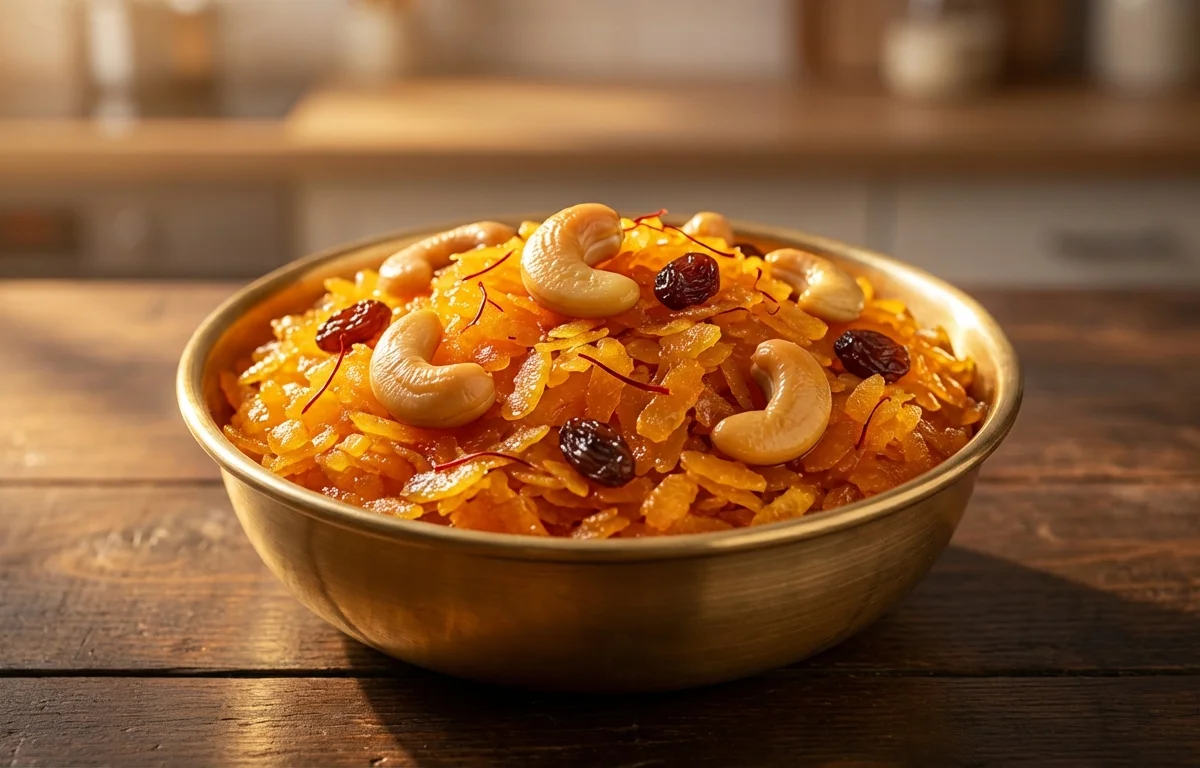
Aval Kesari
A soft, melt-in-the-mouth South Indian sweet made from flattened rice, ghee, and sugar. Laced with saffron, cardamom, and crunchy nuts, this quick dessert comes together in under 20 minutes and is perfect for festive mornings or a simple after-meal treat.
For 4 servings
- prep · ~20 min
Wash and soak the poha.
1.Place poha in a sieve and rinse briefly under running water.2.Drain fully and set aside for 15-20 minutes to soften. - prep · ~2 min
Prepare jaggery syrup and saffron milk.
1.In a small bowl, dissolve jaggery in ¼ cup water and strain to remove impurities.2.In another tiny bowl, soak saffron strands in 1 tablespoon warm milk. - temper · ~3 min
Fry the nuts and raisins.
1.Heat ghee in a heavy-bottomed kadai over medium heat.2.Add cashews and fry until golden.3.Add raisins and let them puff up.TIPUse medium-low heat to avoid burning the nuts. - simmer · ~5 min
Cook the poha until soft.
1.Add the softened poha to the kadai with the fried nuts.2.Pour in 1.5 cups of water and a pinch of salt.3.Cook on medium heat for 4-5 minutes, stirring occasionally, until poha is soft and mushy.TIPMash the poha lightly with the back of the spoon for a smoother texture. - mix · ~4 min
Add jaggery and flavorings.
1.Pour the strained jaggery syrup into the cooked poha.2.Add the saffron milk and cardamom powder.3.Stir continuously for 3-4 minutes until the mixture thickens and starts to leave the sides of the pan. - simmer · ~2 min
Finish cooking the kesari.
Continue to cook for another 2 minutes on low heat, stirring gently. The ghee will start to ooze out, and the kesari will come together as a glistening, soft mass.
- serve
Serve warm.
Transfer to a serving bowl. Drizzle any remaining ghee from the pan on top. Serve warm for the best flavor and texture.
What to keep in mind.
6 tips from the recipe — small details that make a real difference to the final dish.
- 1Always use thick poha (flattened rice) — thin poha turns mushy and won't give the proper kesari texture.
- 2Rinse poha gently in a sieve; do not soak it in water or it will become too soft and clumpy.
- 3Strain the jaggery syrup through a fine-mesh sieve to remove any impurities or grit.
- 4Cook the poha on medium heat, mashing it lightly for a smoother, homogenous kesari.
- 5Stir continuously after adding jaggery to prevent the mixture from sticking or burning.
- 6Serve kesari warm — it firms up as it cools, so enjoy it fresh for the softest texture.
Adapt it for your goals.
Vegan
Replace ghee with coconut oil or a neutral vegetable oil, and use plant-based milk (like almond or oat milk) for soaking the saffron.
low sugarLow-sugar
Substitute jaggery with coconut sugar or a sugar-free sweetener like stevia — adjust water quantity as needed, as jaggery adds moisture.
pineapple kesariPineapple kesari
Add ½ cup finely chopped ripe pineapple along with the water in step 4; reduce jaggery slightly to balance the fruit's natural sweetness.
nut freeNut-free
Skip cashews and use pumpkin seeds or sunflower seeds for crunch; ensure ghee is used from a trusted source (usually nut-free).
Why this is on our healthy list.
Quick Energy from Poha
Poha (flattened rice) is a light carbohydrate that provides rapid, digestible energy, making this sweet an ideal option for breakfast or post-meal treat.
Iron-Rich Jaggery
Jaggery, used instead of refined sugar, contains trace amounts of iron and other minerals, and adds a rich, earthy sweetness without chemical processing.
Digestive Aid from Cardamom
Green cardamom is traditionally used in South Indian cooking to aid digestion and add a fragrant, appetizing aroma.
Frequently asked questions
No, thin poha becomes too mushy and sticky; always use thick (or red) poha for the best soft but distinct texture.


