Baqarkhani
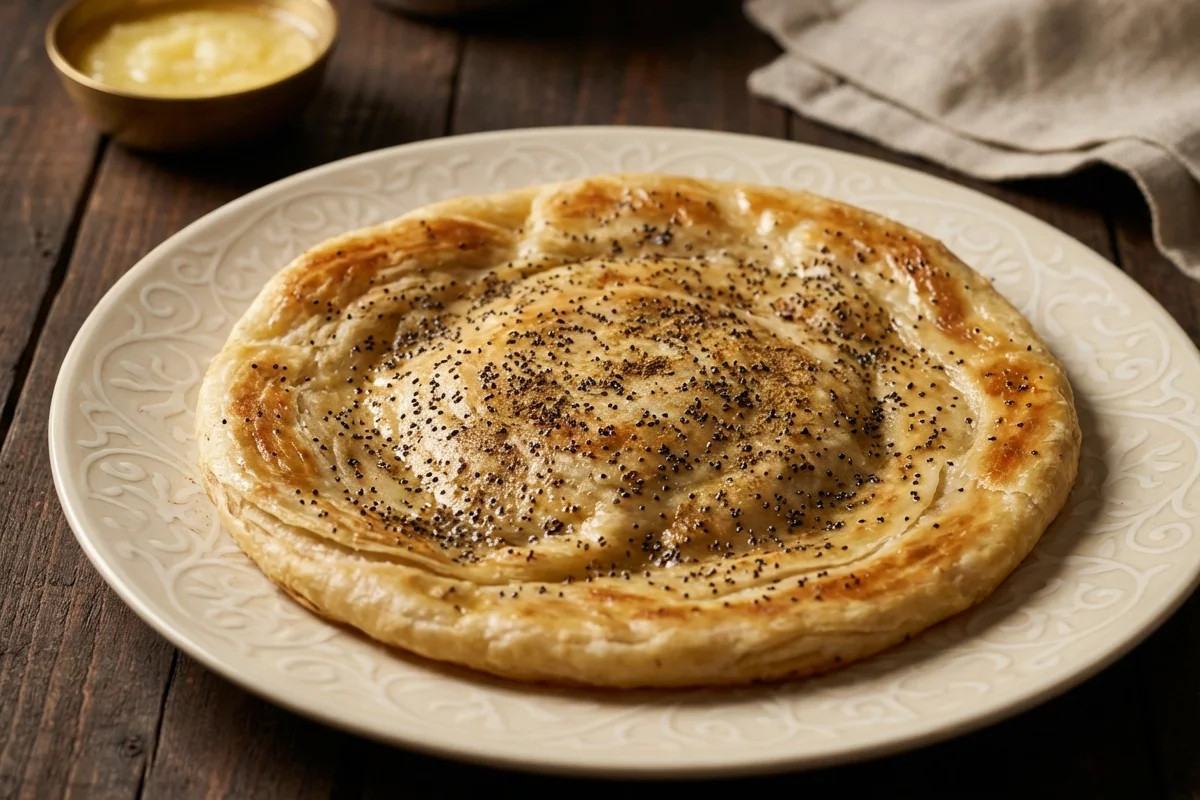
This rich, flaky flatbread has a biscuit-like bite and delicate layers that come from folding ghee into a lightly sweet dough. A classic from old Mughlai baking, it is lovely with chai, korma, or kebabs.
For 8 servings
- mix · ~4 min
Mix the dry ingredients.
1.Add all-purpose flour, semolina, sugar, salt, baking powder, fennel seeds, and black pepper to a wide bowl.2.Mix well so the semolina and seasonings are evenly spread through the flour.3.Rub in 3 tbsp ghee with your fingertips until the mixture looks sandy. - knead · ~8 min
Knead the dough.
Pour in the lukewarm milk little by little and bring the mixture together into a firm but smooth dough. Knead for 6 to 8 minutes until it feels supple and no dry flour remains.
TIPKeep the dough slightly firm so the bread holds its layered shape after folding. - rest · ~20 min
Cover and rest the dough.
Cover the dough and let it rest for 20 minutes so the flour hydrates and the dough becomes easier to roll.
- prep · ~5 min
Divide the dough and prepare for layering.
1.Divide the dough into 8 equal portions.2.Keep the remaining 2 tbsp ghee ready for layering and shaping.3.Lightly grease the work surface with a little ghee. - assemble · ~15 min
Roll and fold the baqarkhani.
1.Roll one dough portion into a small oval or round disc.2.Brush a thin layer of ghee over the surface.3.Fold the disc into thirds like a letter, then roll it up into a loose spiral.4.Tuck the end under and gently flatten it.5.Repeat with the remaining dough portions.TIPDo not press too hard while shaping the spirals or the layers will merge. - rest · ~10 min
Rest the shaped dough.
Let the shaped spirals rest for 10 minutes, covered lightly, so they relax before the final rolling.
- prep · ~10 min
Roll the breads and prepare the topping.
1.Roll each rested spiral into a thick disc about 10 to 12 cm wide.2.Prick the surface lightly with a fork to keep the center from puffing too much.3.Mix the beaten egg with 1 tbsp water.4.Brush the tops with the egg wash and sprinkle nigella seeds over each disc. - bake · ~20 min
Bake until golden and layered.
Place the breads on a baking tray and bake at 190°C until golden brown and crisp at the edges. The tops should look glossy and lightly blistered.
TIPBake until the surface turns deep golden; pale baqarkhani will taste soft instead of flaky. - serve
Cool slightly and serve warm.
What to keep in mind.
7 tips from the recipe — small details that make a real difference to the final dish.
- 1Keep the dough slightly firm; a soft dough will spread and blur the laminated layers.
- 2Rub the ghee well into the flour until sandy so the finished bread bakes up short and flaky.
- 3Use only a thin smear of ghee between folds; too much will leak and make the layers slide.
- 4After shaping the spiral, flatten gently with your palm before rolling so the layers stay distinct.
- 5Fork-prick mainly in the center so the middle stays flat while the edges can still puff and crisp.
- 6Bake until deeply golden with crisp edges; underbaked baqarkhani stays bready instead of biscuit-like.
- 7Cool on a rack for a few minutes after baking so steam does not soften the flaky crust.
Adapt it for your goals.
Eggless
Skip the egg wash and brush with milk or a little melted ghee instead; useful if you want the same shine without egg.
sweeter chai styleSweeter-chai-style
Increase the sugar slightly and add a touch of cardamom for a more tea-time version that leans toward bakery-style baqarkhani.
savory spicedSavory-spiced
Add a little extra black pepper and a pinch of ajwain for a more robust flatbread that pairs especially well with kebabs and korma.
sesame toppedSesame-topped
Replace or combine the nigella with sesame seeds for a nuttier topping and a slightly more toasted finish.
Why this is on our healthy list.
Energy-Giving Bread
The flour, semolina, and milk make this a satisfying, carbohydrate-rich bread that pairs well with meals or tea.
Digestive Spice Notes
Fennel seeds are traditionally used in breads for their aromatic flavor and gentle digestive appeal.
More Filling Texture
Semolina adds body and texture, giving the flatbread a sturdier bite than plain refined flour alone.
Frequently asked questions
This usually happens if the dough is too soft, the layers were pressed together while rolling, or the breads were pulled before they turned deep golden.