
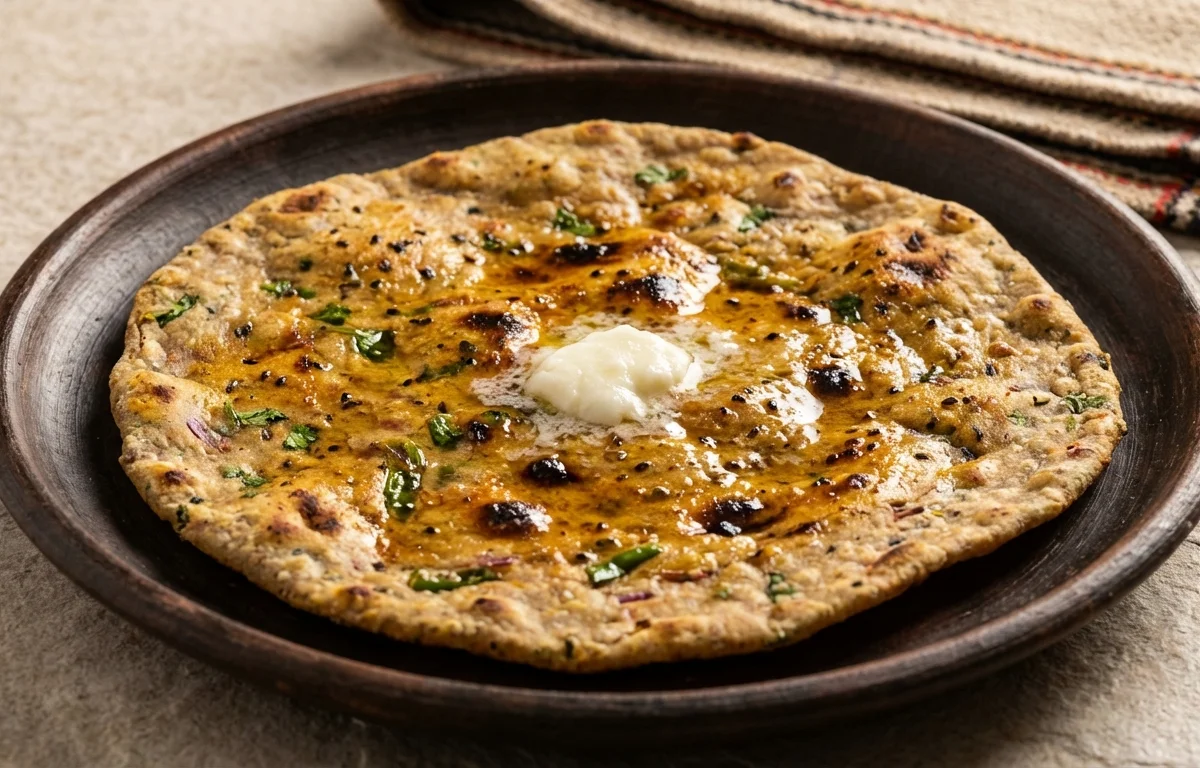
Bejad Roti
A rustic Rajasthani flatbread made with a mix of flours, bejad roti has a hearty bite and earthy flavor. It cooks up soft with light brown spots and pairs especially well with gatte, ker sangri, or plain yogurt.
For 4 servings
- mix · ~3 min
Mix the flours and seasonings.
1.Add whole wheat flour, chickpea flour, and barley flour to a wide bowl.2.Mix in cumin seeds, ajwain, and salt.3.Pour in 1 tbsp ghee and rub it into the flours until the mixture looks crumbly.TIPRubbing in the ghee well helps the rotis stay softer and cook more evenly. - knead · ~5 min
Knead the dough.
Add water little by little and knead to a firm but smooth dough. The dough should hold together without feeling sticky.
- rest · ~10 min
Cover and rest the dough.
Cover the dough and let it rest for 10 minutes so the mixed flours hydrate well and become easier to roll.
- prep · ~3 min
Divide and shape the dough.
1.Divide the dough into 4 equal portions.2.Roll each portion into a smooth ball.3.Dust lightly with whole wheat flour if needed. - knead · ~5 min
Roll the rotis.
Roll each dough ball into a medium-thick round roti, about 5 to 6 inches wide. Keep the thickness even so the roti cooks uniformly.
TIPIf the edges crack, press them back together and roll gently; mixed-flour dough is more delicate than plain wheat dough. - fry · ~12 min
Cook the rotis on a hot tawa.
1.Heat a tawa over medium heat until hot.2.Place one rolled roti on the tawa and cook until small bubbles appear and the underside gets light brown spots.3.Flip and cook the second side until lightly spotted.4.Apply a little ghee on both sides and cook, pressing gently, until golden brown spots appear and the roti is cooked through.5.Repeat with the remaining rotis.TIPCook on medium heat so the thicker roti gets done inside without burning on the outside. - serve
Serve the bejad roti hot.
What to keep in mind.
7 tips from the recipe — small details that make a real difference to the final dish.
- 1Rub the ghee into the flour mix thoroughly; that moyan is what keeps bejad roti from turning dry.
- 2Add water gradually, because chickpea and barley flours absorb differently and the dough can go sticky quickly.
- 3Resting the dough is important here; it helps the mixed flours hydrate so the rotis roll with fewer cracks.
- 4Roll slightly thicker than plain phulka, since bejad roti is meant to have a rustic, hearty bite.
- 5Cook on medium heat only; high heat will brown the outside before the thicker center is fully done.
- 6If the roti feels stiff after cooking, stack and cover it in a cloth for a few minutes to soften.
- 7These rotis are best served hot, but you can half-cook them ahead and finish with ghee just before serving.
Adapt it for your goals.
Vegan
Replace ghee with neutral oil for the moyan and cooking. The rotis stay rustic and soft while becoming fully dairy-free.
spicierSpicier
Add crushed black pepper, green chili, or a pinch of red chili powder to the dough for a sharper, more robust flavor.
herbedHerbed
Mix in chopped methi or coriander leaves for extra aroma and a fresher taste that pairs well with yogurt or sabzi.
low oilLow-oil
Use less ghee on the tawa and cook mostly dry, brushing only at the end if desired for a lighter everyday roti.
Why this is on our healthy list.
Mixed Grain Goodness
Using whole wheat and barley flour adds more grain variety and a heartier texture than a plain refined-flour flatbread.
Plant Protein Support
Chickpea flour contributes plant protein, making the roti more sustaining and especially useful when paired with simple yogurt or sabzi.
Digestive Spice Boost
Ajwain and cumin are traditional digestive spices that also make this dense, rustic roti feel more balanced and aromatic.
Frequently asked questions
Mixed-flour dough is less elastic than plain wheat dough. Let it rest well, keep it firm but smooth, and press cracks together gently as you roll.



.webp)
.webp)
.webp)