
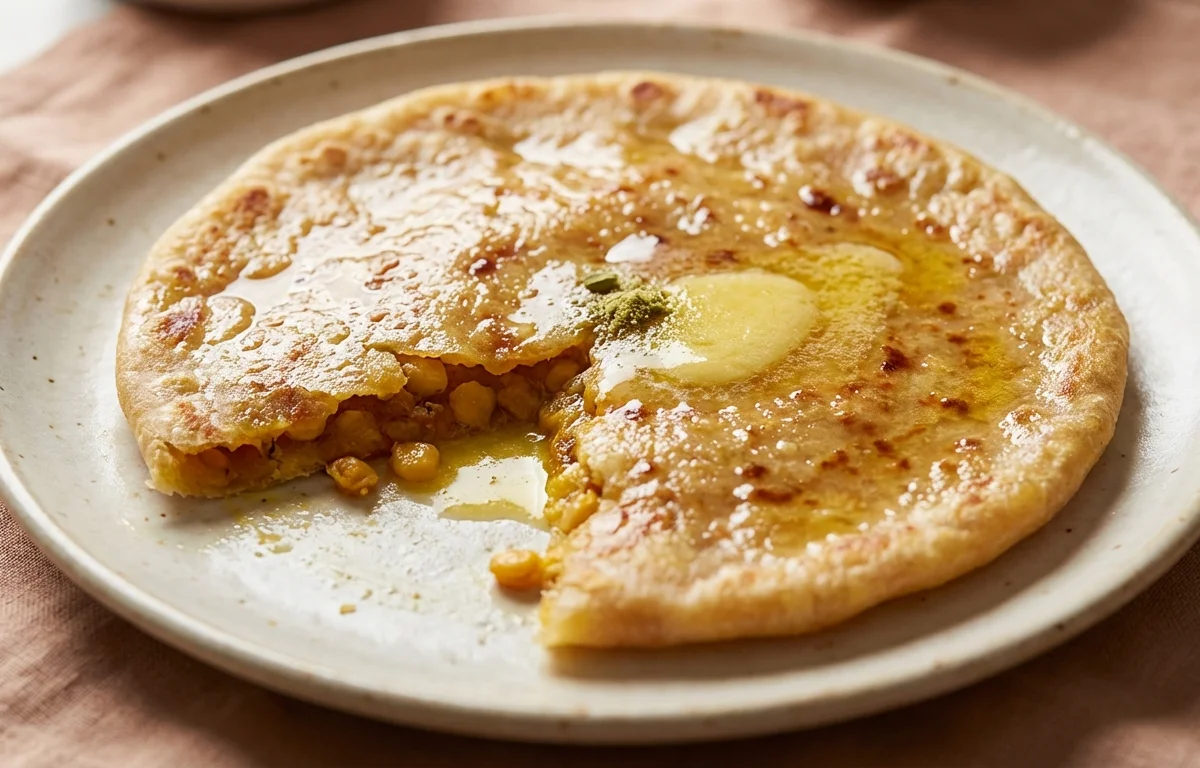
Bele Holige
Soft, golden flatbreads filled with a sweet, spiced lentil-jaggery mixture. A cherished Karnataka festival treat, these melt-in-your-mouth delights are best enjoyed warm with a drizzle of ghee and a glass of milk.
For 8 servings
- prep · ~20 min
Cook the chana dal.
1.Wash chana dal and add it to a pressure cooker with 2 cups water.2.Cook on medium heat for 3-4 whistles until dal is soft but holds its shape.3.Let the pressure release naturally, then drain the dal completely in a colander for 10 minutes.TIPDraining thoroughly is key — any leftover water makes the filling soggy and hard to roll. - mix · ~10 min
Make the sweet filling (hoorana).
1.Transfer the drained dal to a heavy-bottomed pan and add grated jaggery.2.Cook on low heat, stirring continuously, until the jaggery melts and the mixture thickens.3.When the mixture leaves the sides of the pan and looks glossy (about 8-10 min), turn off the heat.4.Stir in cardamom powder, dry ginger powder, and grated nutmeg. Let the filling cool completely.TIPDon't over-dry the filling. It will firm up as it cools — stop when it's moist but not runny. - knead · ~20 min
Knead the dough.
1.In a large bowl, mix all-purpose flour, fine semolina, turmeric powder, a pinch of salt, and 2 tbsp oil.2.Add water little by little and knead into a very soft, smooth dough.3.Coat the dough with a few drops of oil, cover with a damp cloth, and rest for 20 minutes.TIPThe dough should be softer than roti dough. A good rest relaxes the gluten and makes rolling easy. - prep · ~5 min
Portion the dough and filling.
1.Divide the rested dough into 8 equal balls.2.Once the filling is cool, also divide it into 8 equal portions and roll them into smooth balls.3.Keep both covered with a damp cloth to prevent drying.TIPKeep the dough balls slightly larger than the filling balls for easier wrapping. - assemble · ~10 min
Shape the holige.
1.Flatten a dough ball on a greased parchment paper using your fingertips into a 3-inch disc.2.Place a filling ball in the center and gather the edges over the top to seal it completely. Pinch off any excess dough.3.Gently flatten the sealed ball, dust with rice flour, and carefully roll it out into a thin 6-inch circle.4.Use gentle, even pressure and roll from the center outwards. Flip and dust with rice flour as needed.TIPRoll on parchment paper and use it to transfer the holige to the pan — this prevents tearing. - fry · ~2 min
Roast the holige.
1.Heat a skillet over medium heat. Gently transfer the rolled holige onto the hot pan.2.Cook for 30-40 seconds until small bubbles appear on the surface. Flip.3.Spread ½ teaspoon ghee on the cooked side, flip again and spread ghee on the other side.4.Roast until both sides are golden with slightly darker spots.TIPKeep the heat at medium. Too hot burns the sugar in the jaggery; too cool dries out the holige. - serve
Serve warm, smeared with ghee.
Stack the finished holige on a plate and smear each one generously with ghee. Serve immediately while still warm, with a glass of cold milk or a spoonful of extra ghee on the side.
What to keep in mind.
7 tips from the recipe — small details that make a real difference to the final dish.
- 1Drain the cooked chana dal thoroughly for 10 minutes; excess water makes the filling sticky and hard to roll.
- 2Cook the jaggery-dal mixture just until glossy and it leaves the pan sides; it firms up as it cools.
- 3Knead the dough softer than roti dough; a 20-minute rest relaxes the gluten for easy rolling.
- 4Keep dough and filling balls covered with a damp cloth to prevent drying while shaping.
- 5Roll holige on greased parchment paper and use it to transfer to the pan to avoid tearing.
- 6Roast on medium heat; too high burns the jaggery, too low makes the holige dry and stiff.
- 7For storing, layer holige with parchment and refrigerate up to 3 days; reheat on a tawa with ghee.
Adapt it for your goals.
Oil-free dough
Replace the oil in the dough with an equal amount of yogurt or extra water. The holige will be slightly less flaky but still soft and suitable for low-fat preferences.
coconut fillingCoconut filling
Add 1/2 cup of fresh grated coconut to the filling while cooking the jaggery-dal mixture. This adds tropical sweetness and a slightly grainier texture, popular in coastal Karnataka variations.
jaggery substituteJaggery substitute
For a milder sweetness, swap half the jaggery with 1/2 cup of light brown sugar or palm sugar. Keep the rest as jaggery for its distinctive earthy depth.
Why this is on our healthy list.
Rich in Plant-Based Iron
Jaggery is a traditional source of iron and minerals, and the chana dal provides additional non-heme iron, making this sweet dish a surprising source of dietary iron.
Good Source of Plant Protein
Chana dal (split chickpea lentils) is high in protein and fiber, giving these festive flatbreads a satisfying, nutritious core that balances the jaggery's sugars.
Digestive Spices
Cardamom, dry ginger, and nutmeg not only add fragrance but also aid digestion and help reduce bloating after a rich meal.
No Refined White Sugar
The sweetness comes solely from jaggery, an unrefined cane sugar that retains natural molasses, minerals, and a lower glycemic impact than white sugar.
Frequently asked questions
The filling was likely too moist (see tip: drain dal thoroughly) or the dough was too thin. Chill the filling balls for 15 minutes before stuffing, and ensure the dough seals completely without gaps.


