Bhapa Ilish
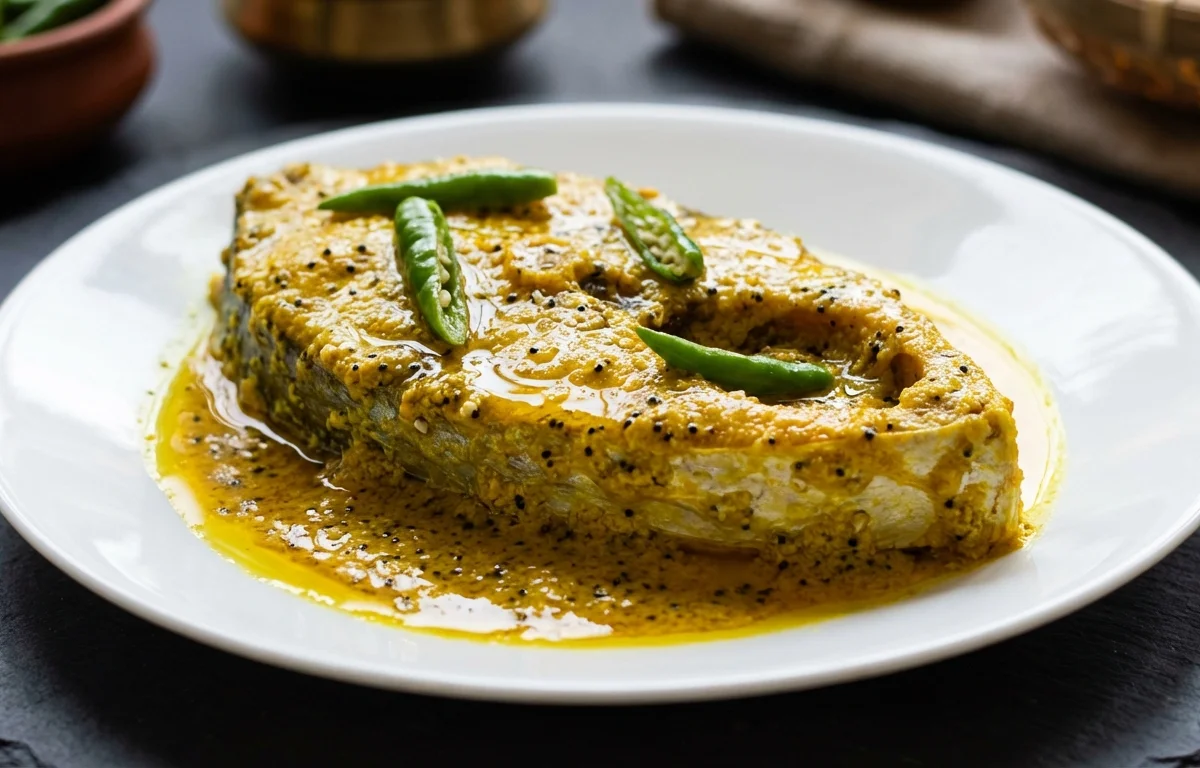
A classic Bengali delicacy where fresh hilsa fish steaks are steamed in a pungent mustard seed and poppy seed paste, along with a drizzle of mustard oil and green chilies. The gentle steam cooking technique preserves the delicate texture of the fish while allowing the bold mustard flavors to infuse completely.
For 4 servings
- prep · ~30 min
Soak the mustard and poppy seeds.
Soak yellow mustard seeds, black mustard seeds, and poppy seeds in warm water for 30 minutes. Drain and set aside.
TIPUse warm water, not hot — hot water can make mustard seeds bitter. - prep
Marinate the fish steaks.
Rub the hilsa steaks with turmeric powder and salt. Let them rest while you prepare the mustard paste.
- prep
Grind the mustard-poppy paste.
Grind the soaked mustard seeds and poppy seeds with 3 tablespoons of water and 1 chopped green chili to a smooth, thick paste. The paste should coat the back of a spoon.
TIPDo not over-grind mustard — it turns bitter. Pulse in short bursts and check consistency. - mix
Mix the mustard paste with oil and seasoning.
Transfer the ground paste to a bowl. Add 2 tablespoons of mustard oil and salt to taste. Mix well with a spoon until the oil is incorporated and the paste looks creamy.
- assemble
Coat the fish with the mustard paste.
Take the fish steaks and generously coat each piece with the mustard-poppy paste on all sides. Place the coated steaks inside the steel tiffin box in a single layer. Pour any remaining paste over the top.
- assemble
Add green chilies and mustard oil.
Place the 4 slit green chilies on top of the fish. Drizzle the remaining 1 tablespoon of raw mustard oil evenly over the top. Close the tiffin box lid tightly.
TIPTighten the lid well — you want steam to cook the fish, not water to seep in. - steam · ~25 min
Steam the fish in a steamer or pot.
Fill the steamer or large pot with water (ensure the water level is below the tiffin box). Bring to a rolling boil. Carefully place the sealed tiffin box inside, cover the steamer, and steam for 20-25 minutes on medium heat.
TIPCheck water level halfway. Add more boiling water if needed — never let the pot run dry. - rest · ~5 min
Rest the steamed fish.
Turn off the heat and let the tiffin box rest in the steamer for 5 minutes. This allows the flavors to settle and the gravy to thicken slightly.
- serve
Serve Bhapa Ilish hot.
Carefully open the tiffin box. Transfer the fish steaks with the mustard gravy to a serving dish. Serve immediately with steamed rice or shada bhaat.
TIPA squeeze of lemon is not traditional but brightens the dish beautifully if you find the mustard too sharp.
What to keep in mind.
6 tips from the recipe — small details that make a real difference to the final dish.
- 1Always soak mustard seeds in warm water for exactly 30 minutes to mellow their heat without bitterness.
- 2Grind the mustard-poppy paste in short pulses; over-grinding releases bitter compounds from mustard.
- 3Use a steel tiffin box for steaming — it traps moisture evenly and prevents the fish from drying out.
- 4Check the steamer water level halfway through cooking and top up with boiling water to maintain steady steam.
- 5Let the steamed fish rest for 5 minutes before opening so the gravy thickens and flavors meld.
- 6Do not skip the raw mustard oil drizzle — it adds a pungent kick that defines authentic Bhapa Ilish.
Adapt it for your goals.
Low-oil
Reduce mustard oil to 1 tablespoon in the paste and skip the final drizzle; the dish remains fragrant but significantly lighter.
Milder pasteMilder paste
Replace half the black mustard seeds with white poppy seeds for a gentler, less pungent gravy that suits sensitive palates.
Pan fried finishPan-fried finish
After steaming, briefly sear the fish steaks in a hot non-stick pan for 30 seconds per side to add a smoky crust while keeping the interior moist.
Coconut twistCoconut twist
Add 2 tablespoons of fresh grated coconut to the mustard paste for a subtle sweetness that balances the heat.
Why this is on our healthy list.
Rich in Omega-3 Fatty Acids
Hilsa fish is one of the best sources of heart-healthy omega-3s, which support brain function and reduce inflammation.
Antioxidant from Turmeric
The pinch of turmeric powder provides curcumin, a potent antioxidant that helps combat oxidative stress.
Digestive Aid from Mustard Seeds
Both yellow and black mustard seeds stimulate digestive enzymes, aiding in nutrient absorption and gut health.
Low in Saturated Fat
Mustard oil, used in moderation, is low in saturated fat compared to butter or ghee, making this dish heart-friendly.
Frequently asked questions
Yes, but use an oven-safe glass or ceramic bowl tightly sealed with foil or a lid; the tiffin box is ideal because its seal traps steam perfectly.