Buttermilk Pie
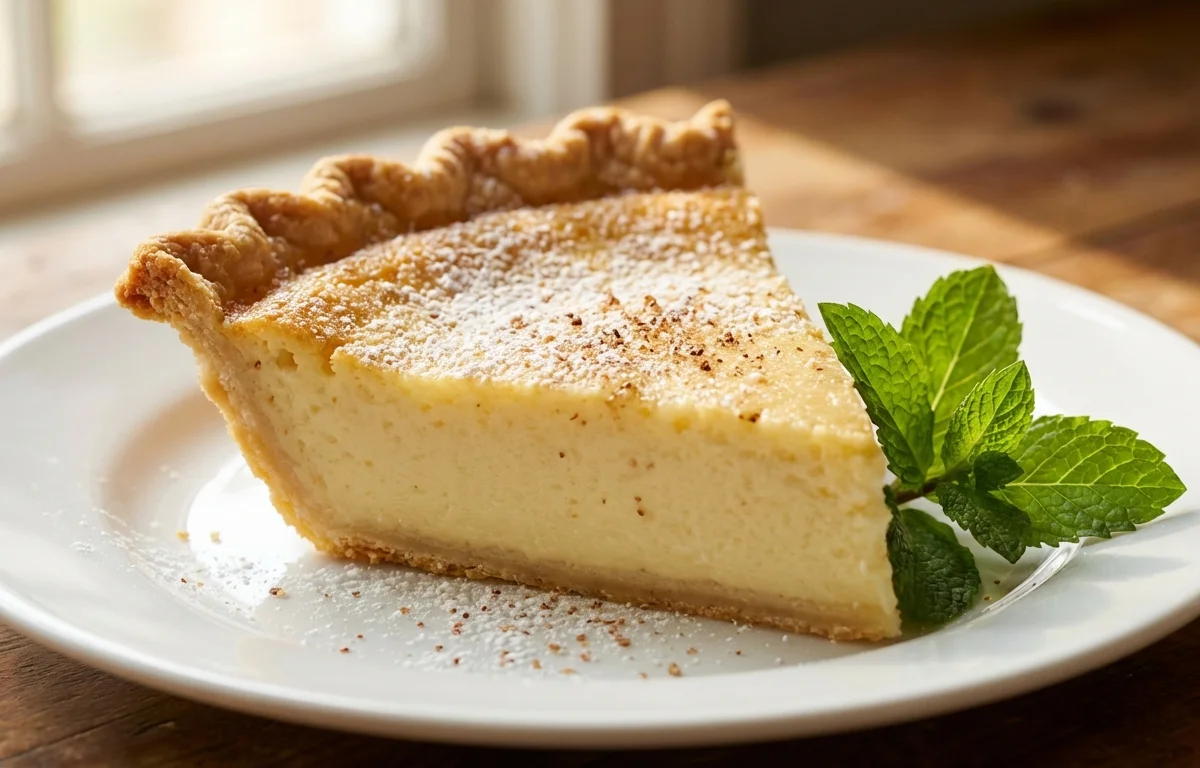
A classic Southern dessert with a silky, tangy custard filling in a flaky, buttery crust. This old-fashioned pie comes together with simple pantry staples and bakes into a golden, slightly caramelized top with a creamy, tender center. Perfect for holidays or any day you crave a nostalgic slice of comfort.
For 8 servings
- prep
Preheat oven and prep the crust.
1.Preheat the oven to 350°F (175°C).2.Place the unbaked pie crust in a 9-inch pie dish. Crimp the edges as desired.3.Set the pie dish on a baking sheet to catch any spills during baking.TIPKeep the pie crust cold until ready to fill to ensure a flaky texture. - mix
Mix the custard filling.
1.In a large mixing bowl, whisk together the melted butter and sugar until well combined.2.Whisk in the all-purpose flour until smooth and no lumps remain.3.Add the eggs one at a time, whisking well after each addition until fully incorporated.4.Pour in the buttermilk, vanilla extract, and lemon juice. Whisk until smooth and silky.5.Grate in a pinch of fresh nutmeg and add the salt. Whisk to combine.TIPMix gently when adding eggs; over-mixing can incorporate too much air and cause the pie to crack. - assemble
Pour filling into crust.
Pour the prepared custard filling into the unbaked pie crust, filling it evenly. The filling will be thin and liquid — that's exactly right.
- bake · ~50 min
Bake the pie.
1.Carefully transfer the baking sheet with the pie to the center rack of the preheated oven.2.Bake for 45–50 minutes, or until the edges are set and the center has a slight jiggle when gently shaken.3.If the crust edges are browning too quickly, cover them with aluminum foil or a pie shield after 25 minutes.TIPThe pie will puff up during baking and settle as it cools — this creates the signature texture. - rest · ~60 min
Cool the pie completely.
Remove the pie from the oven and let it cool on a wire rack for at least 1 hour. The center will continue to set as it cools. For clean slices, cool completely to room temperature, then refrigerate for 2 hours before serving.
TIPPatience is key — slicing a warm pie will cause the custard to run. Chill for the cleanest cuts. - garnish
Garnish with freshly grated nutmeg and serve.
Just before serving, grate a little extra nutmeg over the top of each slice. Serve chilled or at room temperature.
What to keep in mind.
6 tips from the recipe — small details that make a real difference to the final dish.
- 1Use room-temperature eggs and buttermilk to ensure a smooth, lump-free custard.
- 2Mix the batter gently after adding eggs to avoid incorporating too much air, which can cause cracking.
- 3Bake until the center jiggles like firm Jell-O; it will set as it cools.
- 4Chill the pie for at least 2 hours before slicing for clean, neat pieces.
- 5Cover the crust edges with foil after 25 minutes if they brown too quickly.
- 6For extra tang, substitute 1 tablespoon of lemon juice with an additional tablespoon of buttermilk.
Adapt it for your goals.
Citrus Burst
Replace the lemon juice with 1 tablespoon of fresh orange juice and add 1 teaspoon of finely grated orange zest for a brighter, fruitier flavor profile.
Brown Butter NutmegBrown Butter Nutmeg
Brown the ½ cup of butter until golden and nutty before mixing. This adds a deep, caramelized richness that complements the tangy buttermilk.
Coconut Buttermilk PieCoconut Buttermilk Pie
Swap ¼ cup of buttermilk for ¼ cup of full-fat coconut milk and fold in ½ cup of toasted shredded coconut. This gives a tropical twist with a hint of chew.
Low SugarLow-Sugar
Reduce sugar to 1 cup and add ¼ teaspoon of stevia extract or monk fruit sweetener. The pie will be less sweet but still creamy and tangy.
Why this is on our healthy list.
Good Source of Calcium
Buttermilk provides a modest amount of calcium, which supports bone health and nerve function.
Contains Vitamin A from Butter
Butter contributes vitamin A, important for vision and immune function, though used in moderation here.
Low in Sodium
With just a pinch of salt, this pie is naturally low in sodium compared to many store-bought desserts.
Frequently asked questions
Cracking usually happens from over-mixing the eggs or over-baking. Mix gently and pull the pie when the center still jiggles slightly.