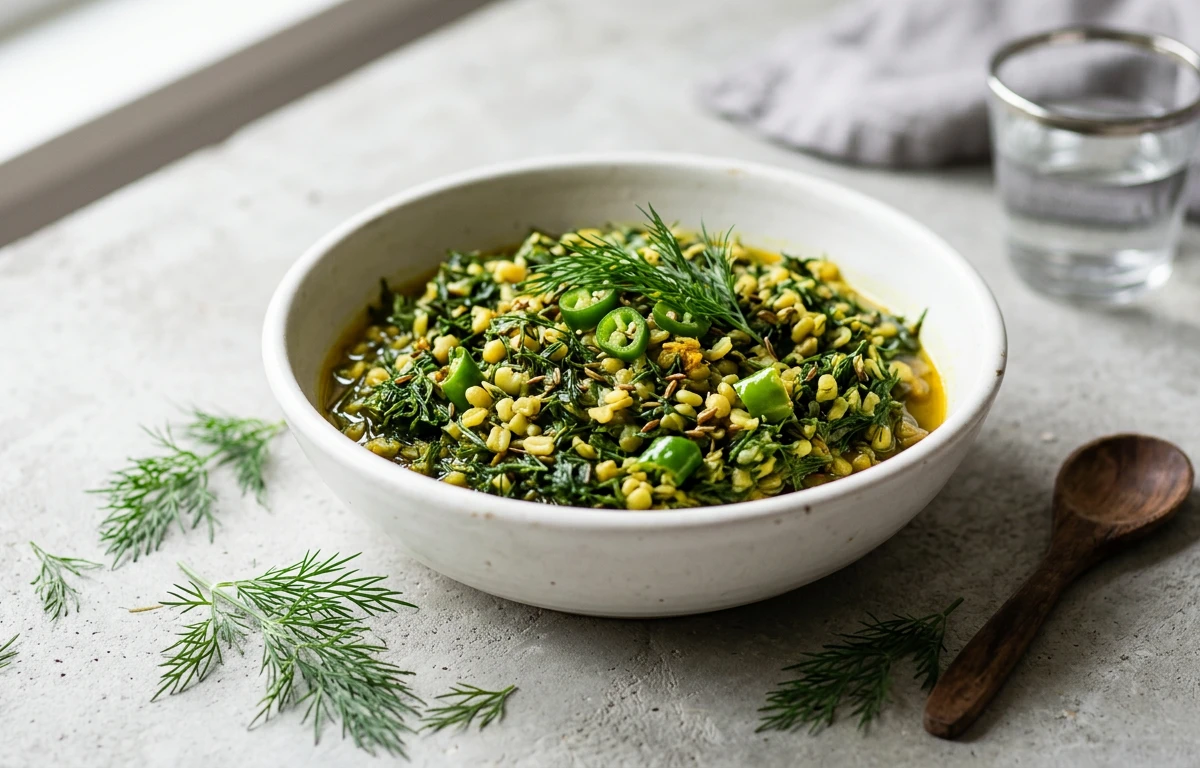
Chana Dal Amboli
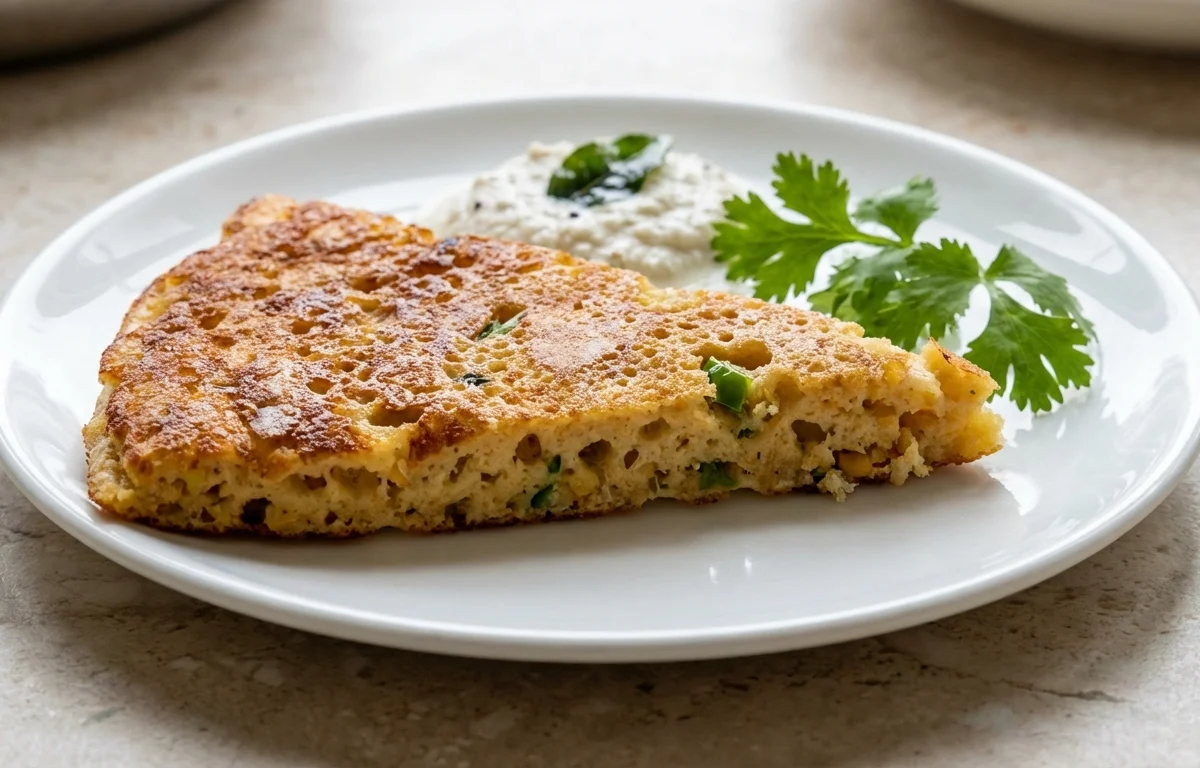
These soft, savory skillet pancakes are made with soaked chana dal and rice, then lightly fermented for a gentle tang. They cook up tender in the middle with crisp golden edges and pair well with chutney or a simple podi.
For 8 servings
- prep · ~360 min
Soak the dal and rice.
1.Wash chana dal and rice well until the water runs mostly clear.2.Soak the chana dal, rice, and fenugreek seeds together in plenty of water for 6 hours.3.Rinse the poha quickly just before grinding.TIPA long soak helps the batter grind smoother and cook up softer. - mix · ~10 min
Grind the batter.
1.Drain the soaked chana dal, rice, and fenugreek seeds.2.Add them to a grinder with poha, green chili, ginger, and cumin seeds.3.Add a little water and grind to a smooth, pourable batter that is slightly thicker than dosa batter. - rest · ~480 min
Ferment the batter.
Transfer the batter to a deep bowl, cover loosely, and leave it in a warm place for 8 hours until lightly risen and faintly tangy.
TIPDo not over-ferment. Amboli tastes best with a mild sourness, not a sharp one. - mix · ~2 min
Season and loosen the batter.
Stir the fermented batter gently and add salt. If needed, mix in a little water so it falls thickly from the ladle and spreads on its own into a small pancake.
- fry · ~25 min
Cook the amboli.
1.Heat a tawa or heavy pan over medium heat and lightly grease it with oil.2.Pour a ladle of batter in the center and let it spread into a small thick round; do not spread it thin like dosa.3.Drizzle a little oil around the edges, cover, and cook until the top looks set and the bottom is golden, 2 to 3 minutes.4.Flip and cook the second side for 1 to 2 minutes until lightly golden.5.Repeat with the remaining batter to make 8 amboli.TIPKeep the heat medium. High heat browns the outside too fast and leaves the center undercooked. - serve
Serve the chana dal amboli hot.
What to keep in mind.
7 tips from the recipe — small details that make a real difference to the final dish.
- 1Grind the batter smooth but keep it slightly thicker than dosa batter so the amboli stays soft and fluffy, not flat.
- 2After fermentation, stir gently; beating the batter hard can knock out the trapped air that makes the texture tender.
- 3If the batter does not spread on its own into a small round, add water a spoon at a time rather than thinning it all at once.
- 4Covering the pan while the first side cooks helps the thick center steam through before the base gets too dark.
- 5Use medium heat throughout; if the tawa is too hot, the edges crisp before the middle of the dal batter cooks properly.
- 6For the best contrast, serve immediately while the edges are golden and crisp and the center is still soft.
- 7Leftover batter keeps well in the fridge for about a day; let it sit out briefly and stir once before making the next batch.
Adapt it for your goals.
Onion-coriander
Mix finely chopped onion and coriander into the fermented batter for sweeter bite and more aroma, great for a heartier breakfast.
spicierSpicier
Increase green chili or add crushed black pepper for a sharper heat that pairs well with plain coconut chutney.
no fermentNo-ferment
Make it the same day by resting the batter briefly instead of fermenting; the amboli will be less tangy but still soft.
mixed milletMixed-millet
Replace part of the rice with little millet or foxtail millet for a nuttier taste and a more rustic texture.
Why this is on our healthy list.
Protein-Rich Dal Base
Chana dal makes these pancakes more filling and adds plant protein, making them more sustaining than a rice-heavy batter alone.
Gentle Fermented Batter
The light fermentation can make the batter taste brighter and may help make the dal-rice mixture easier to digest for some people.
Balanced Grain and Legume Mix
Using both rice and chana dal gives a balanced texture while combining grains and pulses in one traditional dish.
Aromatics With Purpose
Ginger, green chili, cumin, and fenugreek bring flavor and warmth without needing heavy sauces or rich toppings.
Frequently asked questions
The batter may be too thin, too coarse, or the pan too hot. Keep the batter slightly thick, grind it smooth, and cook covered on medium heat.



.webp)