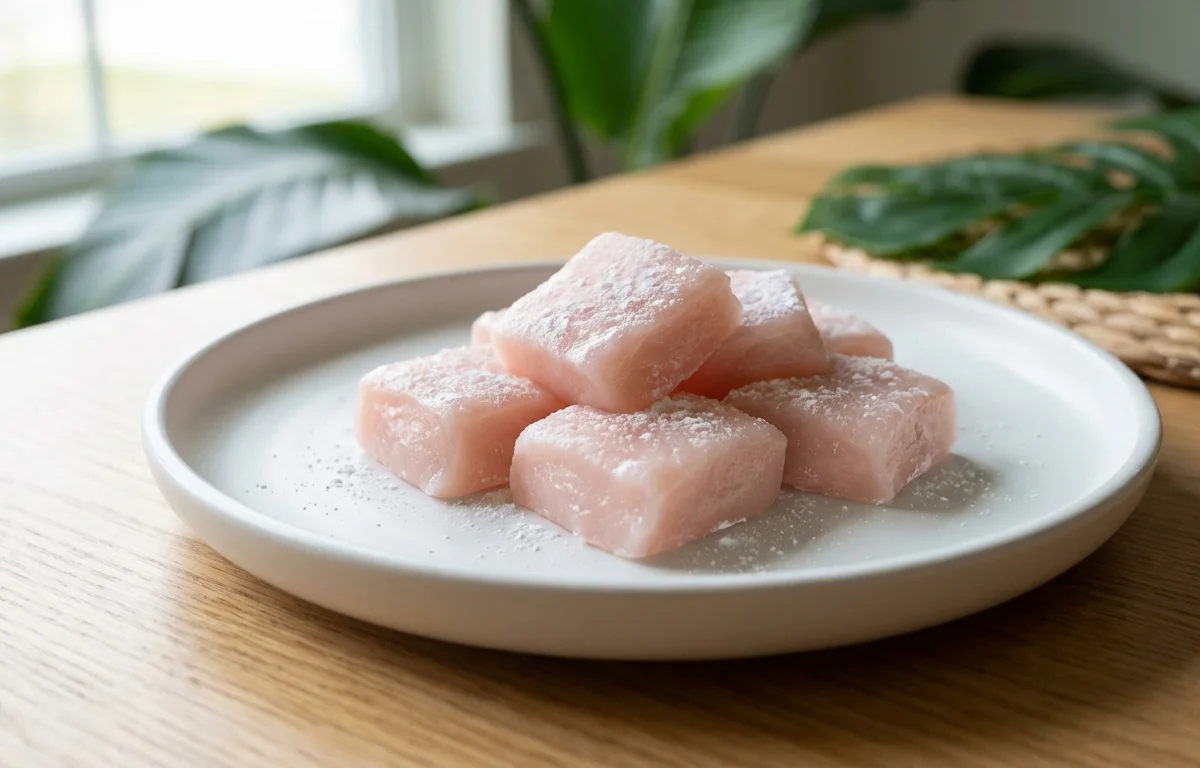
Chichi Dango
Soft, chewy coconut mochi cakes with a delicate sweetness that melts in your mouth. This beloved Hawaiian treat combines sweet rice flour and coconut milk into tender little squares, perfect for snacking, celebrations, or a light dessert.
For 8 servings
- prep
Preheat oven and prep the pan.
1.Preheat the oven to 325°F (160°C).2.Line a 9x9 inch baking pan with parchment paper, leaving some overhang on the sides for easy lifting later. - mix · ~2 min
Mix the wet ingredients.
In a large mixing bowl, whisk together the coconut milk, water, sugar, vanilla extract, and salt until the sugar is mostly dissolved and the mixture is smooth.
- mix · ~3 min
Add the mochiko and stir until smooth.
Gradually add the mochiko (sweet rice flour) to the wet mixture, whisking continuously to prevent lumps. Stir until you have a smooth, pourable batter with no dry pockets of flour remaining.
TIPThe batter will be fairly thin — that's exactly what you want. - bake · ~30 min
Bake for 30 minutes.
Pour the batter into the prepared baking pan. Bake on the middle rack at 325°F for 30 minutes, until the top is set and the edges begin to pull away slightly from the sides.
- bake · ~25 min
Cover with foil and bake 25 more minutes.
Remove the pan from the oven and cover loosely with aluminum foil to prevent the top from browning too much. Return to the oven and bake for an additional 25 minutes, until the mochi is firm and set through.
TIPThe mochi is done when a toothpick inserted in the center comes out clean. - rest · ~60 min
Cool completely before cutting.
Remove the pan from the oven and let the mochi cool in the pan at room temperature for about 1 hour. Once fully cooled, use the parchment overhang to lift the slab out onto a cutting board.
TIPDon't rush this — cutting warm mochi will result in a sticky, messy disaster. - prep · ~5 min
Cut into pieces and dust with potato starch.
1.Dust the top of the cooled mochi slab lightly with potato starch to prevent sticking.2.Use a plastic knife (or a regular knife coated with potato starch) to cut the mochi into 8 rectangular pieces or small squares.3.Toss each piece gently in a light coating of potato starch, shaking off any excess.TIPA plastic knife cuts through mochi much more cleanly than a metal one.
What to keep in mind.
6 tips from the recipe — small details that make a real difference to the final dish.
- 1Use a plastic knife to cut the mochi cleanly without sticking.
- 2Let the mochi cool completely for at least 1 hour before cutting to avoid a gummy mess.
- 3Shake the can of coconut milk well before measuring to incorporate the cream.
- 4Cover with foil halfway through baking to keep the top pale and tender.
- 5Store leftover chichi dango in an airtight container at room temperature for up to 3 days.
- 6Dust your cutting board lightly with potato starch to prevent sticking while slicing.
Adapt it for your goals.
Matcha chichi dango
Whisk 1 tablespoon of matcha powder into the mochiko before adding the wet ingredients for a subtly bitter, earthy green tea twist.
Ube chichi dangoUbe chichi dango
Add 1 teaspoon of ube extract and a drop of purple food coloring to the wet mixture for a vibrant purple color and a hint of nutty, vanilla-like flavor.
Vegan versionVegan version
Substitute the sugar with an equal amount of organic cane sugar (ensure it's vegan-friendly) — all other ingredients are already plant-based.
Lower sugar chichi dangoLower-sugar chichi dango
Reduce the sugar to 1 cup and replace the remaining ½ cup with a sugar substitute like monk fruit sweetener for a less sweet treat.
Why this is on our healthy list.
Coconut-based energy
Full-fat coconut milk provides healthy medium-chain triglycerides (MCTs) that offer a quick source of energy.
Gluten-free dessert
Made with mochiko (sweet rice flour), this treat is naturally gluten-free and safe for those with celiac disease or gluten sensitivity.
Low in sodium
With just a pinch of salt, chichi dango is a very low-sodium sweet treat.
Frequently asked questions
Mochiko is a specific type of sweet glutinous rice flour that gives chichi dango its signature chewy texture. Regular rice flour won't work as it lacks the same starch structure.