Chopped Liver on Rye Toast
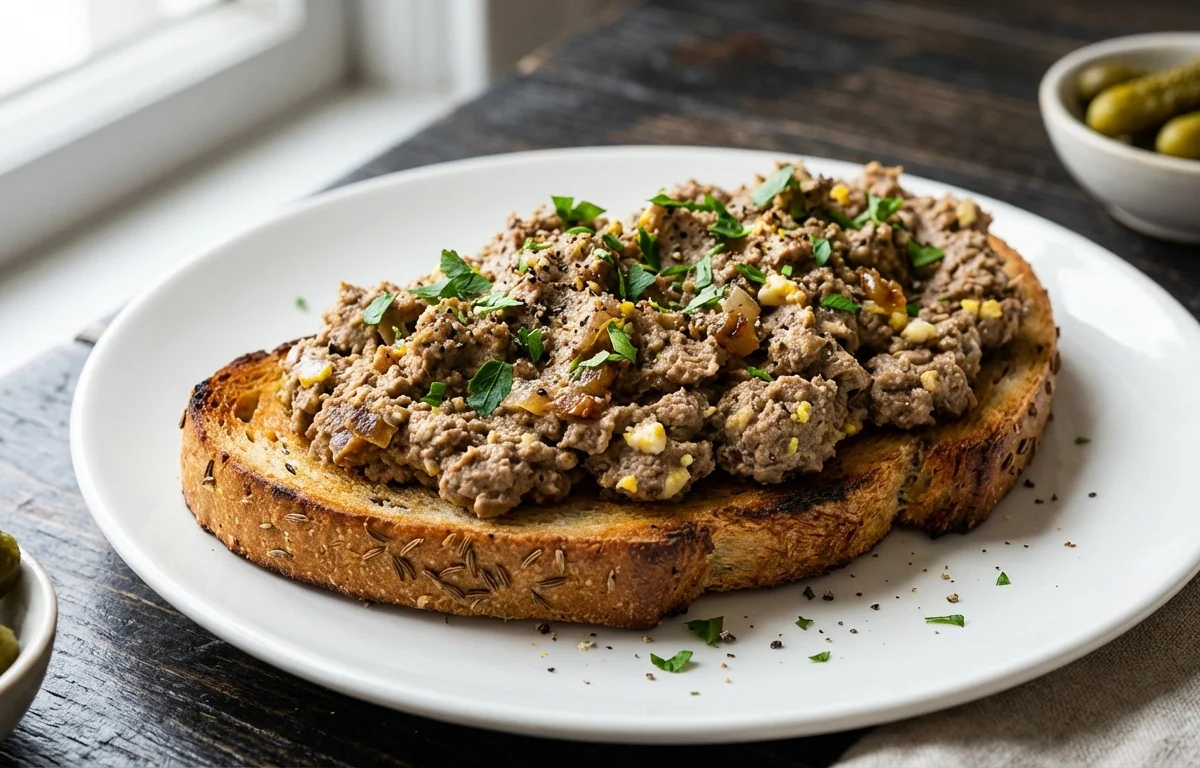
A classic Jewish-American deli staple featuring finely chopped, schmaltzy chicken livers with caramelized onions and hard-boiled egg. Served generously on crisp toasted rye bread, it's rich, savory, and deeply satisfying.
For 4 servings
- boil · ~12 min
Hard boil the eggs.
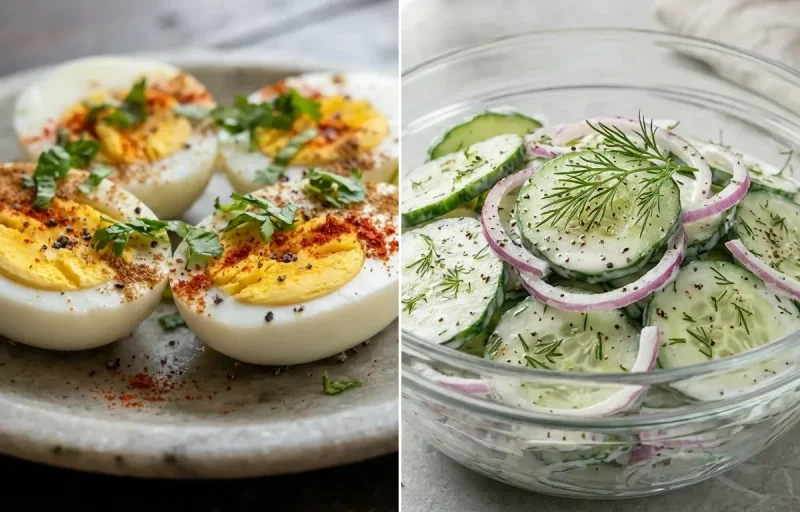
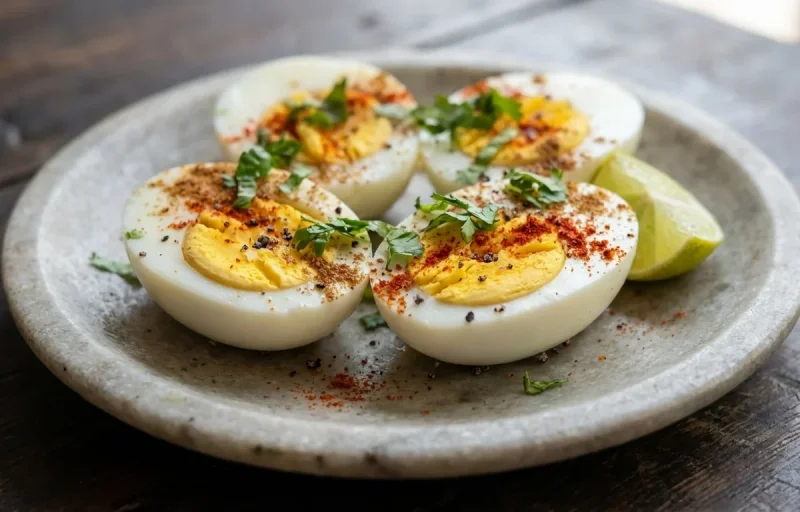
Place eggs in a saucepan, cover with cold water, and bring to a rolling boil. Cover, remove from heat, and let sit for 10 minutes. Transfer to ice water, peel, and set aside.
- saute · ~15 min
Caramelize the onions.
Heat 2 tablespoons of schmaltz in a large skillet over medium heat. Add the chopped onions and a pinch of salt. Cook, stirring occasionally, until deeply golden brown and sweet, about 12-15 minutes. Transfer to a plate.
- fry · ~6 min
Sauté the chicken livers.
Add the remaining tablespoon of schmaltz to the same skillet and increase heat to medium-high. Season livers with salt and pepper. Cook in a single layer for 2-3 minutes per side, until browned outside but still slightly pink inside. Do not overcook.
TIPLivers should be pink in the center; overcooking makes them grainy and bitter. - mix · ~3 min
Chop the liver mixture.
On a large cutting board, combine the cooked livers, caramelized onions, and peeled hard-boiled eggs. Using a large chef's knife, chop everything together by hand until finely minced and uniform in texture. Do not use a food processor; it should have a slightly textured, coarse consistency.
TIPHand-chopping preserves texture — a food processor turns it into a smooth paste. - mix · ~1 min
Adjust seasoning and chill.
Taste the chopped liver and adjust salt and pepper as needed. Transfer to a bowl, cover, and refrigerate for at least 30 minutes to let the flavors meld.
- bake · ~5 min
Toast the rye bread.
Toast rye bread slices until golden and crisp. Cut each slice in half on the diagonal.
- assemble · ~2 min
Assemble and serve.
Spread a generous mound of chopped liver onto each rye toast half. Serve immediately at room temperature or slightly chilled.
What to keep in mind.
6 tips from the recipe — small details that make a real difference to the final dish.
- 1For the best texture, chill the chopped liver for at least 30 minutes before serving to let the flavors meld.
- 2When sautéing livers, keep them slightly pink inside; overcooking makes them grainy and bitter.
- 3Always hand-chop the mixture with a chef's knife — a food processor will create a pasty, mushy texture.
- 4Use high-quality schmaltz (rendered chicken fat) for authentic depth; substitute duck fat if unavailable.
- 5Toast the rye bread until very crisp so it holds up against the rich, moist chopped liver.
- 6Let the caramelized onions cool slightly before chopping to avoid steaming the liver mixture.
Adapt it for your goals.
Low-oil
Replace schmaltz with a neutral oil like avocado oil and use only 1 tablespoon. Reduce calories while keeping the savory onion and liver flavor intact — ideal for lighter eating.
high proteinHigh-protein
Add 2 extra hard-boiled eggs and replace one rye toast per serving with cucumber slices or endive leaves. Increases protein while lowering carbs.
jainJain
Omit the eggs and replace schmaltz with ghee or oil. Use only the livers and deeply caramelized onions for a Jain-friendly version that still tastes authentic.
veganVegan
Substitute chicken livers with 400g of firm tofu (pressed, crumbled) and use 3 tablespoons of olive oil instead of schmaltz. Sauté tofu with onions and a splash of soy sauce for a rich, umami spread.
Why this is on our healthy list.
Rich in Iron
Chicken liver is one of the most concentrated dietary sources of heme iron, which supports healthy red blood cells and energy levels.
High in Vitamin A
Chicken liver provides a significant amount of preformed vitamin A, essential for immune function, vision, and skin health.
Good Source of Choline
Both eggs and liver supply choline, an important nutrient for brain health and liver function.
Contains B Vitamins
This dish delivers B12, B6, and folate from the liver and eggs, supporting metabolism and nerve function.
Frequently asked questions
It's not recommended; a food processor creates a smooth, pasty texture rather than the traditional coarse, slightly chunky consistency that makes chopped liver distinctive.