Dahi Bhalla
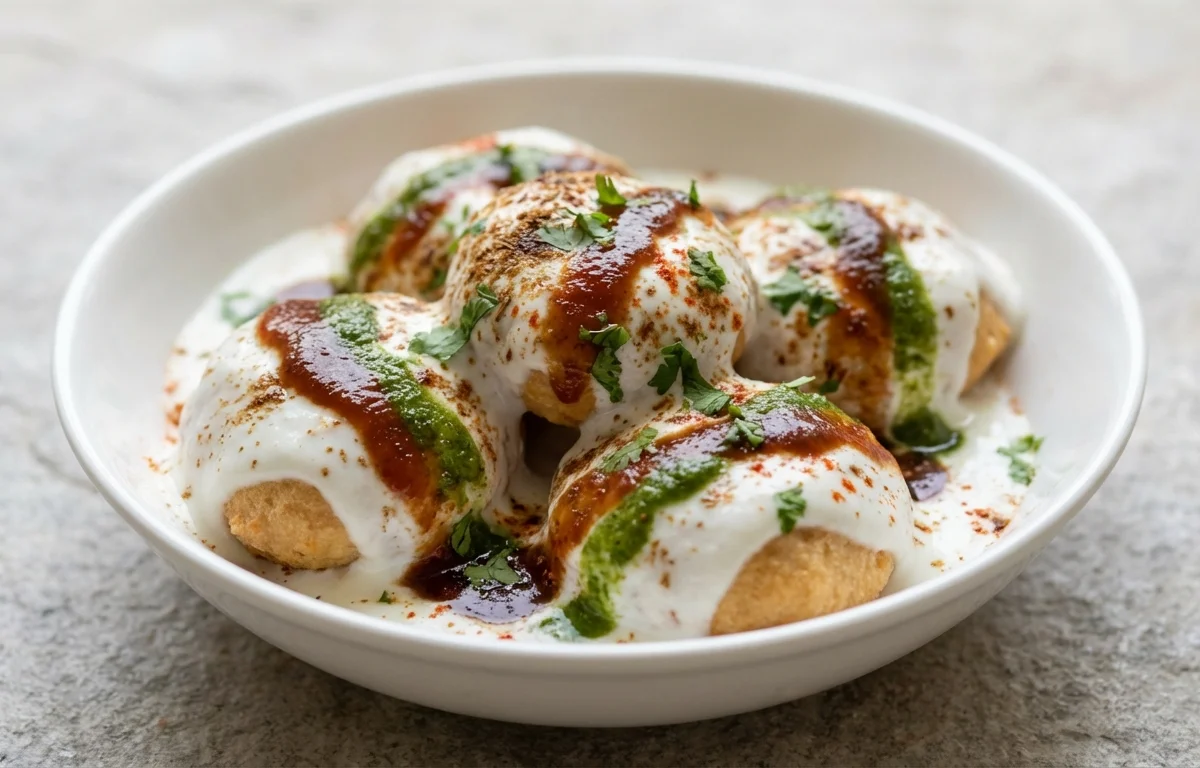
Soft lentil dumplings soaked until tender, then topped with chilled yogurt, sweet tamarind chutney, and gentle spices. This festive North Indian favorite brings creamy, tangy, sweet, and savory flavors to one plate.
For 8 servings
- prep · ~480 min
Soak the lentils.
Wash the urad dal and moong dal well. Soak them in plenty of water for 8 hours or overnight, then drain completely before grinding.
- mix · ~7 min
Grind the batter.
1.Add the soaked urad dal, moong dal, ginger, green chili, and 2 tbsp water to a grinder.2.Grind to a thick, smooth batter, adding only a little extra water if needed.3.Transfer to a bowl and mix in 0.25 tsp salt.4.Beat the batter for 2 to 3 minutes until it looks light and airy.TIPKeep the batter thick. A loose batter makes flat, heavy bhallas. - fry · ~15 min
Fry the bhallas.
1.Heat the oil for frying over medium heat.2.Drop small portions of batter into the hot oil using wet fingers or a spoon.3.Fry in batches, turning gently, until the bhallas are puffed and pale golden on all sides.4.Lift them out and let them drain briefly.TIPDo not overcrowd the pan or the bhallas will not puff evenly. - rest · ~15 min
Soak the bhallas in warm water.
Place the fried bhallas in 4 cups warm water and let them soak for 15 minutes until soft. Lift each one gently and press lightly between your palms to remove excess water.
- simmer · ~5 min
Make the tamarind chutney.
In a small pan, simmer the tamarind paste, jaggery, 0.5 cup water, and cumin powder for 4 to 5 minutes until slightly thick and glossy. Cool before using.
- mix · ~3 min
Prepare the yogurt topping.
Whisk the yogurt with sugar, the remaining 0.25 tsp salt, and black salt until smooth and lightly sweet-tangy. Chill if needed so it tastes cool and creamy.
- assemble · ~4 min
Assemble the dahi bhalla.
1.Arrange 2 soaked bhallas on each serving plate or in a shallow bowl.2.Spoon plenty of yogurt over them so they are well covered.3.Drizzle tamarind chutney on top.4.Finish with roasted cumin powder and red chili powder. - serve
Serve chilled or slightly cool.
What to keep in mind.
8 tips from the recipe — small details that make a real difference to the final dish.
- 1Drain the soaked dals very well before grinding so the batter stays thick enough to puff.
- 2Beat the batter until it turns lighter in color; that trapped air is what makes bhallas soft.
- 3Test one bhalla first: if it spreads in oil, the batter needs less water or more beating.
- 4Fry on medium heat only; high heat browns the outside before the center cooks through.
- 5Soak the fried bhallas in warm, not hot, water so they soften without breaking apart.
- 6Squeeze each soaked bhalla gently between your palms to remove water without crushing its shape.
- 7Chill the whisked yogurt before assembling so the final dahi bhalla tastes creamy and refreshing.
- 8Make the tamarind chutney ahead and cool it fully; warm chutney can thin the yogurt layer.
Adapt it for your goals.
Low-oil
Shape small bhallas in an appe pan instead of deep-frying for a lighter version that still soaks up yogurt well.
no chiliNo-chili
Skip the green chili and reduce red chili powder for a milder dahi bhalla that suits kids or spice-sensitive eaters.
chaat styleChaat-style
Top with extra tamarind chutney, more black salt, and a heavier sprinkle of cumin and chili for a sharper street-style finish.
veganVegan
Use a thick unsweetened plant-based yogurt; the tangy chutney and spices still give the dish its classic contrast.
Why this is on our healthy list.
Lentil-Based Protein
Urad dal and moong dal add plant protein, making the bhallas more satisfying than a purely starch-based snack.
Good Source of Ferment-Free Dairy
Yogurt brings protein and calcium while adding cooling richness that balances the chutney and spices.
Digestive Spice Support
Roasted cumin, black salt, ginger, and tamarind are commonly used in chaat for their warming, digestive character.
Frequently asked questions
The batter was likely too thin, not beaten enough, or the bhallas were fried too dark. A thick airy batter and proper warm-water soaking are key.



.webp)