
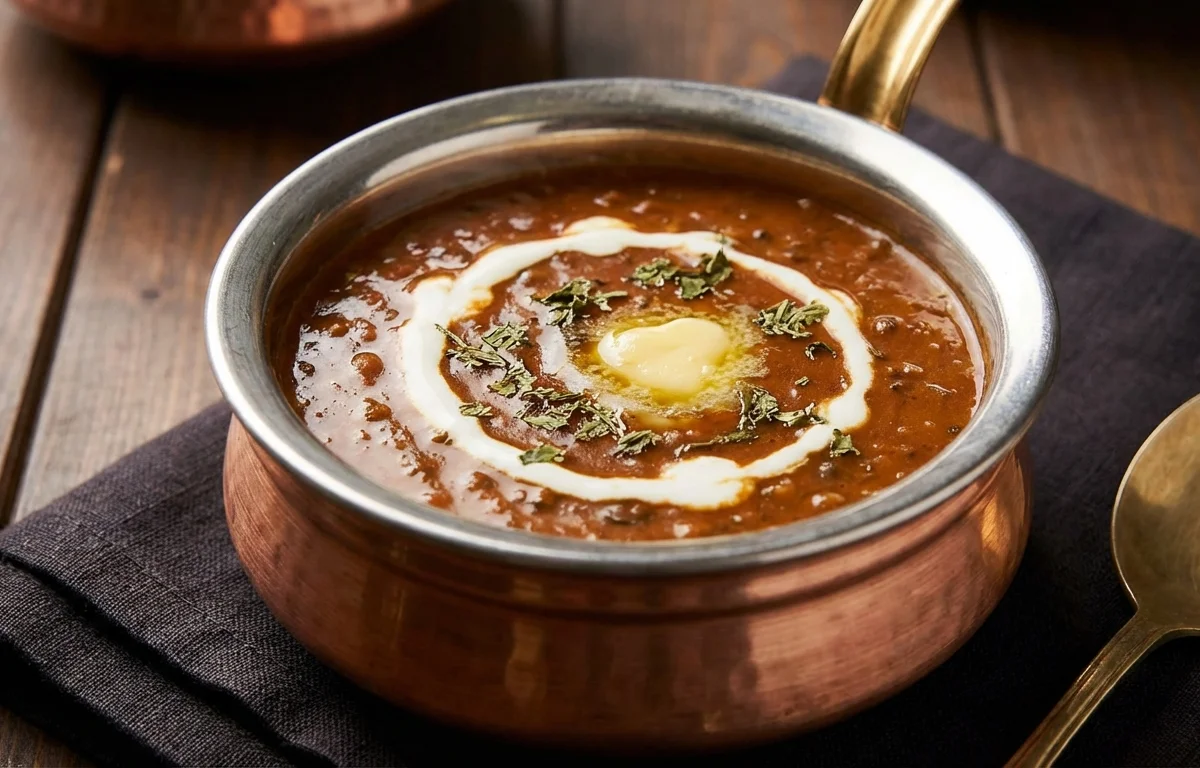
Dal Bukhara
Rich, slow-cooked black gram dal with a silky texture, gentle smokiness, and the deep flavor of butter, cream, ginger, and tomatoes. This restaurant-style North Indian favorite is hearty yet balanced enough to pair with naan or jeera rice.
For 4 servings
- prep · ~480 min
Soak the lentils and beans.
Rinse the urad dal and rajma well. Soak them in plenty of water overnight, then drain before cooking.
- pressure cook · ~50 min
Pressure cook the dal until very soft.
1.Add soaked urad dal and rajma to a pressure cooker with 4 cups water and salt.2.Cook on medium heat until the lentils are completely tender and creamy, about 35 to 40 minutes after full pressure is reached.3.Let the pressure release naturally, then lightly mash some of the dal for a thicker texture.TIPDal Bukhara should be softer than everyday dal. A little mashing helps create its signature velvety body. - saute · ~14 min
Cook the ginger, garlic, and tomatoes.
1.Heat 2 tbsp butter in a heavy pan over low to medium heat.2.Add chopped ginger, garlic, and green chili. Cook until fragrant, about 1 minute.3.Add tomato puree and cook slowly until thickened and glossy, about 10 to 12 minutes.4.Stir in red chili powder and garam masala.TIPKeep the heat moderate so the butter does not brown too much and the tomato base turns sweet, not sharp. - simmer · ~40 min
Slow cook the dal with the tomato base.
Add the cooked dal to the pan and mix well. Simmer uncovered on very low heat for 35 to 40 minutes, stirring often and adding a splash of water if it gets too thick.
TIPFrequent stirring prevents the dal from catching at the bottom and gives it a smoother finish. - simmer · ~4 min
Finish with cream and butter.
Stir in the fresh cream and the remaining 1 tbsp butter. Simmer for 3 to 4 minutes until the dal looks rich and silky.
- serve
Serve hot.
Serve Dal Bukhara hot with naan, tandoori roti, or jeera rice.
What to keep in mind.
7 tips from the recipe — small details that make a real difference to the final dish.
- 1Soak the whole urad and rajma overnight; under-soaked beans stay separate instead of melting into the creamy dal.
- 2Pressure cook until the urad crushes easily between your fingers; Dal Bukhara needs a softer finish than regular dal.
- 3Mash a small portion of the cooked dal before simmering to build the signature velvety, restaurant-style body.
- 4Cook the tomato puree until it turns thick and glossy, or the finished dal can taste tangy instead of deep and rounded.
- 5Use a heavy-bottomed pan for the long simmer so the dal doesn't catch while it reduces slowly.
- 6Stir especially along the base and corners every few minutes during the final simmer, where thick dal tends to stick first.
- 7If making ahead, reheat gently with a splash of hot water; the dal thickens a lot as it rests.
Adapt it for your goals.
Dhungar
For a stronger restaurant-style smokiness, finish the dal with a quick charcoal dhungar before serving.
low creamLow-cream
Reduce the cream and finish with just butter for a slightly lighter dal that still keeps its rich texture from the slow-cooked urad.
spicierSpicier
Add an extra green chili or a little more red chili powder if you want the richness balanced by more heat.
no onion no garlicNo-onion-no-garlic
Skip the garlic and increase ginger slightly for a sattvic-style version that still tastes full from butter, tomato, and slow simmering.
Why this is on our healthy list.
Protein-Rich Lentil Base
Whole urad dal and rajma make this dish filling and nourishing, with plant protein that helps turn it into a hearty main.
Good Source of Fiber
The whole lentils and beans provide fiber, which supports satiety and makes the dish more substantial than a cream-based gravy alone.
Contains Protective Aromatics
Ginger, garlic, and tomatoes add more than flavor, bringing beneficial plant compounds to the dish.
Frequently asked questions
You can, but the texture will be less creamy and the cooking time will increase. Overnight soaking gives the whole urad and rajma the soft, luscious finish this dish needs.


