Dark Rye Bread
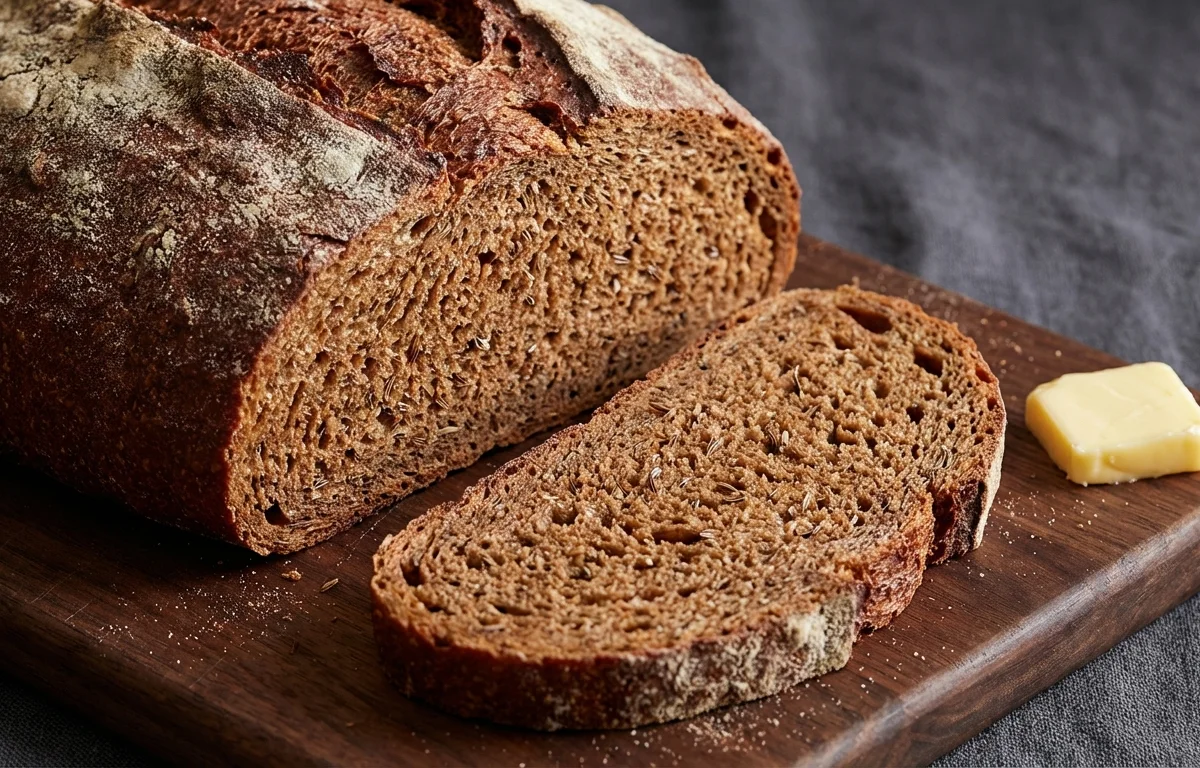
A deeply flavorful, dense loaf with a mahogany crust and a soft, slightly chewy crumb. Molasses and caraway seeds give it that classic deli-style taste, perfect for hearty sandwiches or simply toasted with butter. The kitchen fills with the most incredible aroma while this bakes.
For 12 servings
- prep · ~5 min
Bloom the yeast.
In a large mixing bowl or the bowl of a stand mixer, combine the warm water and molasses. Stir in the instant yeast and let it sit for 5 to 10 minutes until it becomes foamy and fragrant.
- mix · ~2 min
Combine the dry ingredients.
In a separate medium bowl, whisk together the rye flour, all-purpose flour, cocoa powder, caraway seeds, and salt until evenly distributed.
- mix · ~3 min
Form the dough.
Add the melted butter and cider vinegar to the yeast mixture. Gradually add the dry ingredients to the wet ingredients. Mix with a wooden spoon or the dough hook on low speed until a shaggy, sticky dough forms.
TIPRye dough is naturally stickier than wheat dough. Resist the urge to add too much extra flour. - knead · ~8 min
Knead the dough until smooth.
Knead the dough on a lightly floured surface or with the dough hook on medium-low speed for 6 to 8 minutes. The dough will transform from shaggy to a smooth, slightly tacky ball that springs back when poked.
- rest · ~120 min
Let the dough rise until doubled.
Shape the dough into a ball. Place it in a lightly oiled bowl, turning it once to coat the top with oil. Cover the bowl with a clean kitchen towel and let it rise in a warm, draft-free place until doubled in size, about 1.5 to 2 hours.
TIPIf your kitchen is cold, place the covered bowl in a turned-off oven with just the light on to create a warm proofing environment. - rest · ~4 min
Punch down and shape the loaf.
Gently punch down the dough to release the gas. Turn it out onto a lightly floured surface and press it into a 9-inch oval. Fold the long sides in and roll it up tightly, pinching the seam to seal. Place the loaf seam-side down in a greased 9x5-inch loaf pan.
- rest · ~60 min
Proof the loaf.
Cover the loaf pan with the kitchen towel and let the dough rise a second time until it has crowned about 1 inch above the rim of the pan, about 45 to 60 minutes. Towards the end of this time, preheat the oven to 350°F.
TIPThe dough is properly proofed when a gentle poke with your finger leaves a slight indentation that slowly springs back. - bake · ~40 min
Bake the dark rye bread.
Place the loaf in the preheated oven and bake for 35 to 40 minutes. The bread is done when the top is a deep, dark brown, the loaf sounds hollow when tapped, and an instant-read thermometer inserted in the center registers 190°F.
- rest · ~120 min
Cool the bread completely.
Remove the pan from the oven and immediately turn the loaf out onto a wire rack. This prevents the crust from steaming and becoming soggy. Let the bread cool completely for at least 2 hours before slicing to allow the crumb to set properly.
TIPSlicing into warm bread will result in a gummy, compressed crumb. Patience is key here.
What to keep in mind.
6 tips from the recipe — small details that make a real difference to the final dish.
- 1Use dark rye flour (not light) for the deepest color and authentic deli-style flavor.
- 2Bloom the yeast until very foamy to ensure a strong rise despite the dense rye flour.
- 3Rye dough is naturally sticky; resist adding extra flour—wet hands or a bench scraper help shape it.
- 4Check doneness with an instant-read thermometer: 190°F in the center guarantees a fully baked crumb.
- 5Cool the loaf completely on a wire rack (at least 2 hours) before slicing to avoid a gummy texture.
- 6Store leftover bread in a paper bag at room temperature for up to 3 days; freeze slices for longer storage.
Adapt it for your goals.
Seeded Rye
Add 2 tablespoons of fennel seeds, sunflower seeds, or flaxseeds along with the caraway for extra crunch and nuttiness.
Sourdough RyeSourdough Rye
Replace the instant yeast with 1 cup of active sourdough starter and reduce the warm water to 1 cup for a tangier, more complex flavor.
Gluten Free FriendlyGluten-Free Friendly
Swap the all-purpose flour for a 1:1 gluten-free baking flour blend. Expect a slightly denser texture but still delicious.
Sweet RyeSweet Rye
Increase molasses to 1/3 cup and add 1/2 cup of raisins or dried currants for a sweeter, almost dessert-like loaf.
Why this is on our healthy list.
Rich in Dietary Fiber
Rye flour is naturally high in fiber, which aids digestion and helps you feel full longer with every slice.
Good Source of Iron
Molasses contributes a significant amount of iron, supporting healthy blood oxygen transport.
Contains Antioxidants
Cocoa powder adds polyphenols and flavonoids that can help combat oxidative stress.
Lower Glycemic Impact
Rye bread has a lower glycemic index than white or whole wheat bread, making it a better choice for steady energy.
Frequently asked questions
Rye flour contains less gluten than wheat, so the dough naturally rises less. Make sure your yeast is fresh and bloomed until foamy, and don't over-flour the dough during kneading.