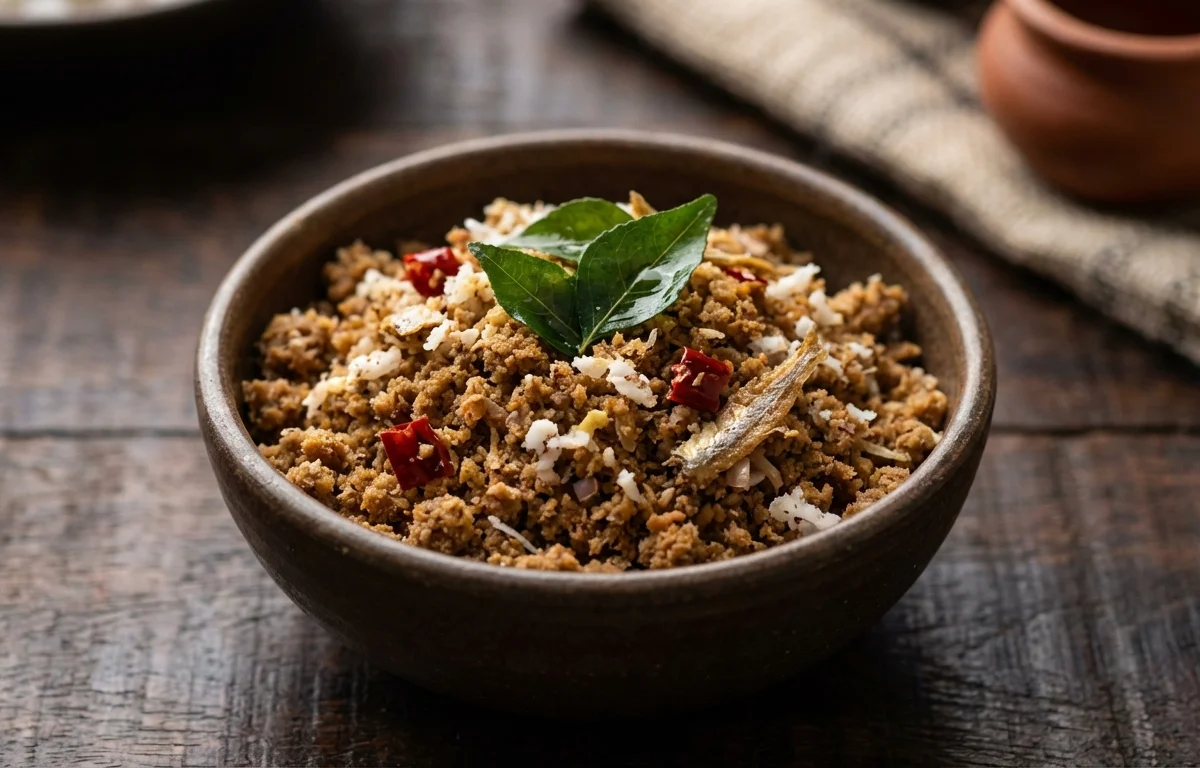
Dry Fish Chutney
A punchy coastal-style chutney made with dried fish, coconut, chilies, and tamarind. It is smoky, salty, and deeply savory, with a coarse texture that tastes especially good with rice, bhakri, or simple dal.
For 8 servings
- prep · ~5 min
Prepare the dried fish.
1.Check the dried fish for hard bones and remove them if needed.2.Wipe it clean with a dry cloth or quickly rinse and pat very dry.3.Break or cut the fish into small pieces so it fries evenly.TIPKeep the fish as dry as possible before frying so it turns crisp instead of steaming. - fry · ~6 min
Fry the fish and chilies.
1.Heat oil in a small pan over medium heat.2.Add the dried fish and fry until crisp and aromatic, stirring often.3.Add the dry red chili and fry for a few seconds until it darkens slightly.4.Take the pan off the heat and cool the mixture a little.TIPUse medium heat so the fish crisps gently without turning bitter. - mix · ~3 min
Grind the chutney.
1.Add the fried fish, fried chilies, coconut, onion, garlic, tamarind, and coriander leaves to a grinder jar.2.Pulse to a coarse chutney rather than a smooth paste.3.Taste and add the pinch of salt only if needed.4.Pulse once more to mix. - serve
Serve the dry fish chutney.
Transfer to a bowl and serve in small portions with hot rice, bhakri, or as a bold side with a simple meal.
What to keep in mind.
6 tips from the recipe — small details that make a real difference to the final dish.
- 1If you rinse the dried fish, pat it completely dry before frying so it crisps instead of softening in the pan.
- 2Fry the fish in a well-ventilated kitchen; proper crisping removes raw dried-fish notes and gives the chutney a cleaner taste.
- 3Add the red chilies only at the end of frying so they toast without burning and turning bitter.
- 4Pulse in short bursts and scrape the jar often; this keeps the chutney coarse rather than turning the coconut into a paste.
- 5Taste before adding any salt, because different dried fish can vary a lot in saltiness.
- 6For a longer fridge life, use very fresh coconut and keep the chutney fairly dry, not wet or spreadable.
Adapt it for your goals.
Extra-spicy
Use more dried red chilies or a hotter variety for a fiercer chutney that stands up especially well to plain rice or congee-like meals.
milderMilder
Reduce the chilies and increase coconut slightly for a gentler version with the same coastal flavor but less heat.
smokierSmokier
Toast the fish a little longer on medium heat until deeply crisp for a more intense, roasted flavor profile.
shallot versionShallot-version
Replace onion with finely chopped shallots for a sweeter, more traditional allium note that blends well with the dried fish.
Why this is on our healthy list.
Protein-Rich Side
Dried fish adds concentrated protein, making this chutney more sustaining than a vegetable-only condiment.
Good Fats from Coconut
Fresh coconut contributes richness and satisfying fats, helping the chutney feel filling in small portions.
Aromatic Plant Ingredients
Garlic, coriander, onion, chilies, and tamarind bring plant compounds and bold flavor without needing much oil.
Frequently asked questions
Yes, but only quickly if needed. Pat it very dry afterward, or it will steam in the pan and won’t turn crisp.