
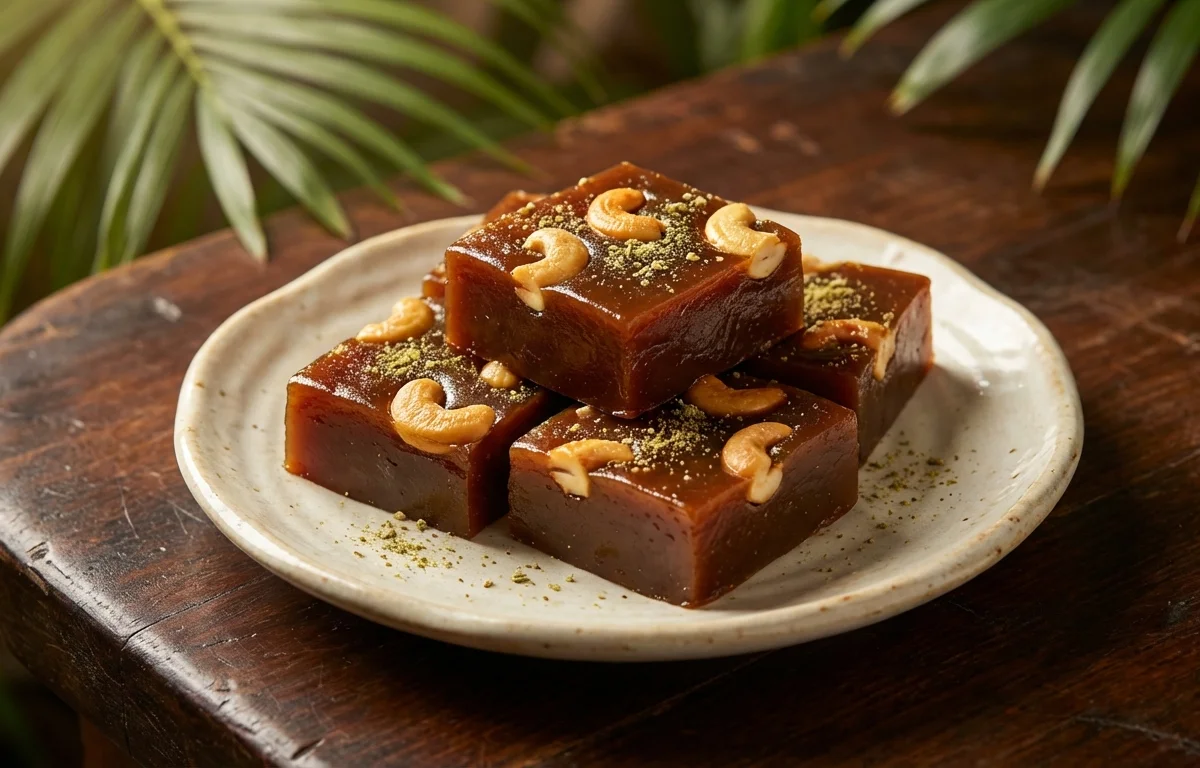
Goan Dodol
A rich Goan sweet made by slowly cooking coconut milk, jaggery, and rice flour until glossy and thick. It sets into soft, chewy slices with deep caramel notes and a gentle coconut flavor that makes it special at festivals.
For 8 servings
- prep · ~10 min
Prepare the coconut milk.
1.Blend the grated coconut with 2 cups water until coarse and milky.2.Strain through a fine sieve or cloth and press well to extract thick coconut milk.3.Mix the squeezed coconut with the remaining 1 cup water and strain again for a thinner second extract.4.Combine both extracts and keep aside.TIPPress the coconut well so you get full flavor and enough liquid for a smooth dodol. - mix · ~5 min
Mix the rice flour slurry.
Take a little of the prepared coconut milk in a bowl and whisk in the rice flour until smooth and lump-free. Add it back to the remaining coconut milk.
- boil · ~8 min
Melt the jaggery.
Add the jaggery to a heavy pan with the coconut milk mixture. Heat gently until the jaggery melts fully, then stir in the salt and cardamom powder.
- saute · ~40 min
Cook the dodol until thick.
1.Cook over low heat, stirring constantly so the mixture does not catch at the bottom.2.Scrape the sides and base of the pan as it thickens and turns glossy.3.Add half the ghee and keep stirring until the mixture starts leaving the sides of the pan.4.Cook until very thick, stretchy, and dark brown.TIPUse low heat throughout. High heat can make the jaggery catch and give the dodol a bitter taste. - assemble · ~3 min
Set the dodol.
Grease a small tray or plate with the remaining ghee. Spread the hot dodol evenly and smooth the top with a greased spoon or spatula.
- rest · ~60 min
Let it cool and firm up.
Cool completely at room temperature until set enough to slice cleanly.
- serve
Slice and serve the dodol.
What to keep in mind.
8 tips from the recipe — small details that make a real difference to the final dish.
- 1Whisk the rice flour with a small amount of coconut milk first; adding it dry will leave stubborn lumps in the dodol.
- 2Strain the melted jaggery mixture if your jaggery has grit or fibers, so the final slices set smooth and glossy.
- 3Use a heavy-bottomed kadai or pan, because the coconut-jaggery mixture catches easily during the long cooking.
- 4Stir right into the corners and scrape the base continuously once it thickens; that is where dodol starts sticking first.
- 5The dodol is ready to set when it turns deep brown, looks shiny, and pulls away from the sides in one mass.
- 6Grease the tray and the back of the spoon with ghee before spreading, otherwise the hot mixture will cling badly.
- 7Let it set fully at room temperature before cutting; chilling too early can make the texture firmer than traditional chewy dodol.
- 8Store slices in an airtight container with parchment between layers so they do not stick together.
Adapt it for your goals.
Vegan
Skip the ghee and grease the tray with coconut oil instead for a fully dairy-free version that still suits the coconut-rich sweet.
firmer setFirmer-set
Cook a little longer before pouring into the tray if you want neater, denser slices that hold shape better for gifting.
softer chewySofter-chewy
Stop cooking slightly earlier for a softer, more pudding-like chew if you prefer a less firm traditional sweet.
spicedSpiced
Increase the cardamom slightly or add a tiny pinch of nutmeg for a warmer festive aroma without changing the base character.
Why this is on our healthy list.
Naturally Gluten-Free Base
This sweet uses rice flour instead of wheat, making it suitable for those who avoid gluten-containing grains.
Coconut-Derived Goodness
Fresh coconut and coconut milk contribute natural fats and a small amount of fiber, adding richness and satiety.
Less Refined Sweetener Choice
Jaggery is a traditional sweetener that is less refined than white sugar and brings deeper flavor along with trace minerals.
Frequently asked questions
It usually means the mixture was not cooked long enough. Keep cooking on low heat until it is very thick, glossy, and leaves the sides of the pan.


