Goan Mackerel Uddamethi
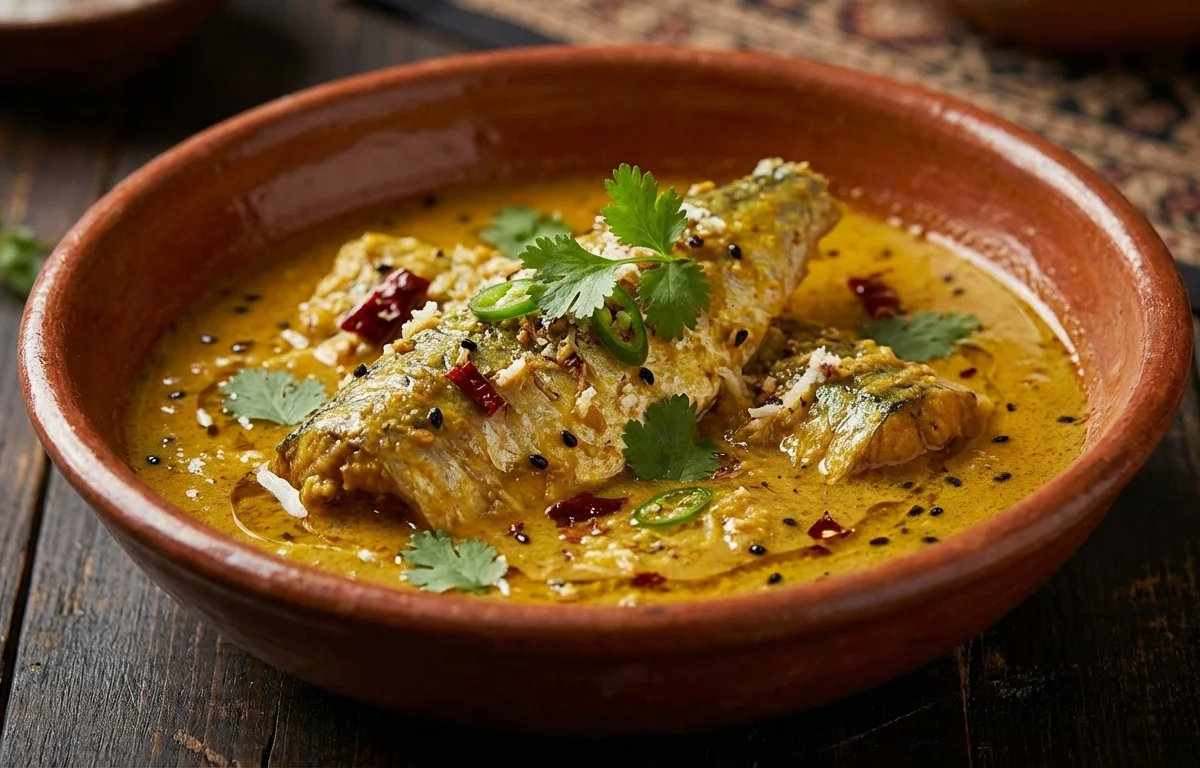
A tangy, fiery Goan-style mackerel curry where fresh mackerel steaks are gently simmered in a roasted coconut, fenugreek, and red chili paste. Coarsely ground spices and tamarind cut through the richness of the fish, creating a deeply aromatic, gravy-thick curry that captures the heart of coastal Goan cooking.
For 4 servings
- prep
Clean and prep the mackerel.
1.Rinse mackerel steaks under cold water and pat completely dry with paper towels.2.Rub with a pinch of salt and a small pinch of turmeric. Set aside. - roast
Roast the coconut and spices.
1.Heat a heavy-bottomed pan over medium-low heat. Add grated coconut, dried red chilies, coriander seeds, cumin seeds, fenugreek seeds, and turmeric powder.2.Dry-roast, stirring continuously, until the coconut turns deep golden brown and the spices are fragrant (4-5 min).3.Transfer to a plate immediately to stop the cooking. Let cool completely.TIPKeep the heat medium-low and stir constantly — fenugreek and coconut scorch easily and turn bitter. - prep
Grind the roasted masala.
1.Once cool, tip the roasted ingredients into a grinder.2.Add tamarind pulp and a splash of water. Grind to a coarse, thick paste (not too smooth — the curry should have some texture).3.Set the ground masala aside. - saute
Build the curry base.
1.In the same pan, heat coconut oil over medium heat.2.Add chopped onion and sauté until soft and translucent (4-5 min).3.Add ginger and garlic. Sauté until the raw smell disappears (1 min).4.Add chopped tomato and cook until soft and the oil starts to separate (3-4 min).5.Stir in the ground masala paste and sauté for 2 minutes. - simmer
Simmer the mackerel in the gravy.
1.Pour in water and add salt. Stir well and bring to a gentle boil.2.Gently slide the mackerel steaks and slit green chilies into the simmering gravy.3.Cover and cook on low heat for 8-10 minutes until the fish is just cooked through. Do not stir too much — shake the pan gently to avoid breaking the fish.TIPMackerel cooks fast. Check after 8 minutes; the flesh should flake easily. Overcooking makes it rubbery. - rest · ~5 min
Rest before serving.
Turn off the heat and let the curry rest, covered, for 5 minutes — this allows the flavors to settle and the fish to absorb the masala.
- serve
Serve with steamed rice.
Transfer to a serving bowl. Serve hot with plain steamed rice or rice bhakri.
What to keep in mind.
7 tips from the recipe — small details that make a real difference to the final dish.
- 1Choose firm, fresh mackerel with bright eyes and a clean sea scent for the best flavor.
- 2Dry-roast the coconut and spices on medium-low heat, stirring constantly, to avoid burning the fenugreek.
- 3Grind the roasted masala to a coarse paste — some texture adds authentic Goan character.
- 4Slide the mackerel steaks gently into the simmering gravy; shake the pan instead of stirring to keep fish intact.
- 5Check doneness after 8 minutes — the flesh should flake easily with a fork; overcooking makes it rubbery.
- 6Let the curry rest covered for 5 minutes after cooking so the fish absorbs the masala fully.
- 7This curry tastes even better the next day — store in the fridge and reheat gently.
Adapt it for your goals.
Lower-fat
Replace half the coconut with roasted chana dal (split chickpeas) for a lighter, slightly nutty gravy without sacrificing thickness.
kingfishKingfish
Substitute mackerel with kingfish (surmai) steaks — they hold up well and have a firmer, meatier texture.
veganVegan
Replace mackerel with thick slices of firm tofu or king oyster mushrooms; the robust masala and tamarind carry the dish beautifully.
extra fieryExtra-fiery
Add 2-3 more dried Kashmiri chilies and a pinch of black peppercorns to the roast for intensified heat and aroma.
Why this is on our healthy list.
Rich in Omega-3s
Mackerel is an excellent source of omega-3 fatty acids, which support heart and brain health.
Gut-Friendly Spices
Fenugreek, cumin, and coriander aid digestion and reduce inflammation.
Antioxidant Boost
Turmeric and tamarind provide curcumin and polyphenols that help fight oxidative stress.
Healthy Fats from Coconut
Coconut oil and fresh coconut supply medium-chain triglycerides (MCTs) for sustained energy.
Frequently asked questions
Fresh grated coconut gives the best flavor and texture. If using dried, rehydrate in warm water first; avoid sweetened or desiccated coconut.