
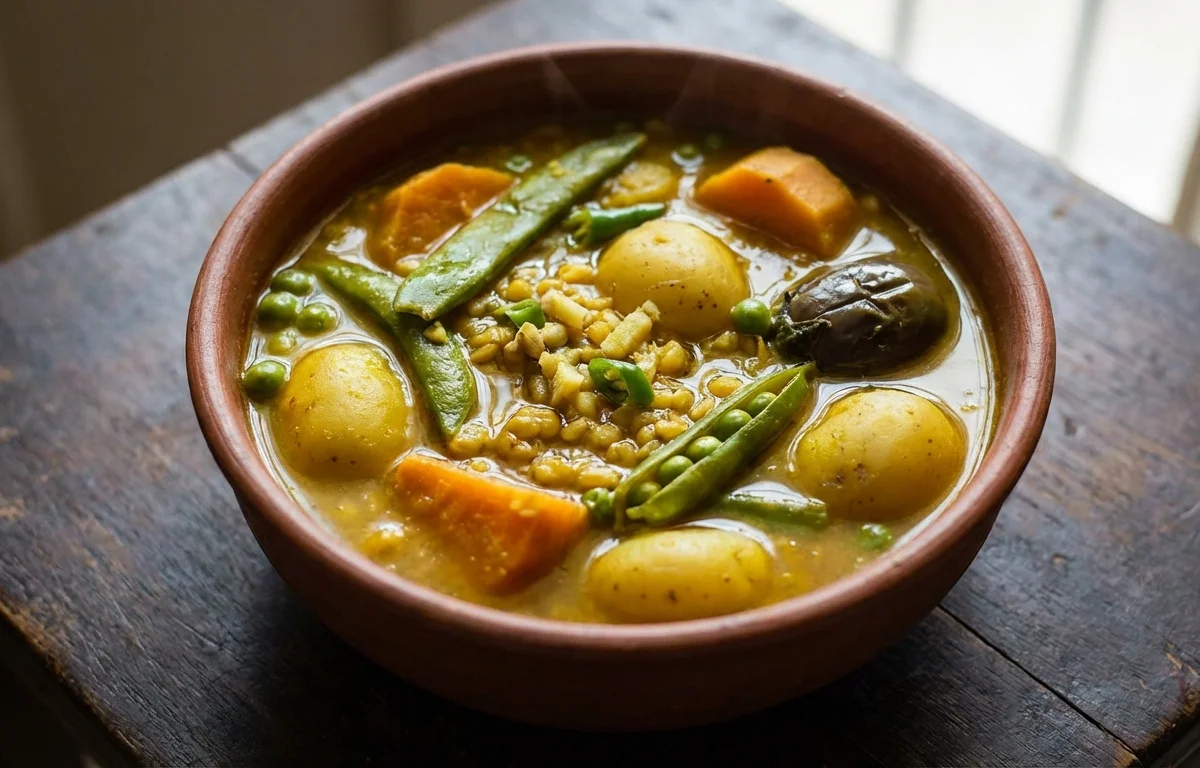
Gota Sheddho
A comforting Bengali-style boiled mixed vegetable dish where whole seasonal vegetables are cooked until tender, then lightly mashed with mustard oil, green chili, and salt. Simple, rustic, and deeply satisfying with hot rice.
For 4 servings
- prep · ~15 min
Prepare the vegetables.
1.Peel the potato, sweet potato, and green banana.2.Keep the eggplant whole if small, or cut it in half if large.3.Cut the green banana into large chunks so it holds its shape while boiling.4.Shell the green peas and keep the green chili ready. - boil · ~25 min
Boil the vegetables until tender.
1.Add water to a deep pot and bring it to a boil.2.Add potato, sweet potato, green banana, eggplant, green peas, and 1 whole green chili.3.Cover and cook on medium heat until all the vegetables are soft and cooked through.4.Drain any excess water if needed and let the vegetables sit for 2 minutes.TIPKeep the vegetables in large pieces so they do not break apart too early in the pot. - mix · ~5 min
Mash the vegetables with mustard oil.
1.Transfer the boiled vegetables to a wide bowl or plate.2.Add salt, mustard oil, and the remaining green chili.3.Mash lightly with the back of a spoon or clean fingers, keeping some texture.4.Mix well so the mustard oil coats all the vegetables evenly.TIPDo not over-mash; Gota Sheddho tastes best when it stays rustic and slightly chunky. - serve
Serve warm with hot rice.
What to keep in mind.
7 tips from the recipe — small details that make a real difference to the final dish.
- 1Boil the vegetables in large pieces so the eggplant and sweet potato do not disintegrate before mashing.
- 2Drain well before mashing; excess water will dilute the mustard oil and make the sheddho taste flat.
- 3Add the mustard oil while the vegetables are still warm so its sharp aroma spreads through the mash.
- 4Mash lightly and unevenly, leaving some peas and potato pieces intact for the classic rustic texture.
- 5If using a stronger raw mustard oil, drizzle it in gradually and taste as you mix.
- 6Serve immediately with hot rice, as the aroma of mustard oil and green chili is brightest when freshly mashed.
- 7Leftovers keep well chilled for a day; bring back to room temperature or warm very gently before serving.
Adapt it for your goals.
Jhal
Mash in extra green chili for a hotter, sharper version that stands up especially well to plain steamed rice.
low oilLow-oil
Use a smaller drizzle of mustard oil for a lighter finish while keeping the boiled vegetable base intact.
mixed seasonalMixed-seasonal
Add seasonal Bengali vegetables like pumpkin or flat beans, keeping them in large pieces so the mash stays rustic.
no eggplantNo-eggplant
Skip the eggplant if you prefer a firmer texture; the potatoes, plantain, and peas still make a satisfying sheddho.
Why this is on our healthy list.
Vegetable-Rich Comfort Food
This dish combines several vegetables in one meal, offering a range of plant nutrients and natural fibre.
Fibre From Root Veg and Plantain
Potato, sweet potato, green banana, eggplant, and peas help make the dish filling and satisfying.
Plant-Based and Simple
Made entirely from vegetables, chili, salt, and mustard oil, it fits well into a straightforward plant-based meal.
Frequently asked questions
Yes, you can boil the vegetables ahead and refrigerate them, but mash with mustard oil and chili just before serving for the best aroma.



-curry.webp)
.webp)