Guar Fali Sabzi
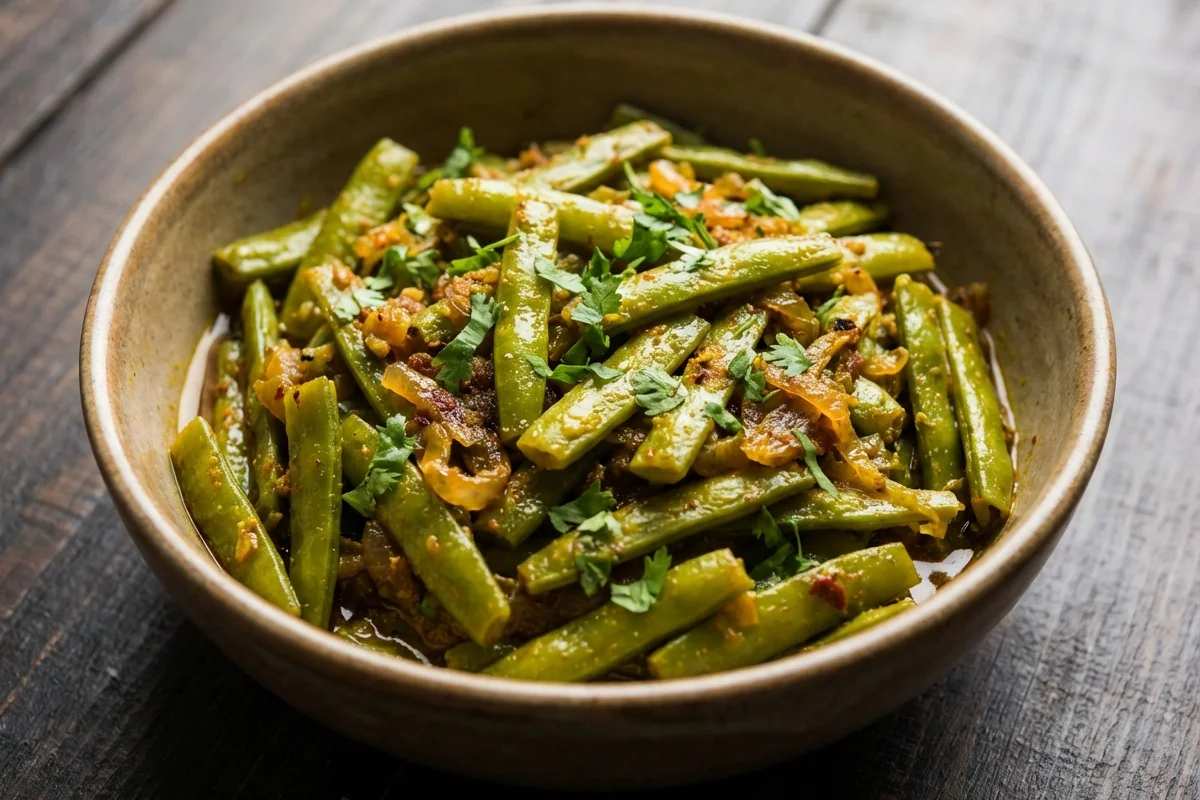
A simple North Indian dry vegetable made with cluster beans, onions, tomatoes, and everyday spices. It cooks down into a lightly spiced sabzi with a pleasant bite and pairs beautifully with roti or dal-rice.
For 4 servings
- prep · ~7 min
Prepare the guar fali.
1.Wash the guar fali well under running water.2.Trim both ends and remove any tough strings.3.Chop into small even pieces so they cook evenly. - saute · ~5 min
Cook the tempering and onions.
1.Heat oil in a kadai over medium heat.2.Add cumin seeds and let them crackle for a few seconds.3.Add asafoetida, chopped onion, green chili, and ginger.4.Cook until the onion turns soft and lightly golden.TIPKeep the heat medium so the cumin and asafoetida do not burn. - saute · ~4 min
Add tomato and spices.
1.Add chopped tomato and mix well.2.Add turmeric powder, coriander powder, red chili powder, and salt.3.Cook until the tomato softens and the masala looks blended. - simmer · ~15 min
Cook the guar fali until tender.
1.Add the chopped guar fali and coat it well with the masala.2.Pour in water and stir once.3.Cover the pan and cook on low heat until the beans are tender but not mushy.4.Stir once or twice in between so the sabzi does not stick.TIPIf the beans are older and tougher, add a splash more water and cook a few minutes longer. - garnish · ~1 min
Finish with dry mango powder and coriander leaves.
Uncover the pan, let any extra moisture dry out, then sprinkle dry mango powder and coriander leaves. Mix gently and cook for 1 minute more.
- serve
Serve hot.
Serve the guar fali sabzi hot with roti, phulka, or as part of a simple everyday meal.
What to keep in mind.
7 tips from the recipe — small details that make a real difference to the final dish.
- 1Chop the guar fali into small, even pieces so the sabzi cooks uniformly without some bits staying fibrous.
- 2If your cluster beans are mature, remove the side strings carefully or the final sabzi can taste tough.
- 3Cook covered on low heat after adding water; high heat can dry the pan before the beans turn tender.
- 4Stir only once or twice while simmering so the beans soften without breaking down into a mash.
- 5Let the extra moisture evaporate fully before adding amchur to keep this sabzi nicely dry, not saucy.
- 6Add the dry mango powder right at the end to preserve its bright tang and avoid a dull, cooked-out flavor.
- 7This sabzi tastes even better after 15 to 20 minutes of resting, when the beans absorb the onion-tomato masala.
Adapt it for your goals.
Jain
Skip onion and asafoetida, and build the base with extra tomato, ginger, green chili, and cumin for a Jain-friendly version.
low oilLow-oil
Use less oil and add a small splash of water while sautéing the onion-tomato masala; useful for a lighter everyday sabzi.
aloo guarAloo-guar
Add small diced potatoes along with the cluster beans for a heartier sabzi that pairs especially well with phulka.
garlic flavoredGarlic-flavored
Add a little chopped garlic with the ginger for a deeper, more robust home-style North Indian flavor.
Why this is on our healthy list.
Fiber-Rich Vegetable Dish
Cluster beans bring plenty of natural fiber, making this dry sabzi a satisfying addition to a simple meal with roti or dal-rice.
Plant-Based Everyday Side
Made mainly from cluster beans, onion, tomato, and spices, this is a naturally plant-forward side dish for regular meals.
Digestive Spice Support
Ginger, cumin, and asafoetida are classic Indian cooking ingredients often used to make bean and vegetable dishes feel easier to digest.
Moderate Oil Preparation
The sabzi uses a small amount of oil and gets much of its flavor from tempering and slow cooking rather than heavy frying.
Frequently asked questions
Trim well, remove tough strings, cook until just tender, and add the amchur at the end. The onion-tomato masala also helps balance the bitterness.



.webp)