Holige
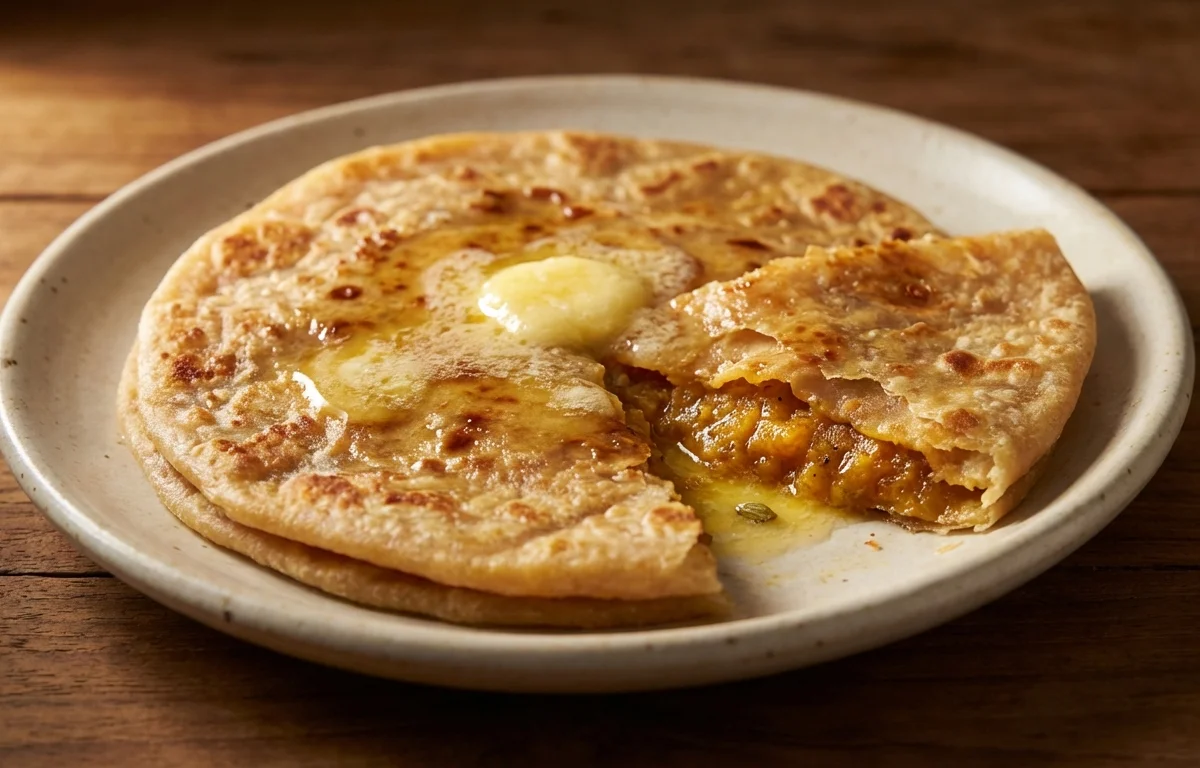
A soft, flaky flatbread stuffed with a sweet lentil and jaggery filling, lightly pan-fried with ghee. This festive Maharashtrian and South Indian delicacy is flavored with cardamom and nutmeg, beloved during celebrations and festivals.
For 8 servings
- prep · ~60 min
Soak the chana dal.
Wash the chana dal thoroughly and soak in enough water for 1 hour. Drain and set aside before cooking.
- pressure cook · ~15 min
Pressure cook the dal.
Add the drained dal to a pressure cooker with just enough water to cover it. Cook for 3-4 whistles until soft but not mushy. Drain any excess water completely.
TIPThe dal should hold its shape and not turn into a paste. Overcooking will make the filling too wet. - mix · ~10 min
Make the sweet filling (puran).
1.Transfer the cooked, drained dal to a heavy-bottomed pan.2.Add the grated jaggery and cook on medium-low heat, stirring constantly.3.Cook until the jaggery melts and the mixture thickens into a soft, cohesive mass (8-10 min).4.Turn off the heat, add cardamom powder and grated nutmeg, and mix well.5.Let the filling cool completely, then divide into 8 equal portions and shape into balls.TIPStir continuously to prevent the jaggery from burning or sticking to the bottom of the pan. - knead · ~2 min
Knead the dough.
In a mixing bowl, combine the whole wheat flour, a pinch of salt, and 2 tablespoons of oil. Gradually add water and knead to form a soft, smooth, pliable dough. Cover and rest for at least 20 minutes.
- prep · ~1 min
Divide and prepare the dough balls.
Divide the rested dough into 8 equal portions. Flatten each into a small disc slightly larger than the filling balls. Keep covered with a damp cloth.
- assemble · ~1 min
Stuff and roll the holige.
1.Take one dough disc and place a sweet lentil ball in the center.2.Bring the edges of the dough up to completely seal the filling inside. Pinch off any excess dough.3.Gently flatten the stuffed ball with your fingers.4.Dust lightly with flour and roll out carefully into a thin, even disc about 5-6 inches in diameter.TIPUse gentle, even pressure. If the filling pokes out, seal it by pinching the dough together and lightly dusting with flour. - fry · ~2 min
Cook the holige on a hot tawa.
Heat a flat pan or tawa over medium heat. Place the rolled holige on it. Cook for about a minute until small bubbles appear, then flip. Spread a teaspoon of ghee on the cooked side. Flip again and apply ghee on the other side. Cook until both sides have golden-brown spots.
TIPKeep the heat medium — too high and it will burn, too low and it will turn hard. - serve
Serve the holige warm.
Stack the cooked holige and spread a little extra ghee on top. Serve warm, ideally with milk or a drizzle of warm ghee.
TIPHolige can be stored in the refrigerator for up to 2 days. Reheat on a warm tawa before serving.
What to keep in mind.
7 tips from the recipe — small details that make a real difference to the final dish.
- 1Drain the cooked dal thoroughly before mixing with jaggery to avoid a runny filling that bursts during rolling.
- 2Rest the dough for at least 20 minutes so the gluten relaxes, making it pliable enough for thin rolling without tearing.
- 3Use a heavy-bottomed pan for the puran and stir constantly — jaggery scorches easily on medium-low heat.
- 4Seal the stuffed ball completely, pinching off any excess dough, to prevent the filling from leaking out on the tawa.
- 5Roll the stuffed holige gently and evenly; apply light dusting of flour if it starts sticking to the rolling surface.
- 6Cook on medium heat only — high heat burns the outside before the inside warms through, low heat makes the holige tough.
- 7Stack finished holige with a smear of ghee between layers to keep them soft and pliable until serving.
Adapt it for your goals.
Low-oil
Skip the ghee for pan-frying and cook the holige on a dry non-stick tawa; the natural sugars in the filling still caramelize slightly for a lighter, less-rich version.
high proteinHigh-protein
Replace half the whole wheat flour with chickpea flour (besan) to boost protein content, and add a tablespoon of milk powder to the dough for extra tenderness.
jainJain
Substitute jaggery with organic unrefined cane sugar, use plant-based oil instead of ghee in the dough, and cook on a tawa without ghee to avoid any root vegetable-based ingredients.
veganVegan
Replace ghee in the dough with coconut oil or any neutral oil, and cook the holige using coconut oil instead of ghee; the filling is naturally vegan already.
Why this is on our healthy list.
Rich in Plant-Based Iron
Jaggery is a traditional source of iron from sugarcane, which can help support healthy blood oxygen levels when paired with vitamin C.
Good Source of Dietary Fiber
Whole wheat flour and chana dal both contribute fiber, aiding digestion and promoting a steady release of energy.
Low in Refined Sugar
Jaggery provides sweetness with a lower glycemic impact than white sugar, plus trace minerals like magnesium and potassium.
Contains Warming Spices
Cardamom and nutmeg add antioxidants and are traditionally used to aid digestion and warm the body in cool weather.
Frequently asked questions
If the dough was too dry or the heat too low, the outer layer can become stiff. Rest the dough longer and cook on medium heat for a soft, pliable texture.



.webp)