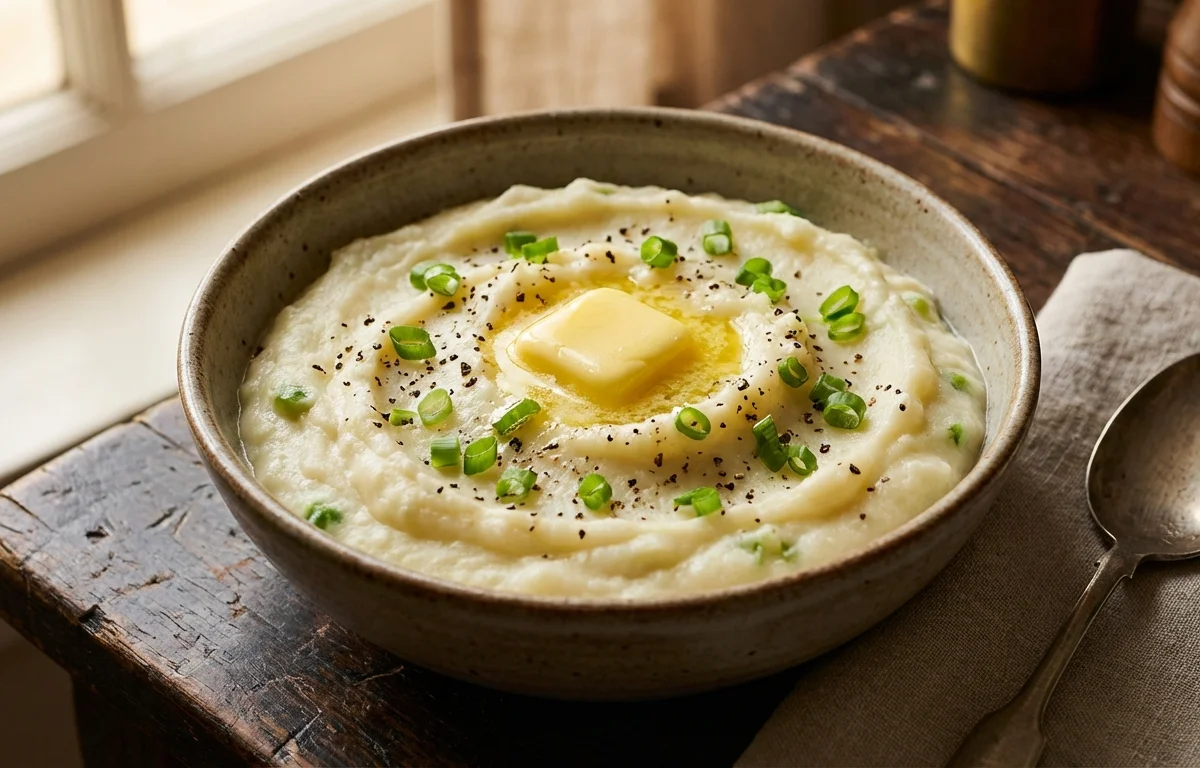
Irish-American Champ
Creamy, buttery mashed potatoes studded with tender spring onions, enriched with warm milk and a generous knob of melting butter on top. This Irish-American comfort classic brings Celtic soul to the American dinner table, perfect alongside sausages or corned beef.
For 4 servings
- prep
Peel and quarter the potatoes.
Peel the floury potatoes and cut them into evenly sized quarters so they cook uniformly.
- boil · ~20 min
Boil the potatoes until tender.
Place the quartered potatoes in a large pot and cover with cold water. Add a pinch of salt. Bring to a boil over high heat, then reduce to a simmer and cook until fork-tender, about 18 to 20 minutes.
TIPStarting with cold water ensures even cooking from the outside in, avoiding mealy centers. - simmer · ~5 min
Warm the milk with spring onion whites.
While the potatoes boil, pour the milk into a small saucepan. Add the sliced white and light green parts of the spring onions and place over low heat. Let them steep gently until the milk is warm and fragrant, about 5 minutes. Do not let it boil.
TIPSteeping the onion whites in warm milk softens their bite and infuses every spoonful with a delicate allium sweetness. - mix · ~3 min
Drain, dry, and mash the potatoes.
Drain the cooked potatoes thoroughly and return them to the hot pot. Let them steam-dry over very low heat for 1 minute, shaking the pot once. Remove from heat, add 2 tablespoons of butter, and mash until smooth and lump-free.
TIPDrying the potatoes after draining prevents a watery mash — fluffy spuds absorb more butter and milk. - mix · ~2 min
Fold in the warm onion milk.
Pour the warm milk and steeped onion mixture into the mashed potatoes a little at a time, folding gently until the mash is creamy and silky. Stir in the reserved spring onion greens, a pinch of salt, and freshly ground black pepper.
- serve
Serve with a butter well.
Pile the champ into a warm serving bowl or individual plates. Use the back of a spoon to make a well in the center of each mound and drop the remaining 2 tablespoons of butter into the well. Serve immediately while the butter melts into a golden pool.
TIPThe butter well is non-negotiable — dip each forkful of champ into the melted butter for the full Irish-American experience.
What to keep in mind.
6 tips from the recipe — small details that make a real difference to the final dish.
- 1Use floury potatoes like Russet or Yukon Gold for the fluffiest mash texture.
- 2Steam-dry the potatoes after draining to remove excess water so they absorb more butter and milk.
- 3Warm the milk gently with the spring onion whites — don't let it boil or it may curdle.
- 4Reserve the green parts of the spring onions to stir in last for a fresh pop of color and flavor.
- 5Serve the champ in a warm bowl to keep the butter melted and the mash hot.
- 6Leftover champ can be reheated in a pan with a splash of milk for creamy results.
Adapt it for your goals.
Cheesy champ
Stir in 1/2 cup of grated sharp cheddar or Irish white cheddar with the milk for a richer, savory mash that pairs beautifully with steak.
low oil / veganLow-oil / vegan
Substitute the butter with a plant-based butter and use oat or almond milk (unsweetened) — keep the steeping step for the same allium-infused creaminess.
garlic champGarlic champ
Add 2 crushed garlic cloves to the milk along with the spring onion whites; strain them out before folding for a subtle garlic undertone.
herb champHerb champ
Fold in 2 tablespoons of chopped fresh parsley or chives with the spring onion greens for an herby twist.
Why this is on our healthy list.
Good Source of Vitamin C
Potatoes provide vitamin C, which supports immune function and skin health, especially when the skins are included (though peeled here).
Contains Prebiotic Fiber
Spring onions offer inulin-type fructans, a prebiotic fiber that supports healthy gut bacteria.
Provides Calcium
Whole milk and butter contribute calcium, important for bone and teeth strength.
Low in Sodium When Controlled
This recipe uses salt only to taste, so you can easily keep the sodium level moderate for heart health.
Frequently asked questions
Yes, but reheat leftover mash in a pan over low heat with a splash of milk to restore creaminess, then fold in fresh sliced spring onions.