
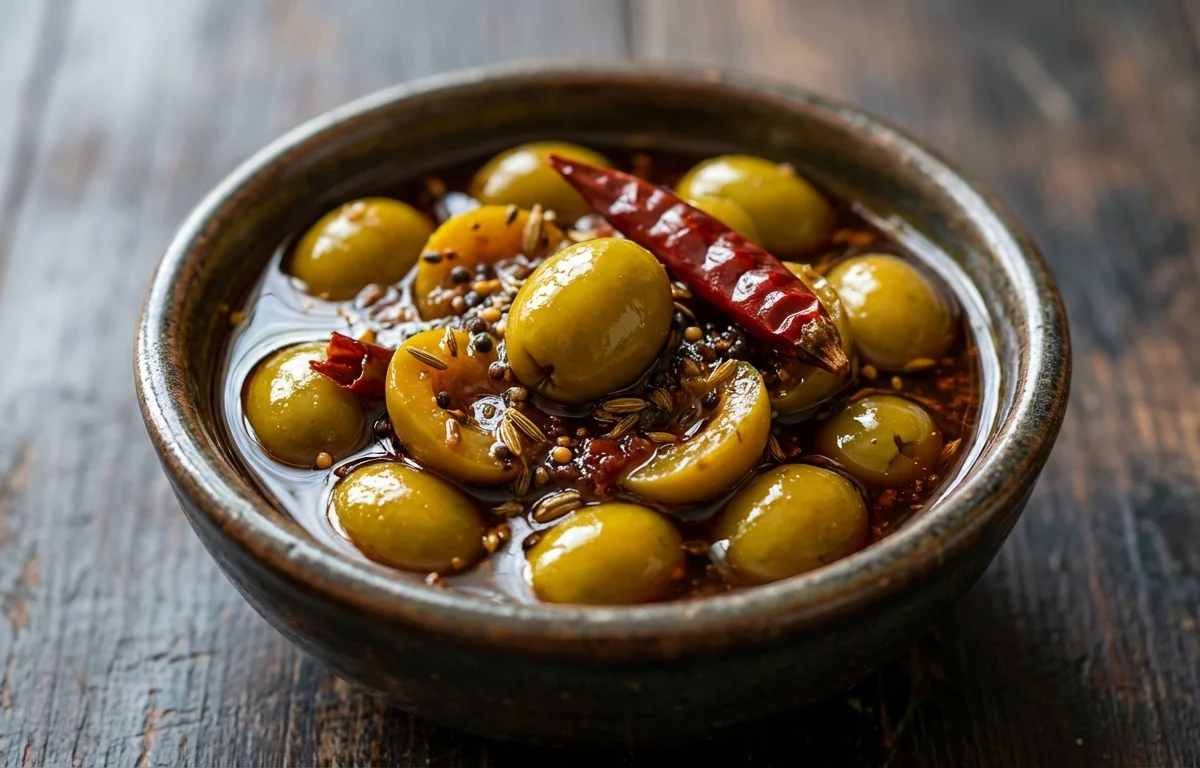
Jolphai Achar
This Bengali olive pickle balances tart jolphai with mustard, chili, and a little jaggery for a sharp, sweet, spicy finish. It keeps beautifully in the fridge and instantly lifts a simple meal of rice, dal, or khichuri.
For 8 servings
- prep · ~5 min
Prepare the jolphai.
1.Wash the jolphai well and pat them dry.2.Lightly crush each one with a rolling pin or make a small slit so the seasoning can get inside.3.Set them aside while you heat the pan. - temper · ~2 min
Make the mustard oil tempering.
1.Heat mustard oil in a small pan until it reaches a light smoking point, then lower the heat.2.Add panch phoron and dried red chili.3.Let the spices sizzle for 20 to 30 seconds until fragrant.TIPHeating mustard oil well first softens its raw sharpness and gives the achar a cleaner taste. - boil · ~10 min
Cook the jolphai with spices.
1.Add the jolphai to the pan and stir to coat them in the spiced oil.2.Add turmeric powder, red chili powder, salt, and water.3.Cover and cook on medium-low heat until the jolphai turn tender but still hold their shape. - simmer · ~7 min
Add jaggery and finish the achar.
Uncover the pan, add jaggery, and stir well. Simmer for 5 to 7 minutes until the jaggery melts and the liquid turns into a glossy, lightly sticky coating around the jolphai.
- rest · ~30 min
Cool the achar completely.
Let the achar cool to room temperature before storing or serving. The flavor deepens as it sits.
- serve
Serve with rice, khichuri, or a simple Bengali meal.
What to keep in mind.
6 tips from the recipe — small details that make a real difference to the final dish.
- 1Lightly crushing or slitting each jolphai helps the mustard oil, salt, and jaggery seep inside instead of only coating the outside.
- 2Do not skip smoking the mustard oil briefly; this tames its raw bitterness and gives the achar a more rounded Bengali pickle flavor.
- 3Cook the jolphai only until tender but intact; if they collapse, the achar can turn mushy instead of pleasantly chewy.
- 4Simmer uncovered at the end until the syrup clings to the fruit in a glossy layer, not a watery sauce.
- 5Cool completely before bottling, and use a dry, clean spoon every time to help the pickle keep well in the fridge.
- 6The achar tastes sharper on day one and mellower after a day or two, so make it ahead if you want a more balanced sweet-tart finish.
Adapt it for your goals.
Spicier
Add extra red chili powder or one more dried red chili for a hotter achar that pairs especially well with plain rice or khichuri.
less sweetLess-sweet
Reduce the jaggery slightly to keep the pickle more tart and sharp, closer to a traditional savory-leaning condiment.
garlic free traditionalGarlic-free-traditional
Keep it exactly as written for a classic Bengali-style jolphai achar with clean mustard and panch phoron notes.
chunkierChunkier
Use only slits instead of crushing the olives if you want firmer pieces that hold their shape better during storage.
Why this is on our healthy list.
Digestive Spice Blend
Panch phoron and chili bring aromatic spices commonly used to make tart, rich condiments feel more balanced and lively.
Fruit-Based Condiment
Because the achar is built around jolphai rather than a heavy base, it adds bold flavor in small spoonfuls alongside simple meals.
Turmeric and Mustard Notes
Turmeric and mustard oil contribute distinctive plant compounds and strong flavor, so a little achar can brighten a whole plate.
Frequently asked questions
Yes. It actually tastes better after resting for several hours or overnight, when the jolphai absorb more of the mustard, spice, and jaggery.



-curry.webp)
.webp)