
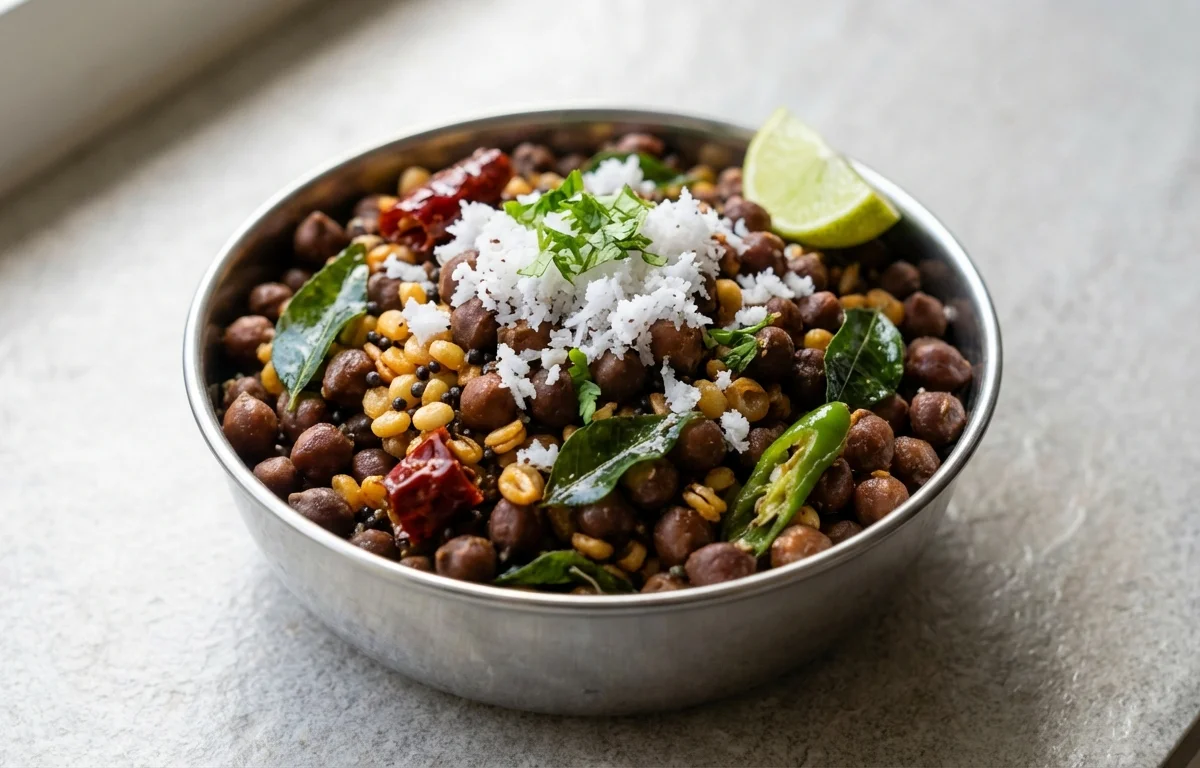
Kadale Usli
A simple, protein-packed stir-fry from Karnataka featuring tender black chickpeas tossed with fresh coconut, green chilies, and a fragrant mustard seed tempering. This lightly spiced dish comes together quickly when you have pre-soaked chickpeas and makes a satisfying snack or side.
For 4 servings
- prep
Soak the chickpeas overnight.
Rinse the dried black chickpeas well. Soak in enough water to cover by 2 inches for at least 8 hours or overnight. Drain before cooking.
- pressure cook · ~15 min
Pressure cook the chickpeas.
Add the soaked and drained chickpeas to a pressure cooker with 2.5 cups of fresh water and 0.5 tsp salt. Cook on medium heat for 4-5 whistles or until tender but not mushy. Let the pressure release naturally. Drain any excess water and set the chickpeas aside.
TIPThe chickpeas should hold their shape and be soft when pressed between your fingers. - temper · ~2 min
Make the tempering.
1.Heat oil in a heavy-bottomed pan over medium heat.2.Add mustard seeds and let them splutter (30 sec).3.Add cumin seeds, dried red chili, and curry leaves. Stir until fragrant (20 sec).4.Add asafoetida, green chilies, and grated ginger. Sauté for 30 seconds. - mix · ~3 min
Toss the chickpeas with the tempering.
Add the cooked and drained chickpeas to the pan. Toss well to coat evenly with the tempering. Cook on low heat for 2-3 minutes so the flavors meld. Turn off the heat.
- mix · ~1 min
Finish with coconut and lemon.
Stir in the grated fresh coconut and lemon juice. Mix gently until well combined.
- garnish
Garnish with coriander leaves and serve warm.
Transfer to a serving bowl, sprinkle with chopped coriander leaves, and serve immediately.
What to keep in mind.
7 tips from the recipe — small details that make a real difference to the final dish.
- 1Soak black chickpeas for at least 8 hours to ensure even cooking and a creamy texture.
- 2Pressure cook until just tender – they should hold their shape and not turn mushy.
- 3Let the pressure release naturally so the chickpeas absorb residual moisture and remain intact.
- 4Splutter the mustard seeds fully before adding other ingredients for the classic South Indian tempering aroma.
- 5Add fresh coconut only at the end off heat to keep its sweet crunch and milky freshness intact.
- 6This dish tastes best served warm; leftovers can be refrigerated for 2 days and gently reheated.
- 7For a drier, snack-like texture, cook on low heat after tossing until any extra moisture evaporates.
Adapt it for your goals.
Low-oil
Reduce oil to 1 teaspoon and dry-roast the mustard seeds, cumin, and curry leaves in a non-stick pan before adding a splash of water to steam the chickpeas — cuts fat while keeping the tempering fragrance.
high proteinHigh-protein
Add ½ cup of roasted, skinless peanuts along with the cooked chickpeas for extra crunch and a protein boost that complements the coconut.
jainJain
Omit asafoetida (hing) if it contains wheat or substitute with a pinch of asafoetida made without grain; use rock salt instead of regular salt and skip the onion-garlic family entirely — the dish remains naturally Jain-friendly.
veganVegan
The recipe is already vegan; ensure the asafoetida is plant-based and use a neutral oil like sunflower instead of ghee — no other changes needed.
Why this is on our healthy list.
Rich in Plant Protein
Black chickpeas provide a hearty dose of plant-based protein, making this dish a satisfying option for vegetarians and vegans.
High in Dietary Fiber
A single serving of black chickpeas delivers considerable fiber, supporting healthy digestion and promoting a feeling of fullness.
Good Source of Iron
Black chickpeas are naturally rich in iron, which is essential for oxygen transport in the body; pairing with lemon juice enhances absorption.
Low in Saturated Fat
With minimal oil and heart-friendly coconut in moderation, this dish keeps saturated fat low while offering healthy medium-chain triglycerides.
Contains Anti-Inflammatory Spices
Ginger, asafoetida, and curry leaves contribute anti-inflammatory compounds that may support overall wellness when eaten regularly.
Frequently asked questions
Yes, use 1.5 cans (about 1.5 cups drained). Skip pressure cooking — just rinse, drain, and toss with the tempering, then cook for 3-4 minutes to warm through.


