Kalara Bhaja
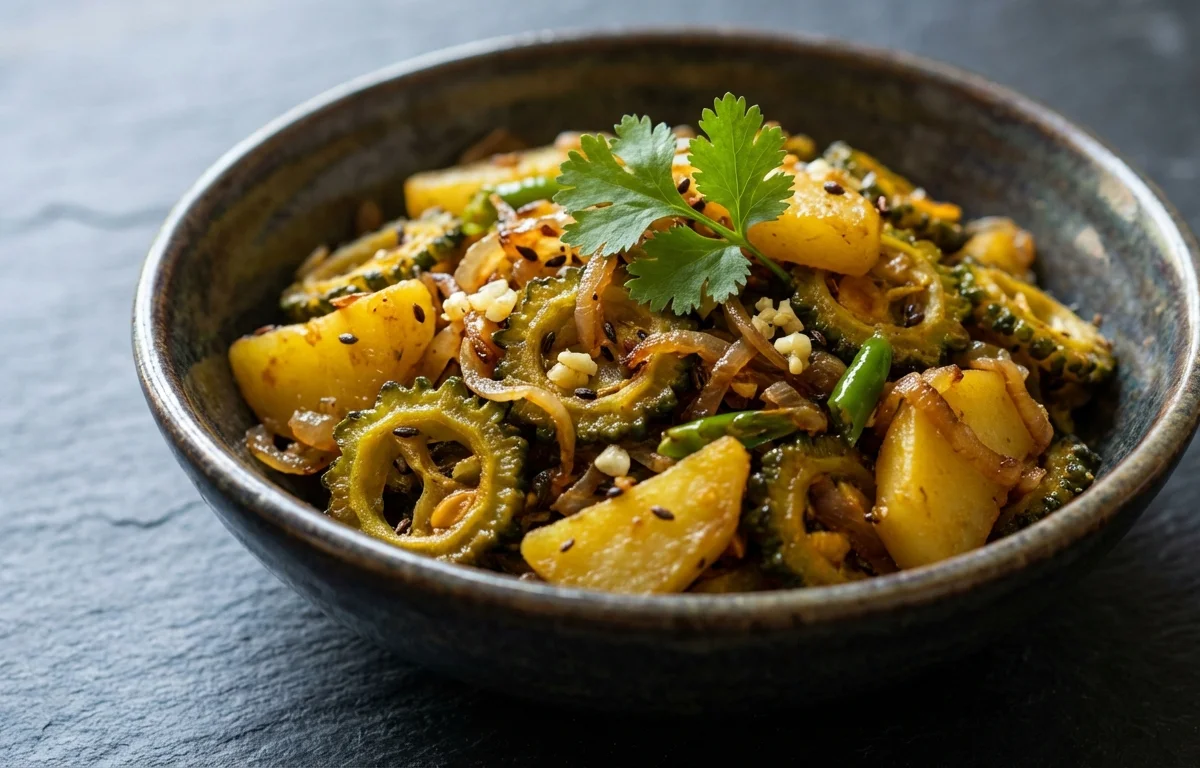
Thin slices of bitter gourd are salted, lightly spiced, and pan-fried until crisp at the edges. This Odia home-style bhaja brings a deep bitter-savory flavor that pairs especially well with rice and dal.
For 4 servings
- prep · ~7 min
Slice and season the bitter gourd.
1.Wash the bitter gourd well and slice it into thin rounds.2.Remove only the hard mature seeds if needed, keeping the tender center intact.3.Place the slices in a bowl and add salt, turmeric powder, and red chili powder.4.Sprinkle the rice flour over the slices and toss well to coat evenly.TIPKeep the slices thin so they crisp up quickly and cook evenly. - rest · ~5 min
Rest the slices for a few minutes.
Set the seasoned bitter gourd aside for 5 minutes so the salt draws out a little moisture and the spices cling better.
- fry · ~12 min
Pan-fry the kalara until crisp.
1.Heat oil in a wide pan over medium heat.2.Spread the bitter gourd slices in a single layer as much as possible.3.Cook undisturbed for 3 to 4 minutes until the underside starts browning.4.Flip and continue frying, stirring now and then, until the slices are crisp at the edges and deeply golden.TIPDo not crowd the pan; crowded slices steam instead of fry. - serve
Serve the kalara bhaja hot or warm.
What to keep in mind.
6 tips from the recipe — small details that make a real difference to the final dish.
- 1Slice the bitter gourd very evenly so all the rounds brown and crisp at the same pace.
- 2After salting, lightly squeeze the slices if they release too much water; this helps them fry instead of soften.
- 3Use a wide pan and keep the slices in one layer as much as possible for proper edge crisping.
- 4Let the first side sit undisturbed until golden before flipping, or the coating can stick and tear.
- 5Add the rice flour only as a thin dusting; too much makes the bhaja pasty instead of delicately crisp.
- 6Serve soon after frying, because bitter gourd loses its best crunch as it sits.
Adapt it for your goals.
Low-oil
Use a well-seasoned nonstick or cast-iron pan and fry in smaller batches with less oil for a lighter everyday version.
no rice flourNo-rice-flour
Skip the rice flour for a more traditional, cleaner bitter gourd texture with a slightly less crunchy finish.
extra spicyExtra-spicy
Increase the chili powder slightly for a sharper heat that stands up well to the bitterness and rice-dal pairing.
onion addedOnion-added
Fry a few thin onion slices along with the kalara for a sweeter contrast to the bitter notes.
Why this is on our healthy list.
Bitter Gourd Goodness
Bitter gourd is a vegetable-rich side that adds fiber and plant compounds while keeping the dish simple and light.
Moderate Oil Cooking
This bhaja is pan-fried rather than deep-fried, so it delivers crisp texture with less oil than many fried sides.
Minimal Ingredient Dish
With just bitter gourd, a little spice, and optional rice flour, the recipe keeps the focus on the vegetable without heavy additions.
Frequently asked questions
Use thin slices, salt them briefly as written, and remove only hard mature seeds. Frying until well browned also mellows the harsh edge of the bitterness.