
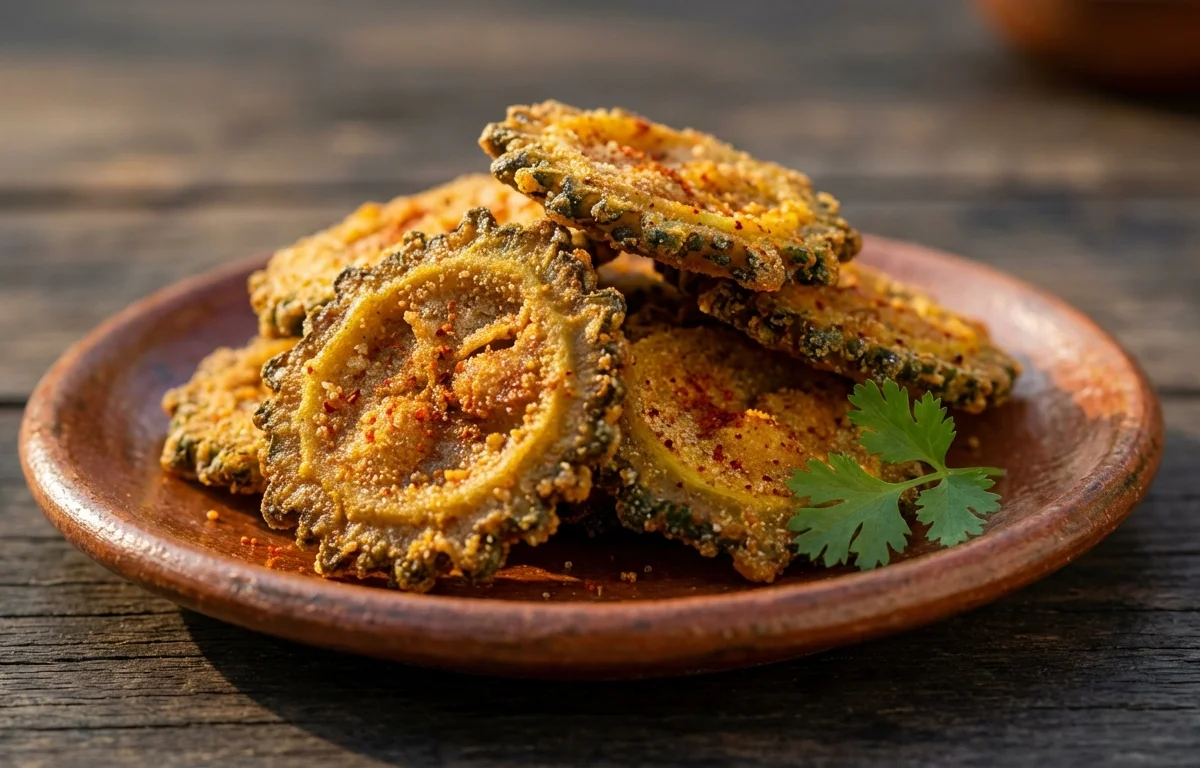
Karathe Phodi
Thin slices of bitter gourd are coated with a spiced rice flour mix and pan-fried until crisp at the edges. This coastal Karnataka side balances bitterness with tamarind, chili, and a light crunchy crust.
For 4 servings
- prep · ~8 min
Slice the bitter gourd.
1.Wash the bitter gourd well and trim the ends.2.Slice into thin rounds for even cooking.3.Remove hard seeds if the bitter gourd is mature. - mix · ~5 min
Coat the slices with the spice mix.
1.Place the sliced bitter gourd in a wide bowl.2.Add tamarind paste, rice flour, red chili powder, turmeric powder, asafoetida, salt, and jaggery.3.Mix well with your hands until the slices are lightly and evenly coated.TIPKeep the coating light. Too much rice flour makes the slices cakey instead of crisp. - rest · ~10 min
Rest the coated slices for 10 minutes.
TIPThis short rest helps the bitter gourd release a little moisture so the masala clings better. - fry · ~15 min
Pan-fry the karathe phodi.
1.Heat oil in a wide pan over medium heat.2.Spread the coated bitter gourd slices in a single layer.3.Cook until the bottom turns crisp and browned, then flip gently.4.Fry both sides until the slices are cooked through and crisp at the edges.TIPCook in batches if needed. Crowding the pan traps steam and softens the slices. - serve
Serve hot as a side dish.
What to keep in mind.
7 tips from the recipe — small details that make a real difference to the final dish.
- 1Slice the bitter gourd very evenly so all the rounds crisp at the same rate in the pan.
- 2If the karela is very mature, remove the hard seeds and thick pith or the texture stays chewy.
- 3After mixing, the slices should look lightly dusty, not heavily battered; excess rice flour turns the crust pasty.
- 4Use a wide skillet and keep the slices in a single layer so they fry instead of steaming.
- 5Flip only after the underside has browned well; early stirring can pull the masala coating off.
- 6Serve immediately after frying for the best contrast between crisp edges and the tender center.
- 7Leftovers can be reheated in a tawa or air fryer to bring back some crispness; avoid microwaving.
Adapt it for your goals.
Low-oil
Shallow-fry in a well-seasoned nonstick pan with less oil, turning carefully; good if you want a lighter version with similar flavor.
air fryerAir-fryer
Arrange the coated slices in one layer and air-fry until browned and crisp, shaking once; useful when making a bigger batch with less hands-on frying.
extra spicyExtra-spicy
Increase the red chili powder slightly for a sharper, hotter phodi that stands up well to plain rice and dal.
no jaggeryNo-jaggery
Skip the jaggery for a more assertively bitter, savory version that tastes closer to a purely spiced fry.
Why this is on our healthy list.
Bitter Gourd Based
This dish features bitter gourd, a vegetable valued in Indian cooking for its fiber and naturally bold, complex taste.
Moderate Oil Cooking
Pan-frying uses less oil than deep-frying, so you still get crisp edges without turning it into a heavy side dish.
Gluten-Free Ingredients
Made with rice flour rather than wheat flour, this recipe suits those looking for a naturally gluten-free side.
Frequently asked questions
Use younger bitter gourd if possible, remove hard seeds from mature ones, and let the slices sit with tamarind, salt, and jaggery before frying.


