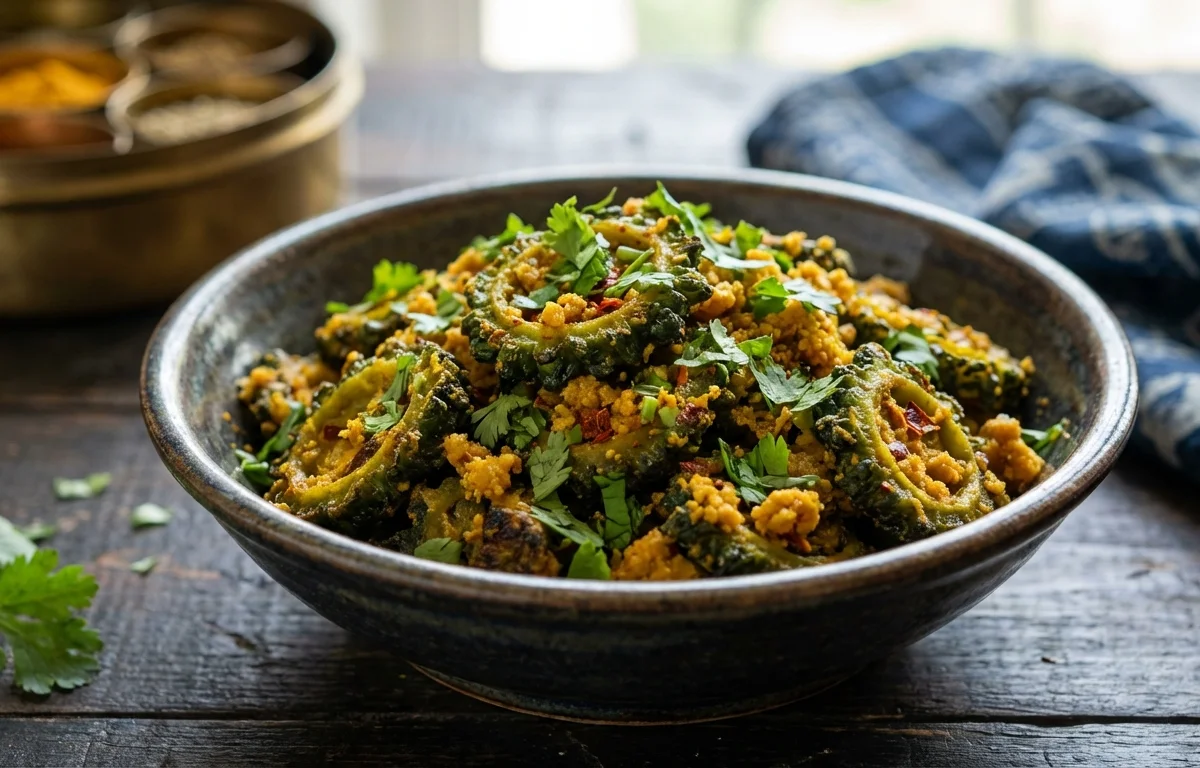
Karela Besan Sabzi
Crispy, golden slices of bitter gourd coated in spiced gram flour and pan-fried to perfection. This homestyle Indian sabzi balances bitterness with nutty besan, tangy amchur, and a fragrant tempering of cumin and fennel. A rustic, dry curry that pairs beautifully with dal and roti.
For 4 servings
- prep · ~15 min
Prep the bitter gourd.
Wash the karela thoroughly. Trim the ends and slice into thin, even rounds. Transfer to a bowl, sprinkle with 0.5 tsp salt, and rub well. Set aside for 15 minutes to draw out bitterness, then rinse thoroughly under running water and squeeze out excess moisture. Pat dry with a kitchen towel.
TIPSqueezing out as much water as possible helps the besan stick and ensures a crispier result. - mix · ~2 min
Coat the karela with besan mixture.
In a small bowl, mix together besan, turmeric powder, red chili powder, coriander powder, cumin powder, and amchur. Sprinkle this spiced besan mix over the dried karela slices. Toss well so every slice is evenly coated.
- fry · ~10 min
Shallow-fry the coated karela.
Heat 1 tbsp oil in a heavy-bottomed pan or kadai over medium heat. Spread the besan-coated karela slices in a single layer. Pan-fry for 8-10 minutes, stirring gently every 2 minutes, until the karela turns golden brown and crisp. Remove to a plate and set aside.
TIPDon't overcrowd the pan — cook in batches if needed to get even browning. - temper · ~5 min
Make the tempering.
1.Heat the remaining 1 tbsp oil in the same pan over medium heat.2.Add cumin seeds and fennel seeds; let them crackle for 30 seconds.3.Add hing and slit green chilies; sauté for 10 seconds.4.Add sliced onion and cook until softened and lightly golden, about 4 minutes. - fry · ~2 min
Combine and finish.
Return the fried karela to the pan with the onion tempering. Add a pinch of salt and toss everything together gently. Cook for 2 more minutes on low heat so the flavors meld. Taste and adjust seasoning if needed.
TIPBe gentle when mixing — the crisp coating can break off if you stir too vigorously. - garnish
Garnish and serve hot.
Transfer to a serving bowl, sprinkle with fresh coriander leaves, and serve immediately alongside dal and roti.
What to keep in mind.
7 tips from the recipe — small details that make a real difference to the final dish.
- 1Rub the sliced karela with salt and let rest for 15 minutes to draw out bitterness, then rinse and squeeze dry thoroughly.
- 2Pat the karela slices completely dry after rinsing — excess moisture makes the besan coating soggy instead of crisp.
- 3Cook the coated karela in a single layer without overcrowding the pan to ensure even golden browning.
- 4Use mustard oil for authentic flavor; its pungency complements bitter gourd beautifully.
- 5Add amchur (dry mango powder) at the end while tossing to retain its tangy punch.
- 6Stir gently when combining the fried karela with the tempering to avoid breaking the crisp coating.
- 7Serve immediately after garnishing — this dish is best enjoyed hot and crunchy, not soggy.
Adapt it for your goals.
Air-fried / Low-oil
Skip shallow-frying: after coating the karela with besan mix, arrange slices in an air-fryer basket in a single layer, spray lightly with oil, and cook at 180°C for 12–15 minutes, shaking halfway — cuts oil by over half while keeping the crunch.
VeganVegan
This recipe is already naturally vegan as it uses no dairy; simply ensure your oil is plant-based (mustard oil is fine) and serve with vegan sides.
Gluten freeGluten-free
Besan (chickpea flour) is naturally gluten-free, making this dish suitable for a gluten-free diet without any substitutions needed — just check that your hing (asafoetida) is pure and not cut with wheat flour.
With potatoWith potato
Add 1 small potato, peeled and thinly sliced, along with the karela when coating with besan — potato adds mild sweetness and extra body, making the dish more filling as a standalone vegetable.
Sindhi style (more sour)Sindhi-style (more sour)
Increase amchur to 1 tsp and add a pinch of sugar while tossing at the end — this creates a pronounced sweet-sour profile popular in Sindhi preparations of bitter gourd.
Why this is on our healthy list.
Blood Sugar Support
Bitter gourd contains compounds like charantin and polypeptide-p that are traditionally associated with helping maintain healthy blood sugar levels.
Rich in Plant-Based Protein
Besan (chickpea flour) provides a good dose of plant protein and dietary fiber, contributing to satiety and digestive health.
Digestive Aid
Fennel seeds, cumin, and asafoetida in the tempering are known digestive aids in Indian cuisine, helping reduce bloating and promote gut comfort.
Antioxidant-Rich Spices
Turmeric, coriander, and amchur supply antioxidants including curcumin and polyphenols that support overall cellular health.
Low Calorie, High Nutrient
Bitter gourd is very low in calories yet packed with vitamin C, vitamin A, folate, and potassium — ideal for weight-conscious diets.
Frequently asked questions
Salting draws out the bitter sap from the gourd, making it milder and more palatable. Rinsing after 15 minutes removes both the salt and the drawn-out bitterness.