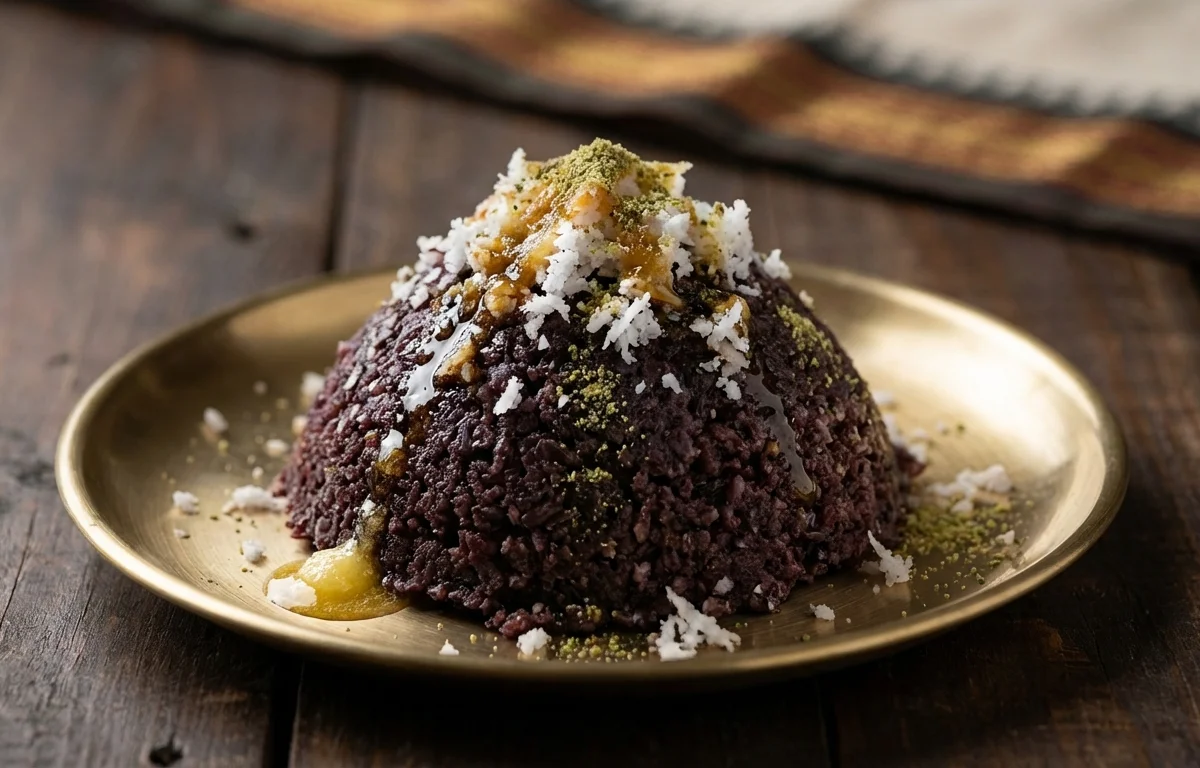
Kavuni Arisi Puttu
A gently sweet Tamil-style puttu made with fragrant black kavuni rice, fresh coconut, and a little jaggery. The steamed crumb turns soft and grainy at once, making it a lovely breakfast or festive side.
For 4 servings
- prep · ~6 min
Soak and drain the kavuni rice.
Wash the kavuni arisi well, soak it for 6 hours, then drain completely. Spread it on a cloth for a few minutes so the surface moisture dries slightly.
TIPThe rice should stay damp, not wet, before grinding or the puttu flour turns pasty. - mix · ~5 min
Grind the rice to a coarse flour.
Grind the drained rice in batches to a slightly grainy flour, not a fine powder. Sieve if needed and pulse the larger bits once more for an even texture.
- mix · ~4 min
Moisten the flour.
1.Add the salt to the ground rice flour and mix well.2.Sprinkle in the water little by little.3.Rub the flour between your fingers until it feels evenly damp and crumbly.4.Press a little in your palm; it should hold shape lightly and fall apart when rubbed.TIPDo not pour all the water at once. The right crumb is what gives puttu its light steamed texture. - assemble · ~3 min
Layer the puttu mixture.
Fill small puttu moulds or heatproof cups by alternating layers of moistened kavuni flour, grated coconut, and a little jaggery. Finish with a thin layer of coconut on top.
- steam · ~12 min
Steam the puttu until cooked.
Place the filled moulds in a steamer and steam for 10 to 12 minutes, until the rice mixture is cooked through and aromatic. The puttu should look set but still soft.
- serve · ~2 min
Unmould and serve warm.
Let the puttu sit for 2 minutes, then gently unmould and serve warm. If you like, loosen the top with a spoon before turning it out.
What to keep in mind.
7 tips from the recipe — small details that make a real difference to the final dish.
- 1Dry the soaked kavuni rice just until the surface stops looking wet; overly damp rice grinds into paste instead of puttu flour.
- 2Aim for a slightly coarse, sandy flour so the steamed puttu stays grainy and light rather than dense.
- 3When moistening the flour, sprinkle water with your fingers and rub well after each addition to avoid hidden wet lumps.
- 4The flour is ready when a squeezed handful holds briefly, then crumbles easily when nudged.
- 5Do not pack the moulds tightly; a loose fill lets steam move through and cook the black rice evenly.
- 6Let the puttu rest for 2 minutes after steaming so it unmoulds cleanly without breaking apart.
- 7Serve it hot or warm; as kavuni puttu cools, the jaggery firms slightly and the texture becomes less soft.
Adapt it for your goals.
Less-sweet
Reduce the jaggery layers for a more breakfast-style puttu that highlights the nutty, earthy flavor of kavuni arisi.
festival styleFestival-style
Steam as written, then drizzle a little melted jaggery syrup over the unmoulded puttu for a richer celebratory finish.
veganVegan
This dish is naturally vegan as written, making it a good choice for plant-based festive or breakfast menus.
no mouldNo-mould
Use small steel tumblers or heatproof cups if you do not have puttu moulds; keep the layers loose for proper steaming.
Why this is on our healthy list.
Whole Grain Base
Kavuni arisi is a traditional whole black rice, so this puttu retains the grain's bran and a more robust character than refined rice dishes.
Plant-Based Energy
Black rice and jaggery provide steady, comforting energy, while coconut adds richness that makes the dish satisfying.
Steamed, Not Fried
Because the puttu is steamed, it is prepared without deep frying and keeps a light, soft texture.
Frequently asked questions
Yes, but the texture may be different. Moisten the flour gradually until it reaches the same crumbly puttu consistency before layering and steaming.