
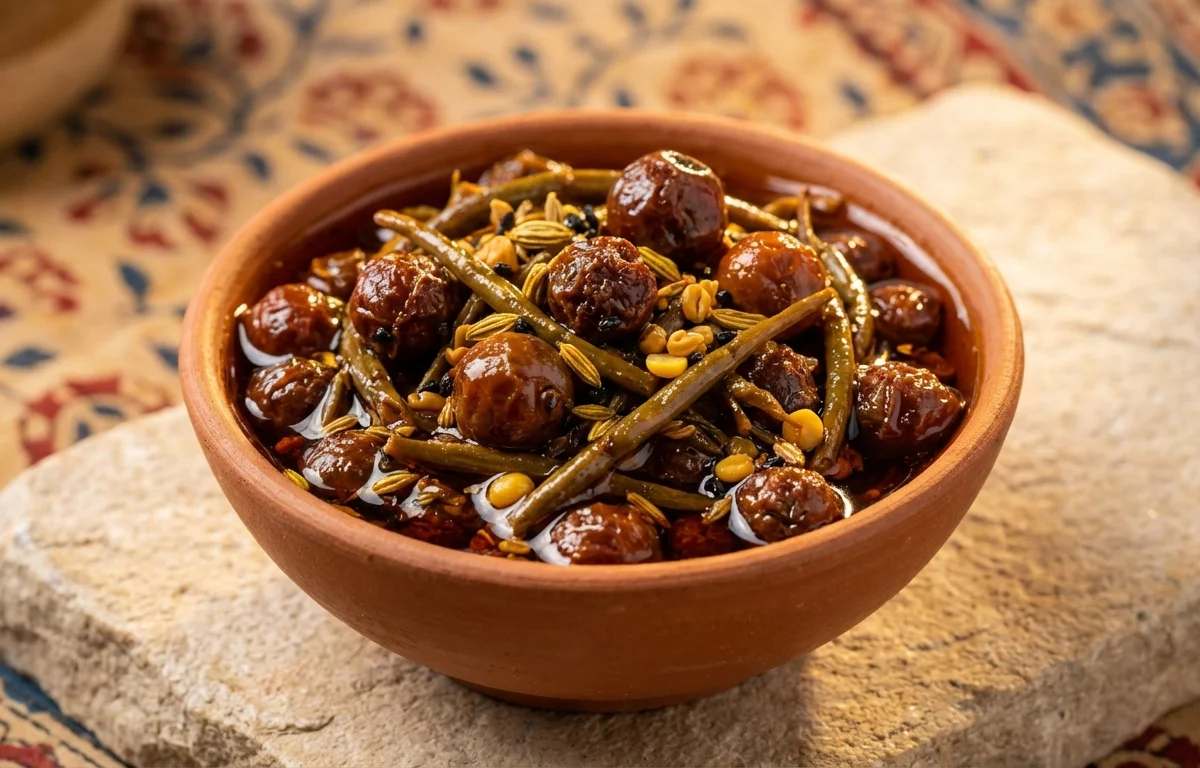
Ker Sangri Achar
A tangy, fiery pickle straight from the heart of Rajasthan, made with foraged desert berries and wild beans. Sun-dried ker and sangri are slow-cooked with a bold blend of fennel, mustard, and red chilies, then preserved in mustard oil for months of intense flavor.
For 16 servings
- prep
Soak the ker and sangri overnight.
Wash the dried ker and sangri thoroughly under running water. Transfer to a bowl, cover with 4 cups of water, and let them soak for 8 hours or overnight until they swell up and soften. Drain fully and pat dry with a clean kitchen towel.
TIPSqueeze out excess water from the soaked ker and sangri — any remaining moisture can dilute the pickle and reduce its shelf life. - prep
Prepare the spice mix.
1.Coarsely grind fennel seeds, mustard seeds, and fenugreek seeds using a mortar and pestle.2.Mix the ground spices with red chili powder, turmeric, asafoetida, and amchur in a small bowl.3.Keep the spice mix ready near the stove.TIPDo not grind the seeds into a fine powder — a coarse texture gives the pickle its signature rustic bite. - fry · ~7 min
Fry the ker and sangri.
1.Heat mustard oil in a heavy-bottomed pan over high heat until it reaches its smoking point and turns pale yellow.2.Lower the flame to medium and add the drained ker and sangri.3.Sauté, stirring frequently, for 5 to 7 minutes until they develop light golden spots and any surface moisture evaporates.TIPMustard oil must smoke properly — this removes its raw pungency and gives the pickle its characteristic rustic aroma. - temper · ~1 min
Temper the whole spices.
1.Reduce the heat to low. Push the ker and sangri to one side of the pan.2.In the cleared space, add nigella seeds and let them crackle for 20 seconds.3.Immediately tip in the prepared spice mix and stir everything together.TIPKeep the flame low while adding dry spices — high heat can burn them in seconds, making the pickle bitter. - mix · ~4 min
Combine and cook the pickle.
1.Add salt and grated jaggery to the pan.2.Mix thoroughly so the ker and sangri are evenly coated with the spice mixture.3.Cook on low heat for 3 to 4 minutes, stirring continuously, until the jaggery melts and the oil begins to separate at the edges. - mix
Finish with lemon juice and cool.
Switch off the flame. Stir in the lemon juice and give the pickle a final, vigorous mix. Let it cool completely to room temperature before transferring to the sterilized jar.
TIPAdding lemon juice off the heat preserves its fresh, tangy brightness. - rest
Mature the pickle for 2 to 3 days.
Seal the jar tightly and place it in a warm, dry spot for 2 to 3 days, shaking the jar gently once a day. The ker and sangri will absorb the spices and turn beautifully glossy.
TIPThis resting period is crucial — the flavors meld and deepen. Avoid refrigerating before the pickle has matured.
What to keep in mind.
6 tips from the recipe — small details that make a real difference to the final dish.
- 1Squeeze soaked ker and sangri thoroughly to remove excess moisture, which prevents spoilage and extends shelf life.
- 2Heat mustard oil until it reaches its smoking point and turns pale yellow to mellow its pungent flavor.
- 3Grind fennel, mustard, and fenugreek seeds coarsely — a fine powder will rob the pickle of its rustic texture.
- 4Add dry spice mix on low heat and stir immediately to prevent burning, which makes the pickle bitter.
- 5Stir in lemon juice only after turning off the heat to preserve its fresh, tangy brightness.
- 6Let the pickle mature in a warm, dry spot for 2–3 days, shaking daily, for the best flavor development.
Adapt it for your goals.
Low-oil
Reduce mustard oil to 2 tbsp and add 2 tbsp water during cooking; this yields a drier, less oily pickle that still packs bold flavor, ideal for those watching oil intake.
extra spicyExtra-spicy
Double the Kashmiri red chili powder or add 1 tsp of finely chopped green chilies along with the spice mix for a searingly hot version that Rajasthanis enjoy.
sweet tangySweet-tangy
Increase jaggery to 2 tbsp and add 1 extra tbsp of dry mango powder for a more pronounced sweet-sour balance, appealing to those who prefer milder heat.
garlic infusedGarlic-infused
Add 4–5 crushed garlic cloves when tempering the nigella seeds; garlic adds a pungent depth that complements the desert flavors beautifully.
veganVegan
This recipe is naturally vegan; simply ensure your jaggery is plant-based and unbleached to keep it fully vegan-friendly.
Why this is on our healthy list.
Rich in Dietary Fiber
Ker and sangri are desert legumes and berries high in fiber, which aids digestion and promotes gut health.
Good Source of Antioxidants
Kashmiri red chili powder, turmeric, and fenugreek seeds provide antioxidants that help combat oxidative stress.
Supports Digestive Health
Asafoetida, fennel, and fenugreek seeds are traditionally used to reduce bloating and improve digestion.
Low in Saturated Fat
Mustard oil is rich in monounsaturated and polyunsaturated fats, making this pickle heart-friendly when used in moderation.
Frequently asked questions
This recipe is designed for dried ker and sangri, which require soaking. Fresh versions are rarely available outside Rajasthan and have different cooking times. Stick with dried for authentic texture and flavor.


