
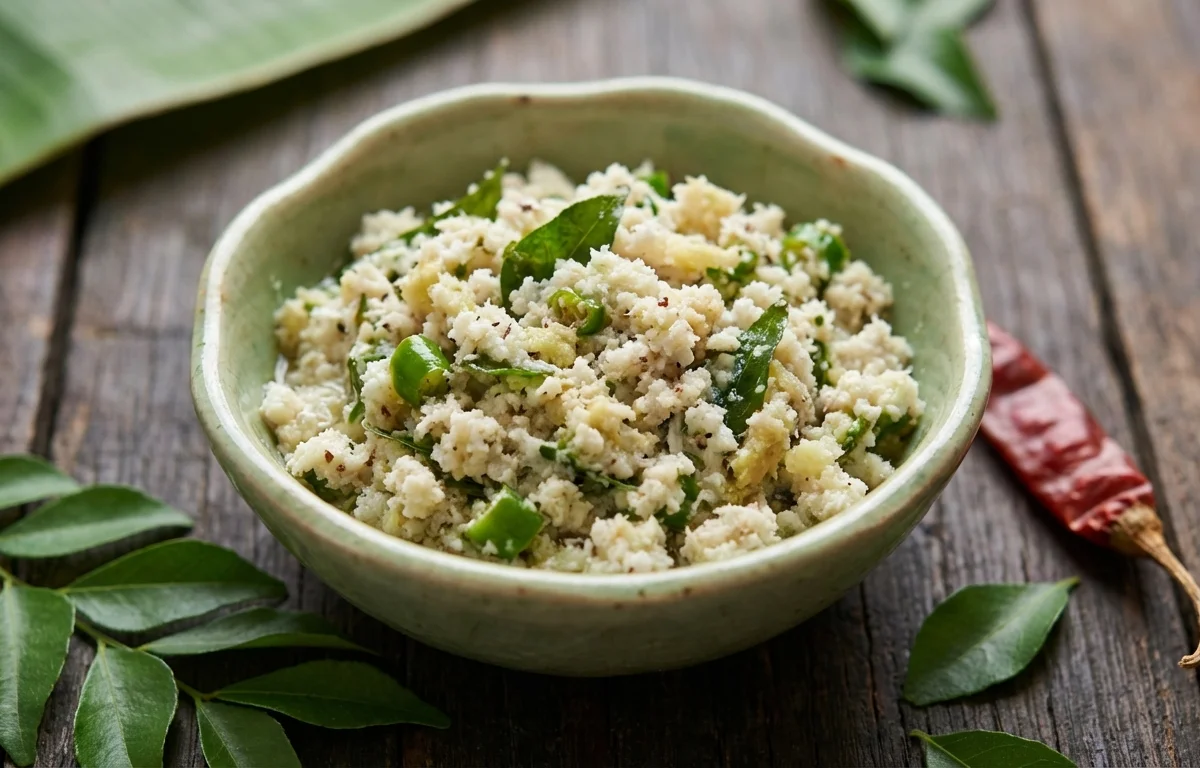
Kerala Coconut Chammanthi
Fresh coconut, shallots, green chili, and tamarind come together in this classic Kerala chammanthi. It is punchy, lightly spicy, and perfect alongside rice, kanji, dosa, or idli when you want a quick homemade side.
For 8 servings
- prep
Prepare the ingredients.
Peel the shallots and roughly chop the green chilies. Keep the grated coconut, tamarind, salt, and water ready near the mixer jar.
- mix · ~2 min
Grind the chammanthi.
1.Add coconut, shallots, green chili, tamarind, and salt to a small mixer jar.2.Pulse a few times to break everything down evenly.3.Add water little by little and grind to a coarse chutney.4.Scrape down the sides once so the mix stays slightly textured, not completely smooth.TIPKeep the water minimal so the chammanthi stays thick and full of coconut flavor. - temper · ~1 min
Make the tempering.
1.Heat coconut oil in a small pan over medium heat.2.Add mustard seeds and let them splutter.3.Add dried red chili and curry leaves.4.Cook for a few seconds until fragrant.TIPLower the heat before adding curry leaves so they crisp without burning. - assemble
Finish the chammanthi.
Transfer the ground chammanthi to a bowl and pour the hot tempering over it. Mix lightly or leave the tempering on top, then serve right away.
- serve
Serve with dosa, idli, rice, or kanji.
What to keep in mind.
6 tips from the recipe — small details that make a real difference to the final dish.
- 1Use very little water while grinding so the chammanthi stays thick, not runny.
- 2Pulse first, then grind briefly; a coarse texture tastes more traditional than a smooth paste.
- 3If the mixer blade struggles, add water by teaspoons rather than all at once.
- 4Taste before tempering and adjust tamarind or chili, since coconut can mute sharp flavors.
- 5Pour the tempering over while still hot to bloom the mustard, curry leaf, and red chili aroma.
- 6Serve soon after making for the freshest coconut flavor; refrigerate leftovers and use the same day if possible.
Adapt it for your goals.
No-tempering
Skip the mustard-curry leaf tempering for an even quicker everyday chammanthi with a raw, sharper coconut-shallot flavor.
spicierSpicier
Add one extra green chili or a second dried red chili if you want the chutney to stand up to plain kanji or curd rice.
shallot heavyShallot-heavy
Increase the shallots slightly for a sweeter, more pungent chammanthi that pairs especially well with dosa.
jainJain
Omit the shallots and use a little more coconut and tamarind for a simpler version suitable for those avoiding onion.
Why this is on our healthy list.
Plant-Based Fats
Fresh coconut and coconut oil provide satisfying fats that make this side filling even in a small portion.
Aromatic Herbs and Spices
Green chili, curry leaves, mustard seeds, and tamarind add flavor with very little volume, helping the chutney stay bold without heavy add-ins.
Pairs Well With Simple Meals
Because it is intensely flavored, this chammanthi can make plain rice, kanji, idli, or dosa more enjoyable with just a small serving.
Frequently asked questions
Yes. Thaw it first and squeeze out any excess water so the chammanthi does not become watery.



.webp)

.webp)