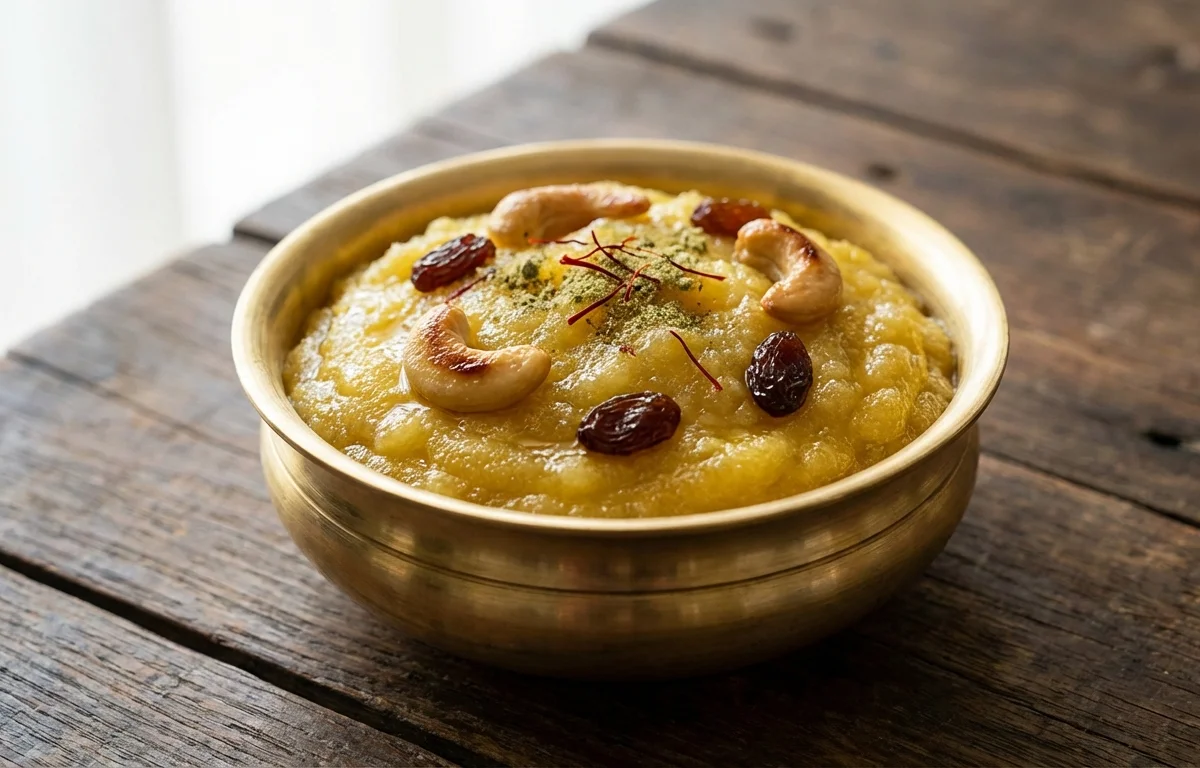
Kesari Bath
A fragrant South Indian semolina sweet with ghee, saffron-like color, and soft spoonable texture. Studded with cashews and raisins, Kesari Bath is a simple festive classic that comes together quickly for breakfast or dessert.
For 4 servings
- prep · ~3 min
Prepare the cardamom and saffron.
Crush the cardamom seeds lightly. Soak the saffron strands in 1 tablespoon warm water and keep both ready.
- saute · ~3 min
Fry the cashews and raisins.
1.Heat 1 tablespoon ghee in a heavy pan over low heat.2.Add cashews and fry until lightly golden.3.Add raisins and fry just until they puff up.4.Remove both to a plate and keep aside.TIPKeep the heat low so the nuts color evenly and the raisins do not burn. - saute · ~6 min
Roast the semolina.
Add the remaining ghee to the same pan. Add semolina and roast on low to medium heat, stirring often, until it smells nutty and turns lightly aromatic without browning deeply.
TIPWell-roasted semolina gives Kesari Bath a fluffy texture and prevents a raw taste. - boil · ~4 min
Boil the sweet liquid.
In another saucepan, bring water to a boil. Stir in sugar, crushed cardamom, soaked saffron with its water, and food color if using.
- mix · ~5 min
Add the semolina to the hot liquid.
1.Keep the roasted semolina pan on low heat.2.Pour the boiling liquid in slowly while stirring constantly.3.Mix well so no lumps form.4.Cook until the semolina absorbs most of the liquid.TIPAdd the liquid carefully and keep stirring because the mixture bubbles up quickly at first. - simmer · ~4 min
Cook until soft and glossy.
Cover and cook on very low heat until the Kesari Bath turns soft, leaves the sides lightly, and looks glossy. Stir once or twice in between.
- garnish · ~1 min
Stir in the fried cashews and raisins.
- serve
Serve warm.
Spoon into katoris and serve warm for the best texture and aroma.
What to keep in mind.
7 tips from the recipe — small details that make a real difference to the final dish.
- 1Use a heavy pan for roasting rava so it toasts evenly without catching at the bottom.
- 2Stop roasting the semolina when it smells nutty and feels lighter; deep browning will dull the classic bright look.
- 3Keep the sugar-water mixture fully boiling before adding it to the roasted semolina for a smoother, lump-free finish.
- 4Pour the hot liquid in a thin stream while stirring continuously, as the mixture swells and splutters quickly at first.
- 5Fry raisins only until they puff; if they darken too much, they can taste slightly bitter in the finished sweet.
- 6Let Kesari Bath rest covered for 3 to 5 minutes after cooking so the grains finish absorbing moisture and turn spoonably soft.
- 7If it thickens as it sits, loosen with a splash of hot water and a little ghee before serving warm.
Adapt it for your goals.
Pineapple-kesari
Add finely chopped pineapple after the semolina starts absorbing liquid for a fruity, festive version popular in South Indian tiffin menus.
low sugarLow-sugar
Reduce the sugar slightly for a less sweet breakfast-style Kesari Bath while keeping the cardamom and saffron prominent.
no food colorNo-food-color
Skip the artificial color and rely only on saffron for a more natural golden hue and subtler finish.
veganVegan
Replace ghee with coconut oil or a neutral vegan fat; the texture stays similar, with a slightly different aroma.
Why this is on our healthy list.
Energy-Giving Semolina Base
Semolina provides quick, comforting carbohydrate energy, which suits a festive breakfast or sweet snack.
Nuts and Dried Fruit
Cashews and raisins add some healthy fats, natural sweetness, and a little texture beyond plain semolina and sugar.
Aromatic Spices Over Heavy Flavoring
Cardamom and saffron bring strong fragrance and flavor, helping the dish taste rich without needing many ingredients.
Frequently asked questions
Lumps usually happen when the liquid is added too fast without enough stirring. Pour the boiling syrup slowly into the roasted semolina while stirring constantly.