
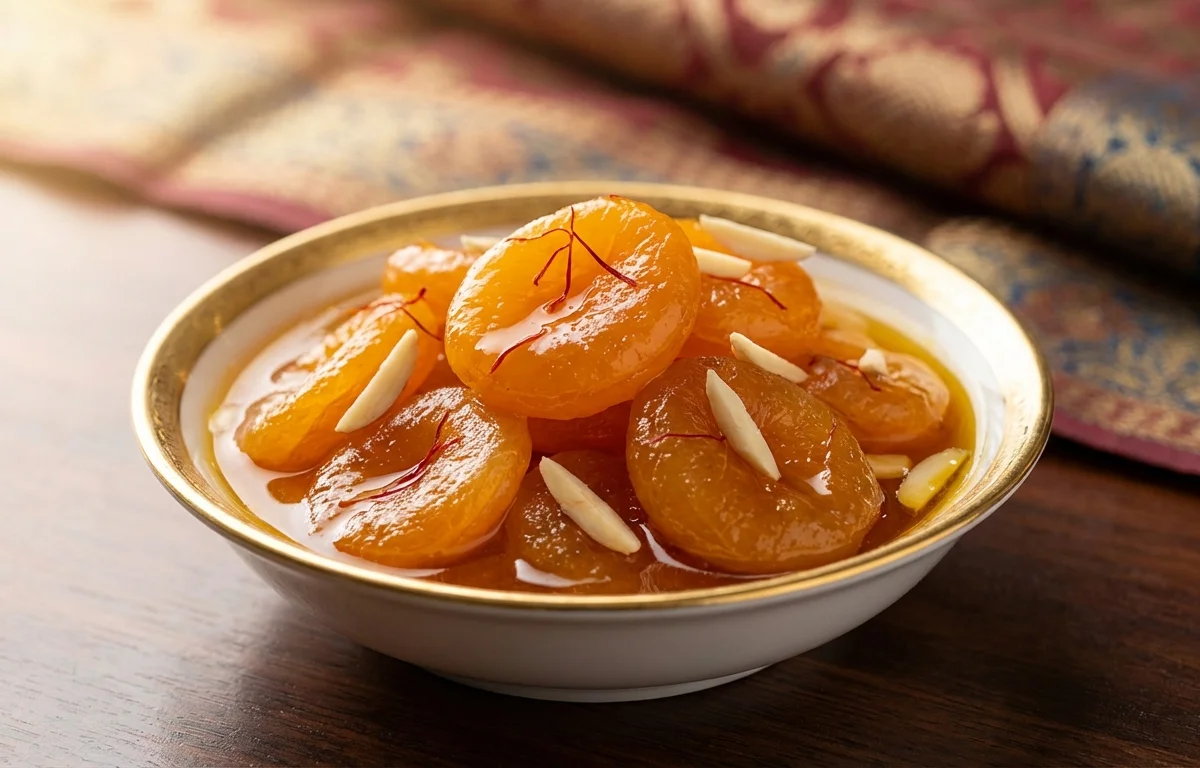
Khubani ka Meetha
A luscious Hyderabadi dessert made from dried apricots, slow-cooked to a jam-like consistency. It's often served with fresh cream or vanilla ice cream, balancing sweet and tangy flavors perfectly. A royal treat for special occasions.
For 4 servings
Soak the Apricots
- Rinse the dried apricots thoroughly under cold running water.
- Place them in a large bowl and cover with 3 cups of water. Let them soak overnight, or for a minimum of 6-8 hours, until they are fully rehydrated, plump, and very soft.
Deseed and Extract Kernels
- After soaking, lift the apricots out of the water but do not discard the soaking water; reserve it.
- Gently squeeze each apricot to pop out the seed. Place the deseeded apricots back into the reserved water.
- SAFETY NOTE: To extract the kernels, wrap the hard seeds in a thick kitchen towel. Place on a hard surface and carefully tap with a hammer or nutcracker until they crack open. Extract the almond-like kernels and set them aside.
Cook the Apricots
- Pour the deseeded apricots along with their soaking water into a heavy-bottomed pot or pan.
- Bring the mixture to a boil over medium heat. Once boiling, reduce the heat to low, cover the pot, and let it simmer for about 25-30 minutes. The apricots should become extremely soft and start to break down.
Mash and Sweeten
- Uncover the pot. Use a potato masher or the back of a sturdy spoon to mash the soft apricots into a coarse, chunky pulp. For a smoother texture, you can use an immersion blender.
- Add the sugar, lemon juice, and cardamom powder to the pot. In a small bowl, soak the saffron strands in 2 tablespoons of warm water for a few minutes, then add this saffron water to the pot.
- Stir everything together until well combined.
Final Simmer and Finish
- Continue to cook the mixture on low heat, stirring frequently, for another 8-10 minutes. The meetha will thicken to a glossy, jam-like consistency.
- Turn off the heat. Stir in the reserved apricot kernels.
- Allow the dessert to cool down slightly. It will thicken more as it cools.
Serve
- Garnish with slivered almonds.
- Serve Khubani ka Meetha warm or chilled. It is traditionally served with a dollop of fresh cream (malai), thick custard, or a scoop of vanilla ice cream to complement its rich flavor.
What to keep in mind.
6 tips from the recipe — small details that make a real difference to the final dish.
- 1Use high-quality, soft dried apricots for the best flavor and texture. The Hunza variety is particularly prized for this dessert.
- 2The soaking step is crucial for achieving the right texture; do not skip it or shorten the time.
- 3Be very careful when cracking the apricot seeds. Wrapping them in a towel prevents the shells from flying around.
- 4The sweetness of dried apricots can vary. Taste the mixture before adding the full amount of sugar and adjust as needed.
- 5The dessert thickens significantly upon cooling. Remove it from the heat when it is slightly runnier than your desired final consistency.
- 6Store leftovers in an airtight container in the refrigerator for up to a week.
Adapt it for your goals.
Smoother Texture
For a more refined, jam-like consistency, blend the cooked apricots with an immersion blender before adding sugar and other flavorings.
Aromatic TwistAromatic Twist
Add 1/2 teaspoon of rose water or a few drops of kewra essence at the very end of cooking for a beautiful floral aroma.
Garnish OptionsGarnish Options
Besides almonds, you can garnish with chopped pistachios, a pinch of saffron strands, or edible silver leaf (vark) for a more festive presentation.
Why this is on our healthy list.
Rich in Dietary Fiber
Dried apricots are an excellent source of dietary fiber, which is essential for digestive health. Fiber helps regulate bowel movements, prevents constipation, and promotes a healthy gut microbiome.
Source of Antioxidants
Apricots are packed with antioxidants, including beta-carotene and other carotenoids. These compounds help protect your cells from damage caused by free radicals, which can contribute to aging and chronic diseases.
Supports Eye Health
The presence of Vitamin A and beta-carotene in apricots is beneficial for maintaining good vision. These nutrients help protect the eyes from age-related macular degeneration and cataracts.
Good Source of Potassium
Dried apricots contain a significant amount of potassium, a mineral that plays a vital role in maintaining fluid balance, nerve signals, and muscle contractions. A potassium-rich diet can also help manage blood pressure.
Frequently asked questions
The best apricots are soft, plump, and naturally sweet varieties like Turkish or Hunza apricots. They rehydrate well and provide a superior flavor and texture to the dessert.


