Kol Posola Khar
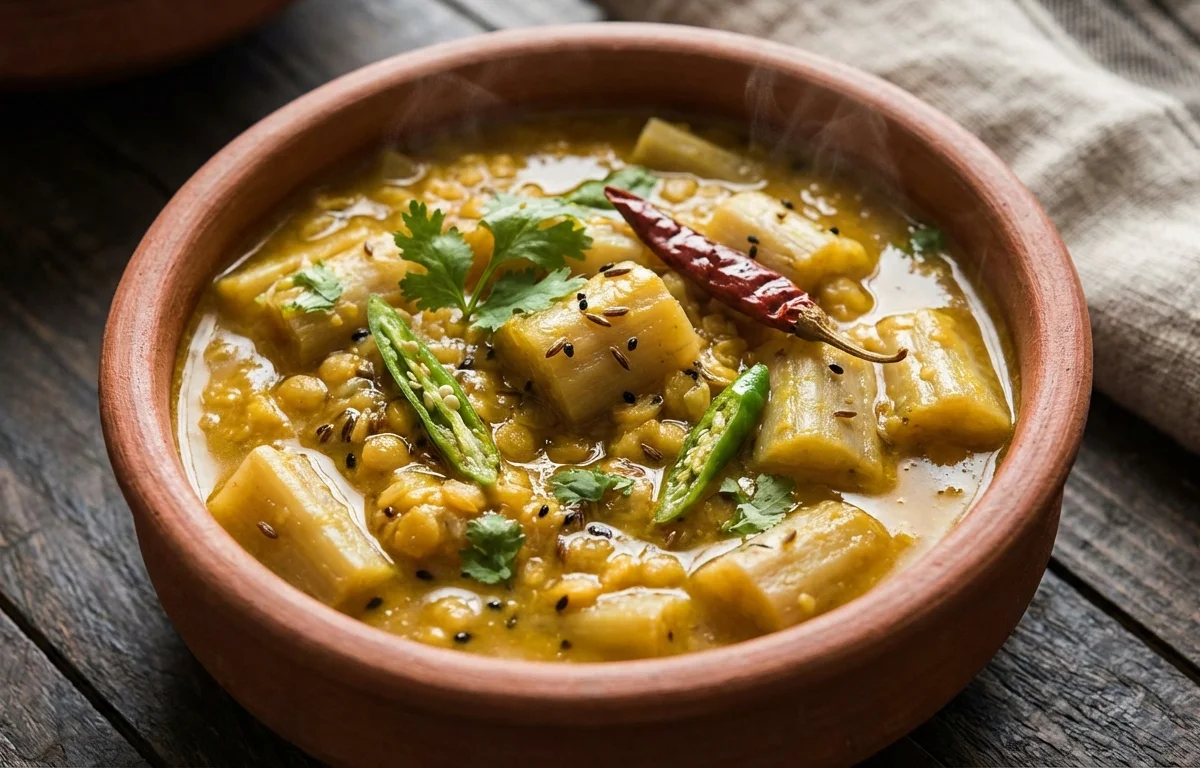
A light, soothing Assamese stew featuring tender banana stem and a unique alkaline khar that gives it a distinct earthy flavor. This humble dish from Northeast India showcases minimal spicing, allowing the natural taste of banana stem to shine through in a thin, comforting gravy.
For 4 servings
- prep · ~10 min
Prepare the banana stem.
1.Peel off the tough outer layers of the banana stem until you reach the tender inner core.2.Slice the core into thin rounds, then into matchsticks, and finally into fine cubes.3.Immediately drop the chopped pieces into a bowl of water to prevent discoloration.TIPRub a little oil on your palms before handling banana stem to avoid the sticky sap. - boil · ~12 min
Boil the banana stem until tender.
1.Drain the chopped banana stem and transfer to a saucepan with 500 ml fresh water.2.Bring to a boil over medium-high heat, then reduce to a simmer.3.Cook until the pieces are fork-tender and translucent, about 10 to 12 minutes.4.Drain and set the cooked banana stem aside.TIPDo not discard the cooking water yet — you can use a splash in the final dish if it needs thinning. - mix · ~1 min
Prepare the khar mixture.
In a small bowl, mix 2 tablespoons of khar with 100 ml of water. Stir well and set aside.
- temper · ~2 min
Temper the aromatics.
1.Heat oil in a kadai or wok over medium heat until warm.2.Add the crushed garlic cloves and sauté until fragrant, about 30 seconds.3.Add the slit green chilies and stir for another 20 seconds.TIPKeep the heat gentle — garlic burns quickly and turns bitter. - simmer · ~6 min
Add khar and banana stem.
1.Remove the kadai from the heat for a moment.2.Pour the diluted khar mixture into the pan, then return to low heat.3.Add the drained boiled banana stem and stir gently to combine.4.Add a pinch of salt, then let it simmer uncovered for 5 to 6 minutes until flavors meld.5.The consistency should be thin and soupy — add a splash of reserved cooking water if too dry.TIPAlways add khar off direct heat to prevent bitterness. Return to a gentle simmer only after mixing. - serve
Serve hot with steamed rice.
Ladle into individual katoris and serve immediately alongside plain steamed rice as part of a traditional Assamese meal.
TIPKol Posola Khar is meant to be the first course of an Assamese thali — the alkaline khar prepares the palate.
What to keep in mind.
6 tips from the recipe — small details that make a real difference to the final dish.
- 1Rub a little oil on your palms before chopping banana stem to avoid the sticky sap.
- 2Drop chopped banana stem into water immediately to prevent discoloration.
- 3Keep the heat gentle when sautéing garlic — it burns quickly and turns bitter.
- 4Always add the diluted khar off the heat to prevent bitterness from developing.
- 5Don't discard the banana stem cooking water; use a splash if the stew needs thinning.
- 6Serve Kol Posola Khar as the first course — the alkaline khar prepares the palate for the meal.
Adapt it for your goals.
With lentils
Add 2 tablespoons of cooked yellow moong dal before simmering for extra protein and a creamier texture, popular in some Assamese households.
spicierSpicier
Increase green chilies to 4-5 or add a pinch of dried red chili flakes for more heat while keeping the dish's traditional lightness.
no oilNo-oil
Dry-roast the crushed garlic in a hot pan and skip the oil for a lower-fat version that still retains aromatic depth.
Why this is on our healthy list.
Supports Digestion
Banana stem is rich in fiber and acts as a natural diuretic, while khar's mild alkaline properties can aid in balancing stomach acidity.
Low in Calories and Fat
This stew uses minimal oil and no heavy cream or coconut, making it a light, waistline-friendly addition to a meal.
Rich in Potassium
Banana stem is a good source of potassium, which helps regulate blood pressure and supports muscle function.
Frequently asked questions
Traditional khar is hard to replace; a pinch of baking soda dissolved in water mimics the alkalinity but with a slightly different flavor—use sparingly.