Koni aru Kosu Xaak Bhaji
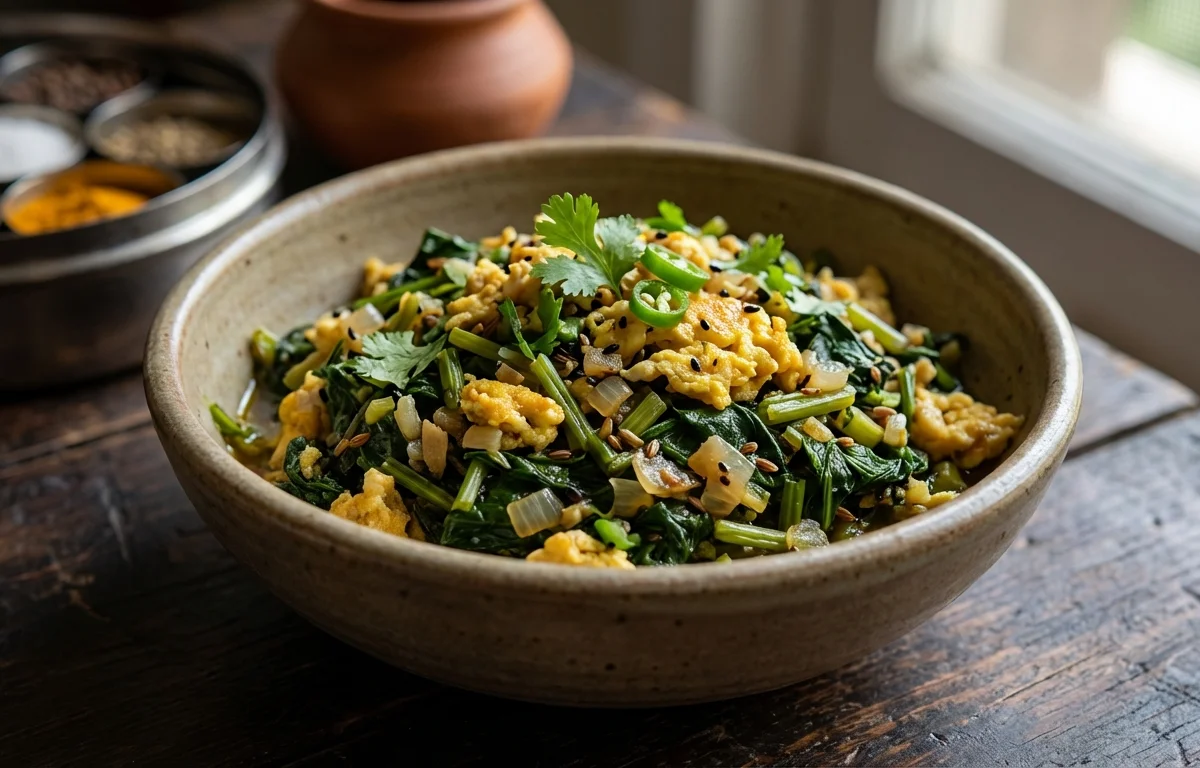
This homestyle Assamese stir-fry brings together tender duck egg and colocasia greens in a simple, earthy bhaji. Lightly spiced and cooked with everyday aromatics, it tastes best with plain rice as part of a comforting meal.
For 4 servings
- prep · ~10 min
Prepare the greens and eggs.
1.Wash the colocasia leaves and stalks very well to remove grit.2.Finely chop the leaves and tender stalks.3.Beat the duck eggs in a bowl with a pinch of turmeric powder and a small pinch of salt. - saute · ~6 min
Cook the aromatics.
1.Heat mustard oil in a pan over medium heat until it smells sharp and just starts to smoke lightly.2.Add the chopped onion and cook until soft and light golden.3.Add ginger, garlic, and green chili, then cook for 1 minute until fragrant. - saute · ~8 min
Cook the colocasia greens.
1.Add the chopped colocasia leaves and stalks to the pan.2.Add the remaining salt and mix well.3.Pour in the water, cover, and cook until the greens soften and reduce.TIPCook the greens fully before adding the egg so the bhaji loses any raw, itchy quality from colocasia. - mix · ~3 min
Add the egg and stir until set.
Lower the heat and pour in the beaten duck egg. Stir continuously so the egg coats the greens and cooks into soft curds without forming large lumps.
- saute · ~3 min
Dry out the bhaji lightly.
Cook for another 2 to 3 minutes, stirring often, until the egg is fully set and the bhaji looks moist but not wet.
- serve
Serve hot with plain rice.
What to keep in mind.
7 tips from the recipe — small details that make a real difference to the final dish.
- 1Wash colocasia leaves and stalks in several changes of water; grit hides in the folds and can ruin the bhaji.
- 2Let the mustard oil reach its light smoking point before adding onion to tame its raw pungency.
- 3Cook the kosu xaak completely before the egg goes in; undercooked colocasia can leave an itchy feel.
- 4Keep the heat low when adding the beaten duck egg so it forms soft curds instead of a dry scramble.
- 5Stir continuously after adding egg so it coats the chopped greens evenly and stays bhaji-like, not chunky.
- 6Stop cooking when the pan looks moist but no free water remains; this dish should be soft, not soupy.
- 7Leftovers keep well for a day refrigerated; reheat gently in a pan rather than microwaving to avoid rubbery egg.
Adapt it for your goals.
Low-oil
Use 1 tablespoon mustard oil and a splash more water while cooking the greens for a lighter everyday version.
spicierSpicier
Add extra slit green chilies or a little chopped fresh chili if you want a sharper heat against the rich duck egg.
chicken eggChicken-egg
Replace duck eggs with chicken eggs for a milder, more accessible version if duck eggs are unavailable.
garlic forwardGarlic-forward
Increase the garlic slightly for a deeper savory note that pairs especially well with plain rice.
Why this is on our healthy list.
Protein-rich from duck egg
Duck egg adds satisfying protein and richness, making this simple greens bhaji more filling as part of a rice meal.
Leafy greens support
Colocasia leaves contribute plant nutrients and fiber, adding substance and balance to the dish.
Digestive aromatics
Ginger, garlic, and green chili bring flavor while also making the earthy greens taste brighter and less heavy.
Frequently asked questions
They need thorough cooking to lose their raw, itchy quality and become tender enough for a pleasant bhaji texture.