Kosu Xaak
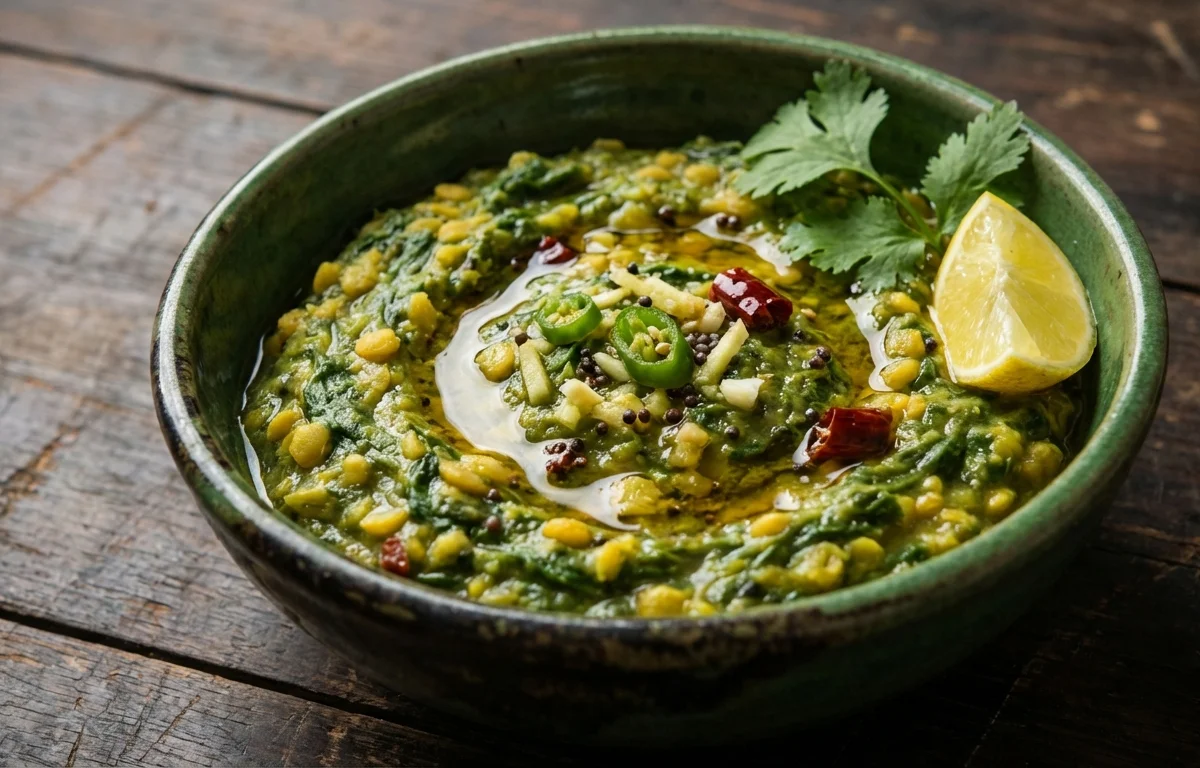
A rustic Assamese stir-fry made with tender colocasia leaves and stems, cooked with minimal spices and a hint of garlic. This everyday dish brings a unique earthy, slightly slippery texture that pairs perfectly with plain rice and a squeeze of lemon.
For 4 servings
- prep · ~10 min
Clean and chop the colocasia leaves.
1.Select tender colocasia leaves with thin stems; avoid older, fibrous ones.2.Wash leaves and stems thoroughly under running water to remove all dirt and grit.3.Remove any tough fibers from the stems by peeling lightly with your fingers.4.Chop the leaves and stems together into small, uniform pieces.TIPRub a little mustard oil on your hands before handling colocasia to prevent itchiness from the oxalate crystals. - boil · ~11 min
Boil the chopped greens until tender.
1.Place the chopped colocasia leaves and stems in a saucepan with water.2.Add half the salt, cover, and bring to a boil over medium heat.3.Cook until the greens are soft and the stems are tender, about 10 minutes.4.Drain any excess water and set aside. Do not squeeze the greens.TIPProperly cooked colocasia loses its scratchy, itchy quality — if it still feels slightly harsh on the tongue, cook it a few minutes longer. - saute · ~2 min
Sauté the garlic and chili in mustard oil.
1.Heat mustard oil in a frying pan over medium heat until it just reaches its smoking point.2.Reduce the heat to low and add the crushed garlic.3.Sauté until the garlic turns light golden and fragrant, about 30 seconds.4.Add the slit green chilies and stir for a few seconds.TIPLetting mustard oil reach its smoking point and then cooling slightly removes its raw pungency and gives the dish its characteristic Assamese flavor. - saute · ~7 min
Stir-fry the boiled greens with the tempering.
1.Add the drained boiled colocasia to the pan with the garlic and chili.2.Sprinkle in the remaining salt and mix well to combine.3.Stir-fry over medium heat, mashing lightly with the back of the spatula, until any remaining moisture evaporates and the greens look glossy, about 5 to 7 minutes.4.Remove from heat.TIPMashing the greens lightly while stir-frying blends all the textures — the stems soften further and the leaves absorb the garlic-infused oil beautifully. - serve
Serve hot with rice and lemon wedges.
Transfer the Kosu Xaak to a serving bowl. Squeeze a wedge of fresh lemon over the top just before eating. Serve alongside steamed rice and a bowl of dal for a simple, satisfying Assamese meal.
What to keep in mind.
7 tips from the recipe — small details that make a real difference to the final dish.
- 1Wear gloves or oil your hands before chopping colocasia to avoid skin irritation from oxalate crystals.
- 2Boil the leaves until completely soft to neutralize the irritating compounds; taste-test a stem.
- 3Let the mustard oil reach its smoking point, then cool slightly before adding garlic for authentic Assamese flavor.
- 4Do not squeeze the boiled greens dry — the retained moisture helps the stir-fry stay tender.
- 5Mash the greens gently while stir-frying to break down stems and absorb the garlic oil.
- 6Kosu Xaak tastes best when served immediately; reheat gently to avoid overcooking.
- 7Leftovers can be stored in the fridge for up to 2 days; the texture softens further.
Adapt it for your goals.
With dried fish
Add a piece of smoked or dried fish (like masor tenga or shidol) while boiling the leaves for a punchy, umami-rich variation common in rural Assamese homes.
lighter oilLighter oil
Substitute mustard oil with any neutral vegetable oil if you prefer a milder flavor, though you'll lose the characteristic pungent kick.
veganVegan
This dish is already vegan; just ensure the mustard oil is plant-based and serve with lemon.
Why this is on our healthy list.
Rich in Dietary Fiber
Colocasia leaves and stems are high in fiber, which supports healthy digestion and helps maintain steady blood sugar levels.
Good Source of Iron
Taro leaves provide plant-based iron, essential for red blood cell production and preventing anemia, especially when paired with the lemon squeeze that boosts absorption.
Antioxidant-Rich Greens
Colocasia contains antioxidants like vitamin C and beta-carotene that help protect cells from oxidative stress.
Low in Calories, High in Nutrients
This stir-fry is naturally low in calories yet packed with vitamins A and C, making it a nutrient-dense side dish.
Frequently asked questions
Mature leaves are tougher and have more oxalate crystals, which can cause itchiness even after cooking. Stick to tender leaves with thin stems for the best texture and safety.