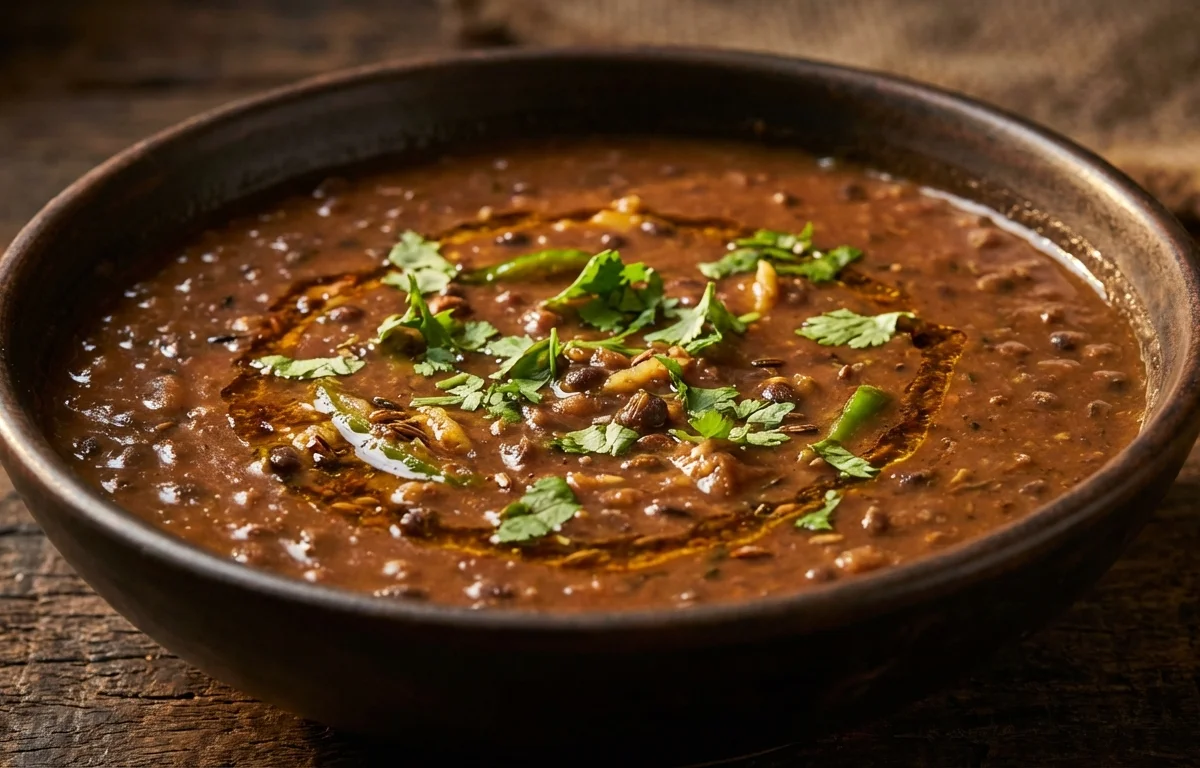
Mati Mahor Dal
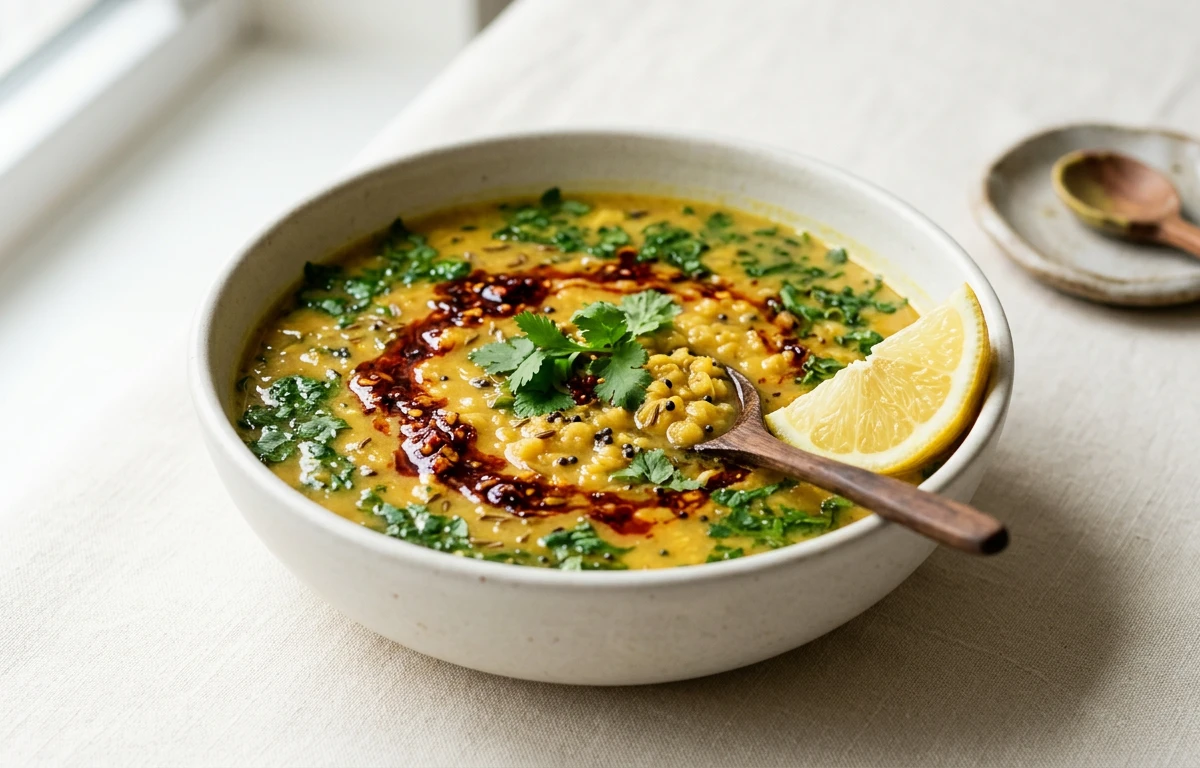
A rustic village-style lentil dish with earthy flavor and a simple tempering of garlic, cumin, and red chili. It cooks into a comforting bowl that tastes best with plain rice or rotis and keeps the seasoning straightforward and homely.
For 4 servings
- prep · ~30 min
Wash and soak the dal.
Pick through the mati mahor dal, rinse it well, and soak it in fresh water for 30 minutes. Drain before cooking.
- pressure cook · ~20 min
Pressure cook the dal until soft.
1.Add the soaked dal to a pressure cooker with water, turmeric powder, and salt.2.Stir once and close the lid.3.Cook on medium heat for 4 whistles, then let the pressure drop naturally.4.Open and lightly mash the dal for a rustic texture.TIPIf the dal looks too thick after cooking, add a little hot water and simmer briefly. - temper · ~2 min
Make the garlic tempering.
1.Heat ghee in a small pan over medium heat.2.Add cumin seeds and let them crackle for a few seconds.3.Add crushed garlic and cook until lightly golden.4.Add dried red chili and asafoetida, then cook for 10 seconds.TIPKeep the heat moderate so the garlic turns golden and sweet, not dark and bitter. - simmer · ~4 min
Mix the tempering into the dal.
Pour the hot tempering over the cooked dal and mix well. Simmer for 3 to 4 minutes so the flavors come together.
- garnish
Garnish with coriander leaves.
- serve
Serve hot with rice or rotis.
What to keep in mind.
7 tips from the recipe — small details that make a real difference to the final dish.
- 1Soaking the mati mahor dal for the full 30 minutes helps it cook evenly and keeps the grains from splitting too much.
- 2After pressure cooking, mash only lightly so the dal stays rustic instead of turning completely smooth.
- 3If the cooked dal thickens as it sits, loosen it with hot water, not cold, before the final simmer.
- 4Crush the garlic lightly rather than mincing it; bigger pieces turn sweet and golden in the ghee without burning fast.
- 5Add the asafoetida only after the garlic is nearly golden so it blooms in the hot fat without scorching.
- 6Pour the tempering over the dal while it is still sizzling hot to trap the aroma of cumin, chili, and garlic.
- 7This dal keeps well for a day in the fridge; reheat gently and add a spoon of hot water if it has tightened.
Adapt it for your goals.
Vegan
Replace ghee with peanut oil or a neutral oil for a dairy-free version that still carries the garlic-cumin tadka well.
jainJain
Skip the garlic and increase cumin and hing slightly for a simpler tempering that keeps the dish sattvic-friendly in style.
spicierSpicier
Add an extra dried red chili or crush one into the tadka if you want a sharper heat with the earthy dal.
thin dalThin-dal
Add a little more hot water after cooking for a looser consistency that pairs especially well with steamed rice.
Why this is on our healthy list.
Plant-Based Protein
The mati mahor lentils provide plant protein, making this simple dal filling and useful for a balanced everyday meal.
Digestive Spice Support
Cumin, asafoetida, and garlic are traditionally used in dals to add flavor while making legumes feel easier to digest.
Comforting Yet Light
This recipe uses a small amount of ghee and relies mostly on lentils, water, and spices, so it stays hearty without being heavy.
Herb and Spice Antioxidants
Turmeric, garlic, red chili, and fresh coriander contribute beneficial plant compounds along with the rustic flavor.
Frequently asked questions
Yes, but it may need a little more water and extra pressure-cooking time. Soaking helps the lentils cook more evenly and keeps the texture better.