
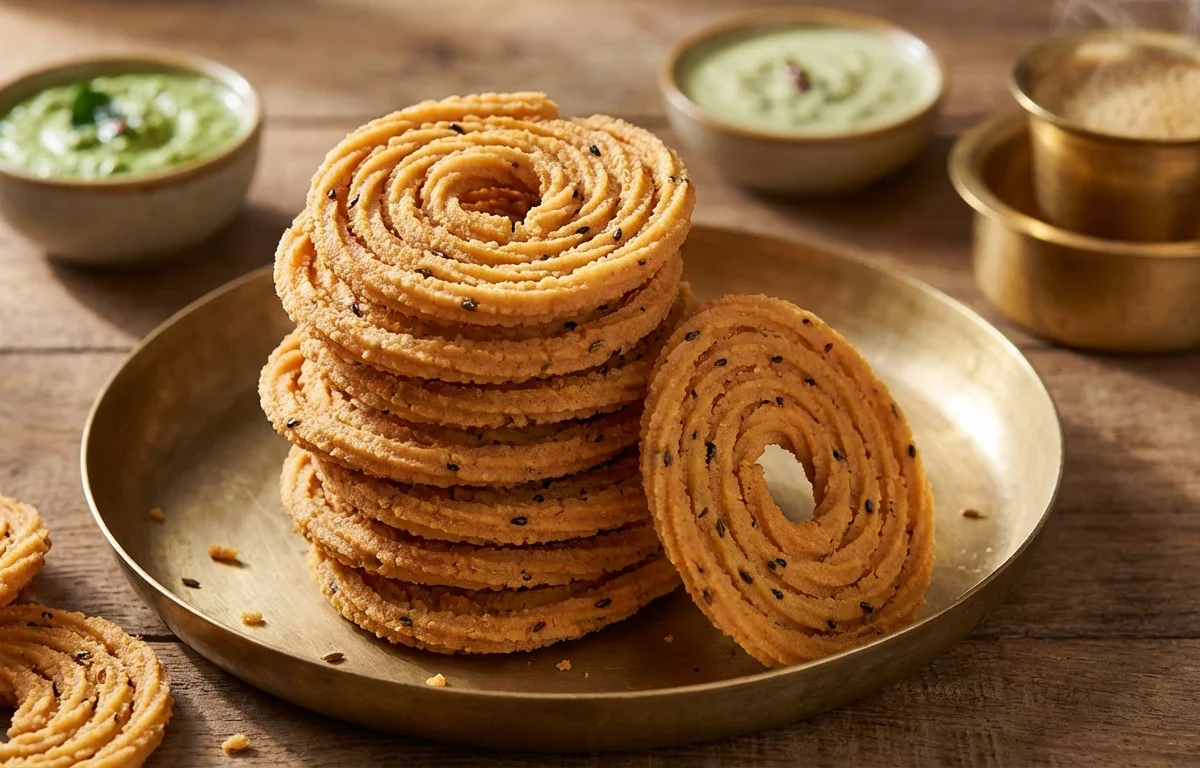
Murukulu
Crunchy, spiral South Indian snacks made with rice flour, urad dal, sesame, and cumin. The dough is pressed into coils and fried until crisp, making them perfect for tea-time nibbling or festive snack boxes.
For 8 servings
- mix · ~3 min
Mix the dry ingredients.
1.Add rice flour and urad dal flour to a wide bowl.2.Add cumin seeds, sesame seeds, red chili powder, asafoetida, and salt.3.Mix well so the spices are evenly spread through the flour. - mix · ~7 min
Make the dough.
1.Add softened butter to the flour mixture and rub it in with your fingers.2.Pour in water a little at a time and bring everything together.3.Make a smooth, soft dough that is pliable but not sticky.TIPKeep the dough soft enough to press easily. A stiff dough can crack while shaping. - prep · ~8 min
Shape the murukulu.
1.Grease the inside of a murukulu press lightly with a little oil from the frying oil.2.Fill the press with part of the dough and close it.3.Press spirals onto small squares of parchment paper or directly over a slotted ladle in medium-sized coils.TIPDo not make very thick coils or they may stay soft in the center after frying. - fry · ~15 min
Fry the murukulu.
1.Heat oil for deep frying in a kadai over medium heat.2.Slide 2 to 3 shaped murukulu gently into the hot oil without crowding the pan.3.Fry, turning once or twice, until bubbling reduces and the murukulu turn light golden and crisp.4.Lift out and drain well before frying the next batch.TIPUse medium heat throughout. Very hot oil browns the outside too fast and leaves the inside undercooked. - rest · ~10 min
Cool the murukulu completely.
Let the fried murukulu cool on a plate or rack until fully crisp. They firm up more as they cool.
- serve
Serve or store the murukulu.
What to keep in mind.
6 tips from the recipe — small details that make a real difference to the final dish.
- 1If the dough starts cracking while pressing, knead in 1 to 2 teaspoons of water to restore pliability.
- 2Press and fry in small batches; dough left uncovered dries quickly and makes murukulu break.
- 3Shape medium-thin coils with a little space between rounds so the centers fry crisp, not chewy.
- 4Wait for the oil bubbling to noticeably reduce before removing them; that is the best cue they are cooked through.
- 5Drain on a rack instead of stacking on a plate, so trapped steam does not soften the spirals.
- 6Cool completely before storing in an airtight tin, or the residual warmth will make them lose crunch.
Adapt it for your goals.
Vegan
Replace butter with hot oil or vegan butter for the same short, crisp texture without dairy.
spicierSpicier
Increase red chili powder slightly or add crushed black pepper for a sharper tea-time snack.
garlicGarlic
Mix in a little garlic paste or garlic powder for a stronger savory flavor that pairs well with the sesame.
ajwainAjwain
Swap part of the cumin with ajwain for a more aromatic, digestively warming variation common in snack mixes.
Why this is on our healthy list.
Lentil-Boosted Snack
The urad dal flour adds plant protein and makes this rice-flour snack more satisfying than a starch-only fry.
Aromatic Seed Goodness
Sesame and cumin contribute flavor along with naturally occurring beneficial fats and plant compounds.
Portion-Friendly Nibbler
Because murukulu are intensely crisp and flavorful, a small serving can feel satisfying with tea or as part of a festive snack plate.
Frequently asked questions
The dough is usually too dry or too stiff. Add a little water, knead again, and keep the remaining dough covered while shaping.


