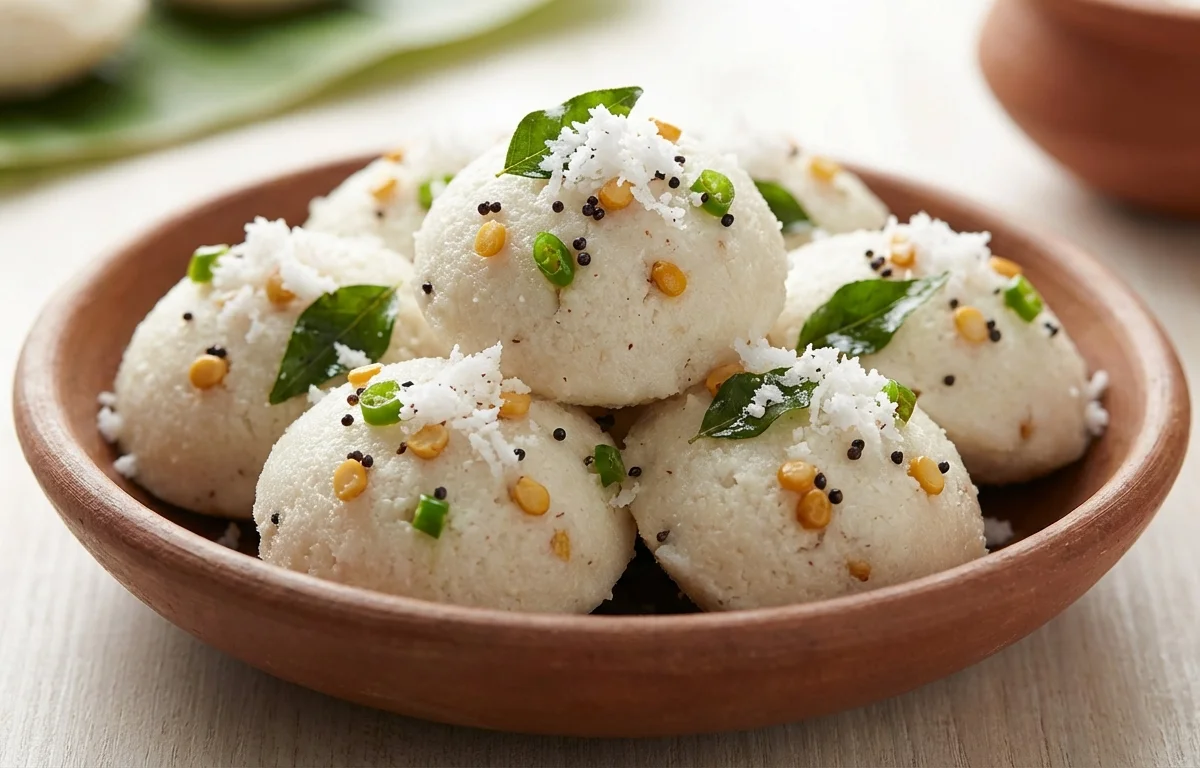
Oondi
Oondi is a simple tribal-style rice dumpling dish from central India, made with lightly seasoned rice flour dough and steamed until soft. It is filling, earthy, and usually enjoyed warm with a mild chutney or curry.
For 8 servings
- boil · ~5 min
Boil the water.
Bring the water and salt to a boil in a pot over medium heat.
- mix · ~4 min
Mix in the rice flour.
Lower the heat and add the rice flour gradually, stirring continuously to avoid lumps. Mix until it comes together into a thick dough.
TIPKeep the heat low while adding the flour so the dough stays smooth and easy to shape. - rest · ~5 min
Cool the dough slightly.
Take the pot off the heat and let the dough rest until cool enough to handle but still warm.
- mix · ~7 min
Shape the oondi.
1.Grease your palms lightly with oil.2.Divide the warm dough into 8 equal portions.3.Roll each portion into a smooth oval or round dumpling. - steam · ~15 min
Steam the dumplings.
Grease the steamer plate lightly with oil and arrange the dumplings with a little space between them. Steam until firm and cooked through.
TIPDo not overcrowd the steamer or the dumplings may stick together. - serve
Serve the oondi warm.
What to keep in mind.
7 tips from the recipe — small details that make a real difference to the final dish.
- 1Add the rice flour in a steady stream while stirring so the dough stays smooth and lump-free.
- 2Shape the dumplings while the dough is still warm; cold rice dough tends to crack at the edges.
- 3If the dough feels dry while shaping, wet your fingertips lightly instead of adding extra oil.
- 4Keep the oondi similar in size so all 8 dumplings steam through at the same time.
- 5The dumplings are done when the surface looks set and they feel firm but springy when pressed.
- 6Let the steamed oondi sit for 2 minutes before lifting them off the plate to reduce sticking.
- 7Leftover oondi can be refrigerated and gently re-steamed or pan-warmed with a splash of water.
Adapt it for your goals.
Mini-oondi
Shape smaller bite-size dumplings for faster steaming and easier serving alongside chutney at breakfast or as a snack.
stuffedStuffed
Fill each dumpling with a lightly spiced coconut or lentil mixture to turn the simple base into a more festive, flavorful version.
millet mixMillet-mix
Replace part of the rice flour with millet flour for a nuttier taste and a slightly denser tribal-style variation.
temperedTempered
Toss steamed oondi in a light tempering of mustard seeds, curry leaves, and green chili for more aroma and texture.
Why this is on our healthy list.
Light Steamed Preparation
Because oondi is steamed rather than fried, it stays gentle and relatively light while still being filling.
Simple Ingredient Dish
Made mainly from rice flour, water, and a little salt, this is a minimal, easy-to-digest style of comfort food.
Low Added Fat
Only a small amount of oil is used for greasing hands and the steamer plate, not for cooking the dumplings in fat.
Frequently asked questions
The dough has likely cooled too much or turned a bit dry. Shape it while still warm, and moisten your fingers lightly if needed.