Oou Khatta
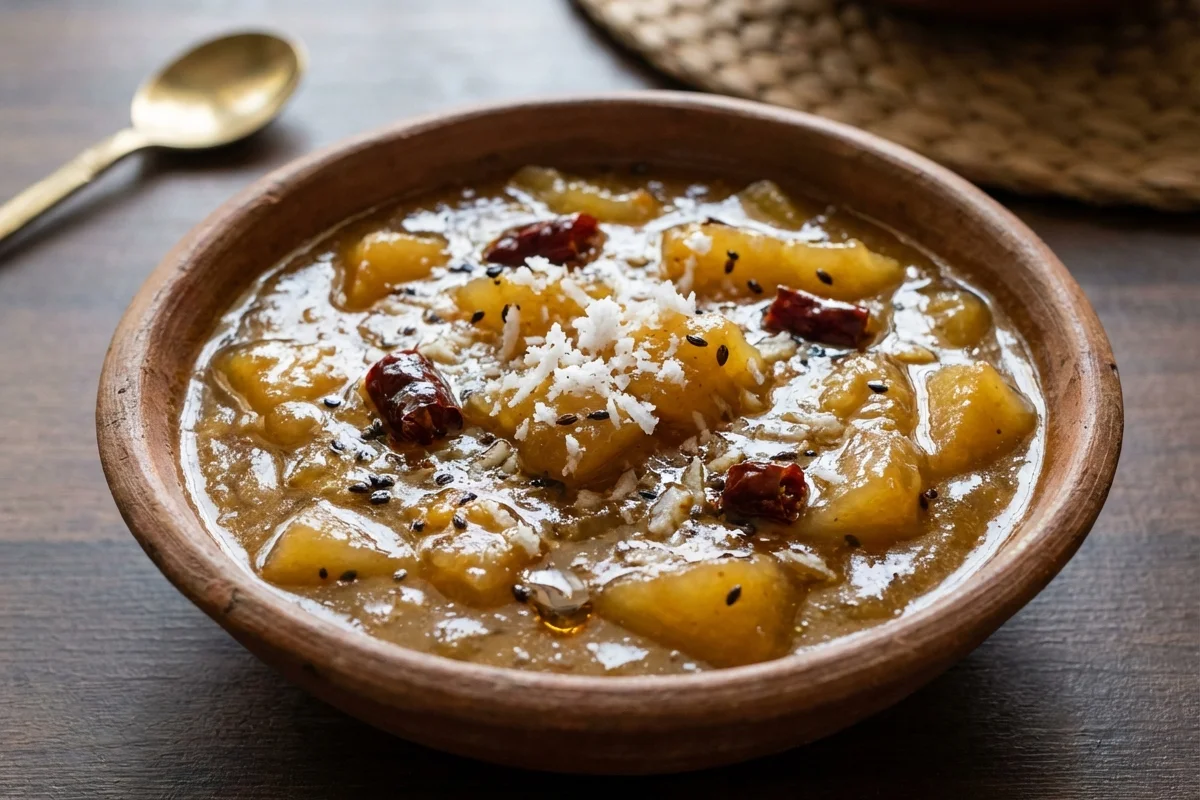
A classic sweet and sour chutney from Odisha made with elephant apple. Jaggery and a fragrant tempering of mustard seeds and curry leaves balance the fruit's natural tartness for a uniquely refreshing side dish.
For 4 servings
- prep · ~11 min
Cook the elephant apple slices.
Place elephant apple slices in a pan with water and a pinch of salt. Bring to a boil, then simmer until the fruit softens and the water reduces by half, about 10-12 minutes.
TIPThe elephant apple will soften but still hold its shape. Don't mash it completely—the texture is part of the charm. - mix · ~6 min
Add jaggery and simmer further.
Add the grated jaggery to the pan and stir gently until it dissolves. Continue to simmer for 5-7 more minutes until the mixture thickens slightly. Turn off the heat.
- temper · ~2 min
Make the tempering.
1.Heat mustard oil in a small tadka pan over medium heat until it reaches its smoking point.2.Add mustard seeds and let them splutter (30 sec).3.Add broken dried red chilies and curry leaves, frying until fragrant and crisp (20-30 sec).TIPLetting mustard oil smoke slightly removes its raw pungency and gives the chutney its authentic flavor. - mix · ~1 min
Pour the tempering over the cooked apple.
Immediately pour the hot tempering over the cooked elephant apple mixture. Stir gently to combine.
- serve
Serve warm or at room temperature.
Transfer to a serving bowl. Serve as a refreshing sweet and sour side with rice and dal, or as a palate cleanser between courses.
What to keep in mind.
6 tips from the recipe — small details that make a real difference to the final dish.
- 1Choose an elephant apple that yields slightly to pressure for the best balance of tartness and texture.
- 2Cut the elephant apple into uniform thick slices (about 1 cm) so they cook evenly without turning mushy.
- 3Let the mustard oil reach its smoking point before adding seeds — this tames its raw pungency and unlocks authentic Odia flavor.
- 4Stir the jaggery gently until fully dissolved to avoid scorching on the pan bottom.
- 5Pour the hot tempering immediately over the cooked fruit to infuse the dish with the aromatic crackle of curry leaves and mustard.
- 6Serve Oou Khatta the same day for the best texture; leftovers can be refrigerated for up to 3 days but the fruit softens further.
Adapt it for your goals.
Low-oil
Skip the tempering and simply stir in a pinch of asafoetida and dry-roasted cumin powder at the end; reduces oil while keeping a warm, earthy note.
spicierSpicier
Add 1-2 slit green chillies along with the jaggery for a fresh, lingering heat that contrasts beautifully with the sweet-sour base.
sweet tangy fusionSweet-tangy fusion
Replace half the water with freshly squeezed orange juice for a citrusy twist that brightens the elephant apple's natural tartness.
Why this is on our healthy list.
Rich in Dietary Fiber
Elephant apple (kathbel) is a good source of fiber, which aids digestion and helps maintain steady blood sugar levels.
Natural Sweetener
Jaggery provides iron and trace minerals, offering a more nutrient-dense alternative to refined sugar in this sweet-sour chutney.
Digestive Support
Mustard seeds and curry leaves are traditionally used in Indian cuisine to stimulate digestion and reduce bloating.
Low in Fat
With only 2 teaspoons of mustard oil for the entire dish, Oou Khatta is a naturally low-fat accompaniment.
Frequently asked questions
Elephant apple (kathbel) has a unique tart, slightly resinous flavor. If unavailable, substitute with an equal weight of Granny Smith apple plus 1 tablespoon of lemon juice for similar tang.