
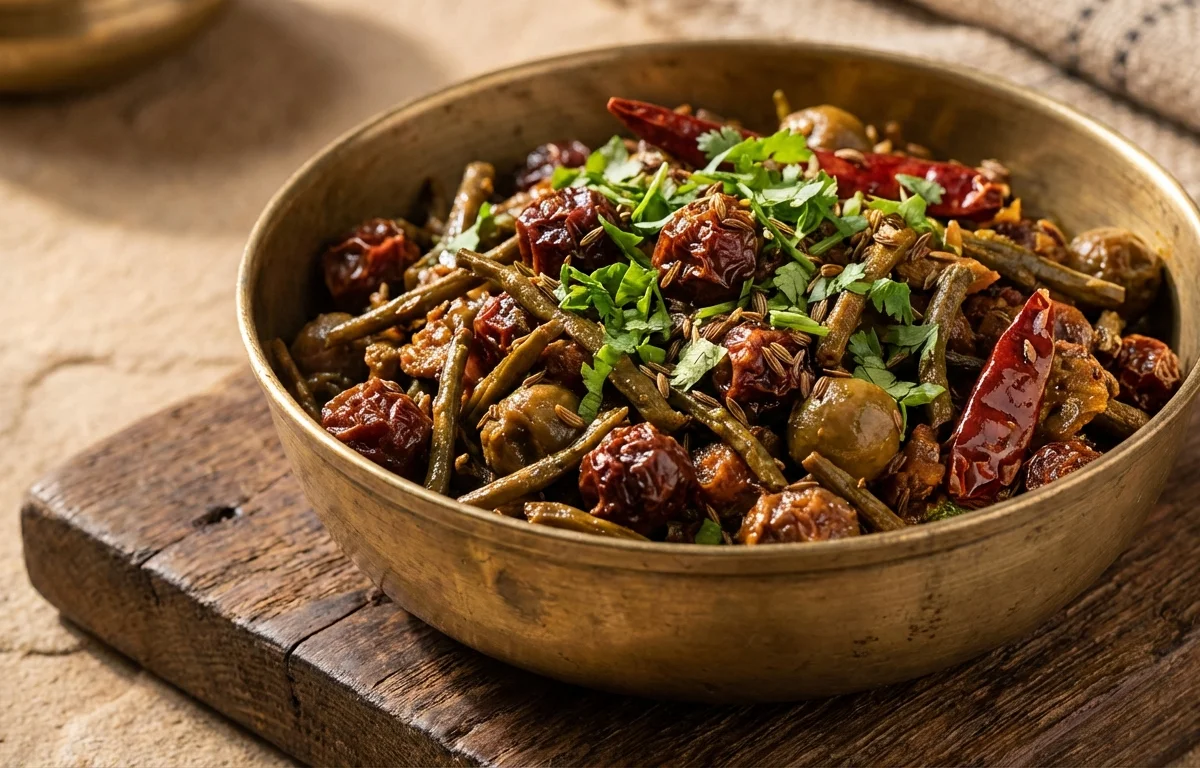
Panchkuta Sabzi
A rustic, tangy stir-fry of five dried desert vegetables and berries, deeply rooted in Rajasthan's culinary heritage. This no-onion, no-garlic sabzi captures the essence of the Thar desert with its chewy textures, bright yogurt kick, and fragrant whole spice tempering.
For 4 servings
- prep
Soak the dried vegetables overnight.
Wash all five dried desert vegetables (sangri, ker, kumatiya, gunda, kachri) thoroughly and soak them in plenty of water for 8 hours or overnight. Drain the soaking water completely.
TIPDon't skip the overnight soak — these are extremely tough dried berries and beans that need time to rehydrate before cooking. - pressure cook · ~15 min
Pressure cook the soaked vegetables.
1.Transfer the soaked and drained vegetables to a pressure cooker.2.Add 500 ml water and 0.25 tsp salt.3.Pressure cook on medium heat for 3-4 whistles.4.Let the pressure release naturally, then drain the water completely.TIPThe vegetables should be tender but still hold their shape. Avoid overcooking into a mush. - temper · ~2 min
Make the tempering.
1.Heat oil in a kadhai over medium heat until shimmering.2.Add cumin seeds and let them crackle for 30 seconds.3.Add dried red chilies and slit green chilies; sauté for 20 seconds until fragrant. - saute · ~8 min
Sauté the boiled vegetables with spices.
1.Add the boiled and drained panchkuta vegetables to the kadhai.2.Sprinkle in turmeric powder, red chili powder, coriander powder, and remaining 0.25 tsp salt.3.Stir well to coat every piece of vegetable with the spices.4.Sauté on medium heat for 7-8 minutes, stirring occasionally, until the vegetables start to look dry and slightly roasted.TIPPatience here rewards you — the vegetables need this dry-roasting time to develop a deeper, nuttier flavor. - saute · ~3 min
Finish with yogurt and amchur.
1.Reduce the heat to low.2.Add the whisked yogurt and dry mango powder.3.Stir continuously for 2-3 minutes until the yogurt is fully absorbed and coats the vegetables.4.Cook until the sabzi is completely dry.TIPKeep the heat low after adding yogurt to prevent it from curdling — stir without stopping. - garnish
Garnish with cilantro and serve hot.
Turn off the heat. Transfer to a serving bowl, sprinkle generously with chopped cilantro, and serve immediately.
TIPThis sabzi tastes even better after resting for an hour — the flavors meld beautifully.
What to keep in mind.
7 tips from the recipe — small details that make a real difference to the final dish.
- 1Soak all five dried ingredients overnight to ensure even rehydration and tender texture.
- 2Drain the pressure-cooked vegetables thoroughly before adding to the tempering to avoid a watery sabzi.
- 3Dry-roast the boiled vegetables for a full 7-8 minutes to develop a nutty, caramelized depth.
- 4Whisk yogurt until completely smooth and bring it to room temperature to prevent curdling when added.
- 5Keep the heat on low when adding yogurt and stir continuously for a silky, non-separated finish.
- 6Let the sabzi rest for an hour after cooking for the flavors to meld and deepen.
- 7Store leftovers in an airtight container in the fridge for up to 3 days; reheat in a dry pan.
Adapt it for your goals.
Low-oil
Reduce oil to 1 tablespoon and skip the final dry-roasting step — simply steam the boiled vegetables with the spices for a lighter, lower-fat version that still delivers the signature tangy taste.
spicierSpicier
Increase dried red chilies to 4 and add 1/2 teaspoon of crushed black pepper along with the amchur for a fiery, peppery version that cuts through the richness of yogurt.
veganVegan
Replace yogurt with 3 tablespoons of thick, unsweetened plant-based yogurt (such as coconut or almond) to keep the creamy tang without any dairy.
protein boostProtein-boost
Add 100g of boiled, cubed paneer or tofu along with the vegetables in step 4 to turn this side dish into a hearty, protein-rich main course.
Why this is on our healthy list.
Rich in Plant Protein
Sangri and ker are dried desert beans packed with plant-based protein, making this sabzi a nourishing addition to vegetarian and vegan diets.
Gut-Friendly Fermented Food Base
Yogurt provides live probiotics that support digestion and gut health, especially when added at low heat to preserve beneficial cultures.
Antioxidant Powerhouse
Dried wild berries like kumatiya and gunda contain anthocyanins and tannins that help fight oxidative stress and inflammation.
Low in Saturated Fat
With only 2 tablespoons of oil and no heavy cream or butter, this sabzi is naturally low in unhealthy saturated fats.
High in Dietary Fiber
All five dried vegetables are rich in indigestible fiber, which promotes regular digestion and helps maintain steady blood sugar levels.
Frequently asked questions
No — the dish relies on the unique chewy texture and concentrated flavor of dried desert ingredients. Fresh substitutes will not rehydrate or taste the same.


