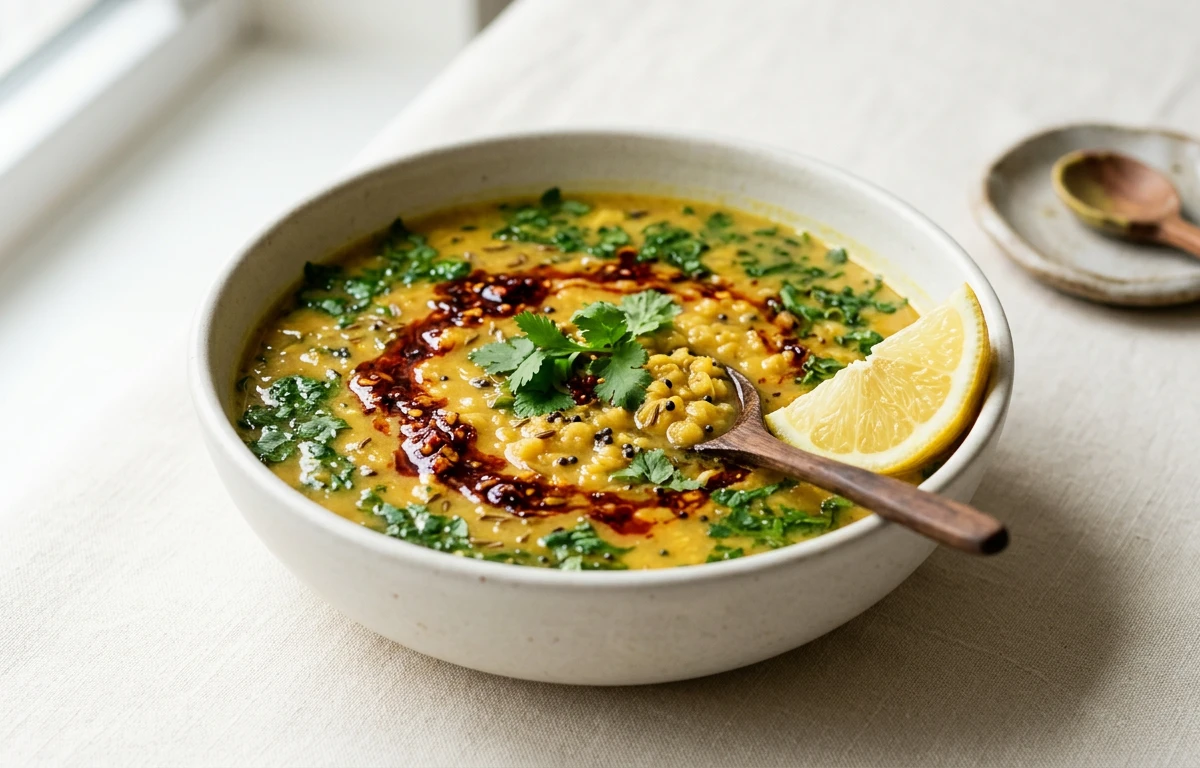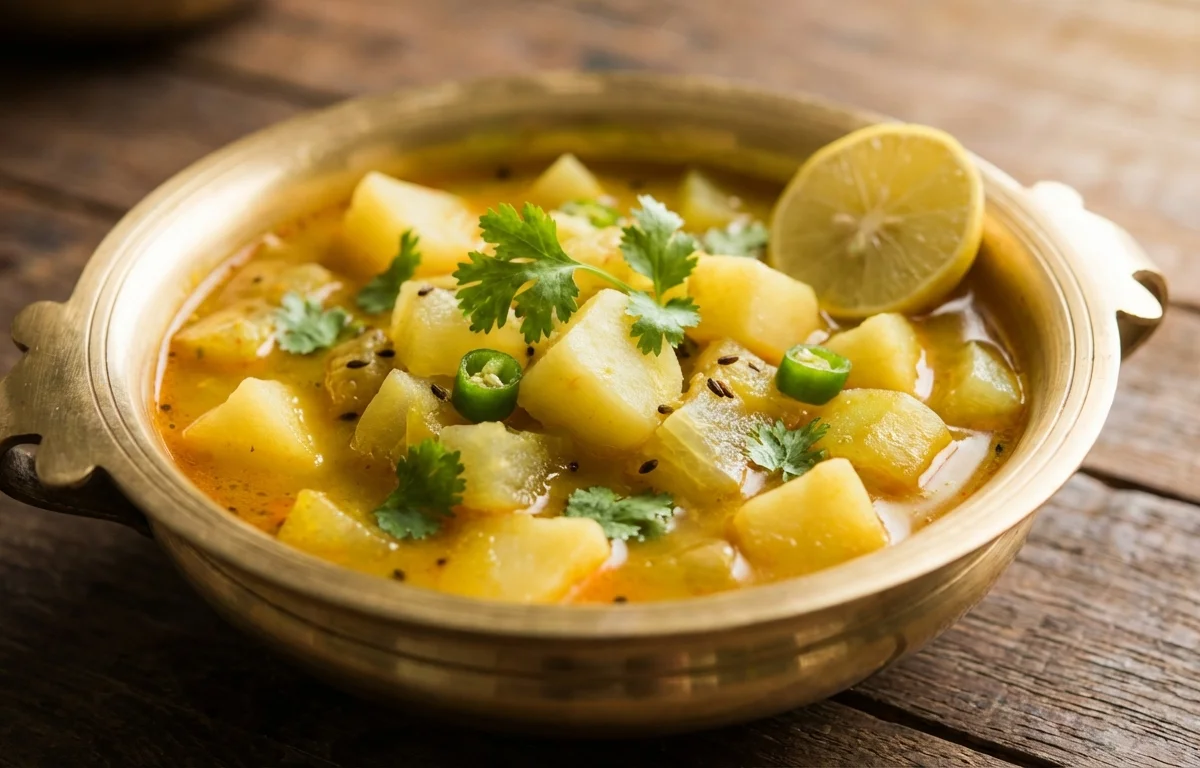
Pani Tenga Vegetable
A light Assamese mixed vegetable curry with a clear, tangy broth. Everyday vegetables simmer gently with tomato and lime for a clean, comforting dish that tastes especially good with plain rice.
For 4 servings
- prep · ~10 min
Prep the vegetables.
1.Peel and cube the potato and pumpkin into medium pieces.2.Cut the eggplant into medium cubes.3.Chop the tomato, slit the green chilies, and lightly crush the ginger. - saute · ~2 min
Start the tempering base.
1.Heat mustard oil in a pan over medium heat until it smells sharp and turns lightly smoky.2.Lower the heat and add panch phoron.3.Add ginger and green chilies, then sauté for 30 seconds.TIPDo not burn the spice mix. A brief sizzle keeps the broth clean and aromatic. - saute · ~5 min
Cook the tomato and vegetables.
1.Add tomato and cook until slightly soft, about 2 to 3 minutes.2.Add turmeric powder and stir well.3.Add potato, pumpkin, and eggplant, then mix to coat them in the oil and spices. - simmer · ~15 min
Simmer the curry.
Add water and salt, then bring the curry to a gentle boil. Cover and simmer until the vegetables are tender but still hold their shape, 12 to 15 minutes.
TIPKeep the broth light and watery. Pani tenga is meant to be delicate, not thick. - garnish
Finish with lime juice and cilantro.
Turn off the heat and stir in the lime juice. Sprinkle cilantro on top just before serving.
- serve
Serve hot with plain rice.
What to keep in mind.
7 tips from the recipe — small details that make a real difference to the final dish.
- 1Heat the mustard oil until just lightly smoky, then reduce the flame before adding panch phoron so the broth stays clean, not bitter.
- 2Keep all vegetable cubes similar in size so the potato, pumpkin, and eggplant turn tender at the same time.
- 3Do not overcook the eggplant; stop simmering when it is soft but still holds its edges in the clear broth.
- 4Add the lime juice only after switching off the heat to preserve its bright sourness and avoid a dull, cooked taste.
- 5If the broth reduces too much, top up with a little hot water rather than boiling it down into a thick curry.
- 6This dish tastes even better after a short rest of 10 minutes, which lets the ginger, tomato, and lime settle into the broth.
- 7Store leftovers in the fridge and reheat gently; a fresh squeeze of lime before serving revives the signature tenga flavor.
Adapt it for your goals.
Jain
Skip ginger and potato, and use more pumpkin or eggplant for a light tangy version suited to Jain preferences.
low oilLow-oil
Reduce the mustard oil slightly and use a good nonstick pan; the dish remains brothy and light while keeping its tempering aroma.
spicierSpicier
Add an extra slit green chili for more heat without changing the delicate, watery character of the curry.
seasonal mixSeasonal-mix
Swap in other mild vegetables like bottle gourd or ridge gourd to keep the same everyday Assamese sour curry style.
Why this is on our healthy list.
Vegetable-rich and light
Made with potato, eggplant, pumpkin, and tomato in a thin broth, this dish offers a satisfying way to eat a variety of vegetables without a heavy gravy.
Gentle, low-heavy-fat cooking
The recipe uses only a small amount of mustard oil and relies on simmering, making it feel lighter than many richer curries.
Contains antioxidant-rich produce
Tomato, pumpkin, green chili, cilantro, and lime bring plant compounds and freshness that fit well in a simple everyday meal.
Frequently asked questions
Yes, but mustard oil gives the dish its characteristic sharp Assamese aroma. If substituting, use a neutral oil and expect a milder flavor.