
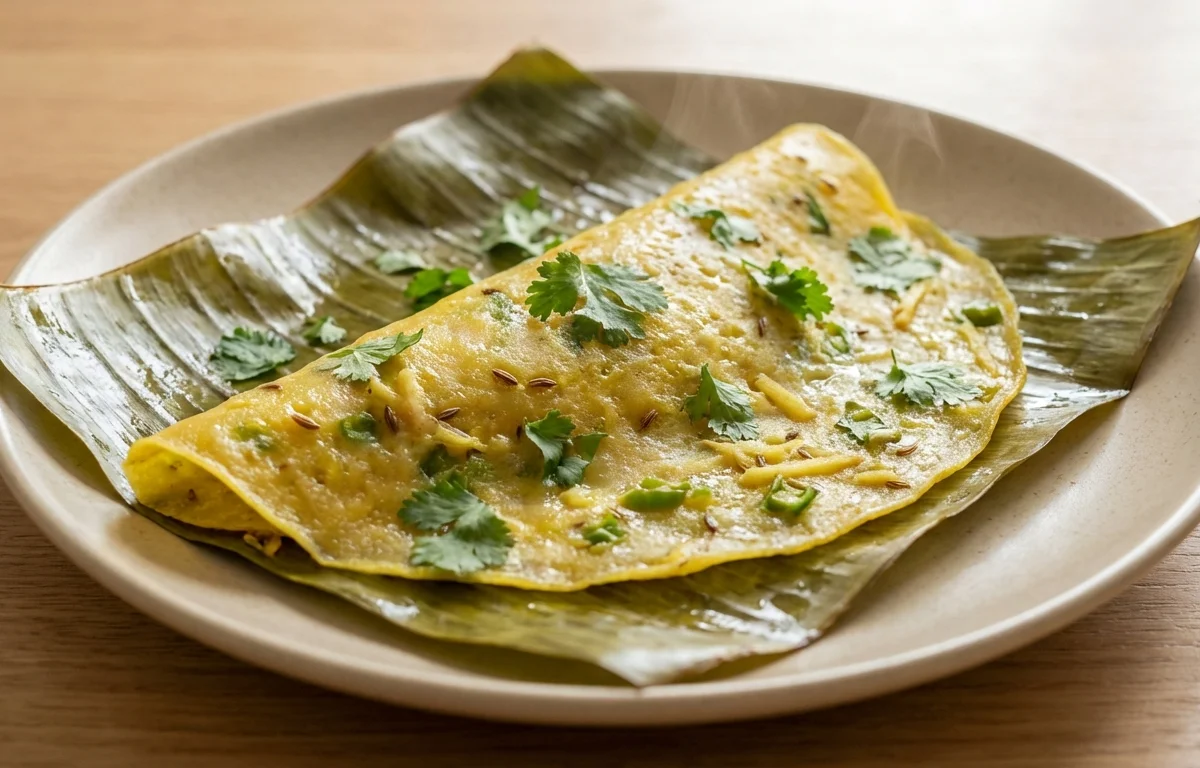
Panki
A delicate, savory pancake from Gujarat, made with rice flour batter and steamed between banana leaves. This unique cooking method gives it a subtle, earthy aroma. It's a light, healthy, and delicious snack.
For 4 servings
Prepare the Batter
- In a large mixing bowl, combine the rice flour, curd, ginger paste, green chilli paste, turmeric powder, asafoetida, sugar, and salt.
- Gradually add water while whisking continuously to form a smooth, lump-free batter.
- The batter should have a thin, pourable consistency, similar to a crepe or dosa batter. Adjust water if necessary.
Ferment the Batter
- Cover the bowl and set it aside in a warm place to ferment for at least 4 to 6 hours.
- This fermentation step is crucial for developing the characteristic tangy flavor of the panki.
Prepare the Banana Leaves
- While the batter ferments, wash the banana leaves thoroughly and pat them dry.
- Cut the leaves into 8 squares, each approximately 8x8 inches.
- To make them pliable and prevent tearing, gently run each leaf square over a low open flame for a few seconds until it turns a brighter green and becomes soft.
Assemble the Panki
- Once the batter is fermented, stir it well. Take two squares of the prepared banana leaf.
- Lightly grease the shiny side of both leaves with oil.
- Place one leaf on a flat surface, greased side up. Pour about 2-3 tablespoons of batter onto the center.
- Quickly spread the batter into a thin, even circle using the back of a spoon.
- Cover it with the second leaf, greased side down, and press gently to seal.
Cook the Panki
- Heat a non-stick tawa or griddle over medium heat.
- Carefully place the assembled panki (the leaf parcel) on the hot tawa.
- Cook for 2-3 minutes on one side. You will see the leaf getting slightly charred and the batter inside changing color.
- Flip the parcel over and cook for another 2-3 minutes on the other side until light brown spots appear on the leaves.
- The panki is cooked when it easily separates from the leaf.
Serve Hot
- Repeat the assembly and cooking process for the remaining batter.
- Serve the pankis immediately, still inside the banana leaves. Diners can peel open the leaves to enjoy the soft, steamed pancake inside.
- It is traditionally served with a side of green chutney.
What to keep in mind.
6 tips from the recipe — small details that make a real difference to the final dish.
- 1Batter consistency is key; it should be thin and pourable, like a crepe batter.
- 2Using sour curd or adding a squeeze of lemon juice enhances the tangy flavor, especially if you shorten the fermentation time.
- 3Don't skip wilting the banana leaves over a flame. This makes them pliable and prevents tearing.
- 4Spread the batter as thinly as possible for the most delicate and authentic texture.
- 5Pankis are best enjoyed immediately after cooking as they can become dry if left out.
- 6Ensure the tawa is at a steady medium heat. If it's too hot, the leaves will burn before the panki cooks through.
Adapt it for your goals.
Flour Variation
Replace a quarter of the rice flour with besan (gram flour) or jowar (sorghum) flour for a different flavor and nutritional profile.
Vegetable PankiVegetable Panki
Add 2-3 tablespoons of finely chopped fenugreek leaves (methi), spinach, or cilantro to the batter for added flavor and nutrients.
Spicy PankiSpicy Panki
Add a pinch of red chilli powder or finely chopped garlic to the batter for an extra kick.
Why this is on our healthy list.
Gut-Friendly
The batter is fermented, which promotes the growth of beneficial gut bacteria, aiding digestion and improving overall gut health.
Light and Digestible
Steamed instead of fried and made from rice flour, Panki is light on the stomach and easy to digest, making it an excellent snack for all ages.
Low in Calories
With minimal oil used in preparation, this dish is low in calories and fat, making it a suitable choice for those managing their weight or seeking a heart-healthy option.
Frequently asked questions
Panki is a traditional Gujarati savory pancake made from a fermented rice flour batter, which is uniquely cooked by steaming it between two banana leaves on a griddle.


