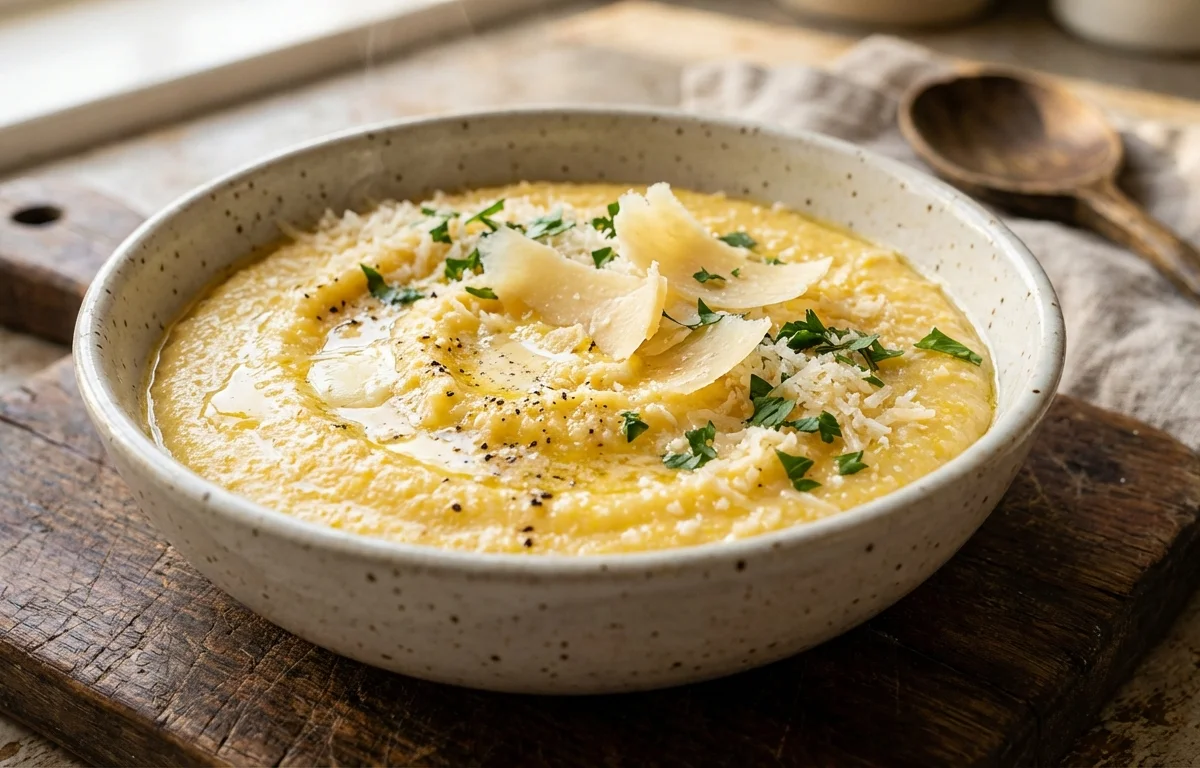
Parmesan Polenta
Golden, creamy polenta enriched with nutty Parmesan cheese that melts into every spoonful. This Northern Italian classic comes together in about 30 minutes with just a handful of pantry staples — the key is patient, steady stirring for that silky smooth texture without a single lump.
For 4 servings
- boil · ~5 min
Bring the salted water to a boil.
1.Pour 4 cups of water into a heavy-bottomed saucepan.2.Add 0.5 teaspoon of salt and place over high heat.3.Bring to a rolling boil. - mix · ~2 min
Whisk in the polenta gradually.
Reduce the heat to medium. Slowly pour the polenta in a thin, steady stream while whisking constantly. This prevents lumps from forming. Keep whisking until the mixture begins to thicken and all the grains are suspended, about 1 to 2 minutes.
TIPPour the cornmeal slowly — dumping it in all at once creates stubborn lumps that are nearly impossible to break. - simmer · ~30 min
Simmer until thick and creamy.
Switch to a wooden spoon once the polenta has thickened enough to resist the whisk. Reduce the heat to low. Cook, stirring frequently and scraping the bottom and sides of the pan to prevent sticking, until the polenta is tender, creamy, and pulls away from the sides of the pan, about 25 to 30 minutes.
TIPIf the polenta gets too thick before the grains are fully tender, add a splash of warm water and stir it in. - mix · ~1 min
Beat in the butter and Parmesan.
Remove the saucepan from the heat. Add the butter and all the grated Parmesan cheese. Stir vigorously with the wooden spoon until the butter and cheese are completely melted and the polenta is glossy and smooth.
TIPStirring off the heat keeps the cheese from getting stringy — residual warmth melts everything perfectly. - serve
Season with black pepper and serve immediately.
Spoon the hot polenta into warmed bowls. Grind the black pepper over the top generously. Serve right away while it is still soft and flowing.
TIPPolenta firms up as it cools — serve it as soon as it hits the bowl for the creamiest texture.
What to keep in mind.
7 tips from the recipe — small details that make a real difference to the final dish.
- 1Use a heavy-bottomed saucepan to prevent hot spots and scorching during the 25–30 minute simmer.
- 2Whisk the polenta in a thin, steady stream — pouring all at once guarantees lumps that won't break up.
- 3Switch from a whisk to a wooden spoon once the polenta thickens; the spoon scrapes the pan bottom more effectively.
- 4If the polenta becomes too thick before it's tender, stir in a splash of warm water to loosen it.
- 5Stir the butter and Parmesan in off the heat — residual warmth melts them without making the cheese stringy.
- 6Serve polenta immediately in warmed bowls; it stiffens as it cools and loses its creamy texture.
- 7Leftover polenta can be poured into a loaf pan, chilled, sliced, and pan-fried for crispy polenta cakes.
Adapt it for your goals.
Herb & Garlic
Add 2 minced garlic cloves along with the butter, and stir in 2 tablespoons of chopped fresh parsley or thyme at the end for a fragrant twist.
Cheese SwapCheese Swap
Replace Parmesan with an equal amount of grated pecorino romano or aged gouda for a sharper, saltier flavor profile.
VeganVegan
Substitute unsalted butter with 2 tablespoons of vegan butter or olive oil, and use 1/4 cup of nutritional yeast plus 1 tablespoon of white miso paste for a cheesy, umami flavor.
Creamy PolentaCreamy Polenta
For extra richness, replace 1 cup of the water with whole milk or add 1/4 cup of heavy cream along with the butter and cheese.
Why this is on our healthy list.
Good Source of Complex Carbs
Polenta provides slow-digesting carbohydrates that deliver sustained energy, making it a satisfying base for meals.
Calcium from Parmesan
Parmesan cheese is naturally rich in calcium, which supports bone health and muscle function.
Naturally Gluten-Free
Polenta is made from cornmeal, making this dish suitable for those following a gluten-free diet.
Low Sugar
With no added sugars, this savory polenta is a blood-sugar-friendly option when paired with vegetables or lean protein.
Frequently asked questions
Yes, but the cooking time will be much shorter (about 5 minutes) and the texture will be less creamy than with traditional medium-grind polenta.