
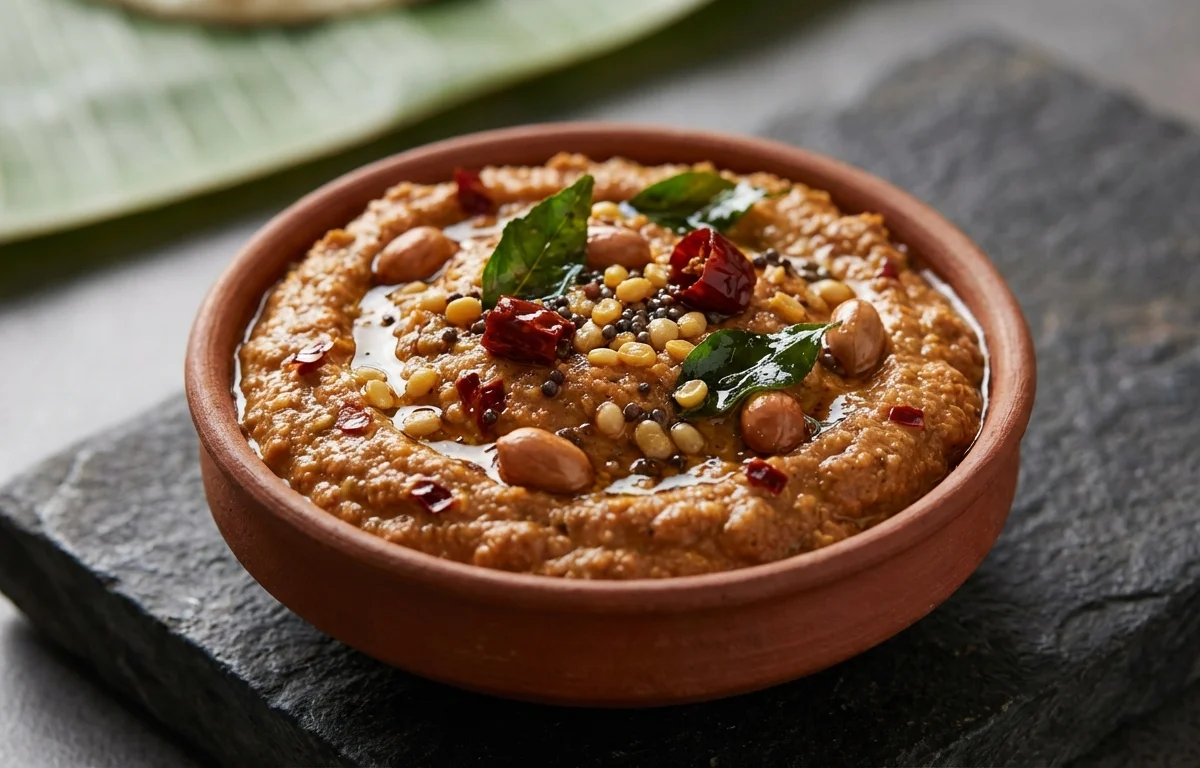
Peanut Chutney
Nutty, creamy peanut chutney with a gentle heat and bright tang makes a lovely partner for idli, dosa, and upma. It comes together quickly with roasted peanuts, fresh aromatics, and a simple tempering on top.
For 8 servings
- roast · ~5 min
Roast the peanuts.
Heat a small pan over medium heat and roast the peanuts, stirring often, until lightly golden and fragrant. Transfer to a plate and let them cool slightly.
TIPKeep the heat moderate so the peanuts roast evenly without turning bitter. - saute · ~4 min
Cook the aromatics.
1.In the same pan, heat the oil over medium heat.2.Add the onion, garlic, and green chili.3.Cook until the onion softens and turns lightly golden, about 3 to 4 minutes.4.Take the pan off the heat and let the mixture cool for a minute. - mix · ~2 min
Grind the chutney.
Add the roasted peanuts, cooked onion mixture, tamarind, salt, and water to a blender jar. Grind to a smooth or slightly coarse chutney, depending on how you like it.
TIPAdd water a little at a time to keep the chutney thick and spoonable, not runny. - temper · ~1 min
Make the tempering.
1.Heat a small spoon of oil from the pan residue or use the remaining oil in the warm pan.2.Add mustard seeds and let them splutter.3.Add urad dal and cook until lightly golden.4.Add dried red chili and curry leaves and cook for a few seconds until fragrant.TIPStand back when the curry leaves hit the pan because they can splutter. - assemble · ~1 min
Finish the chutney.
Spoon the peanut chutney into a serving bowl and pour the tempering over the top. Mix lightly or leave it on top, then serve with idli, dosa, or upma.
What to keep in mind.
7 tips from the recipe — small details that make a real difference to the final dish.
- 1Roast the peanuts only until lightly golden; deep browning can make the chutney taste bitter.
- 2Let the onion-garlic mixture cool briefly before grinding so the chutney stays creamy, not oily.
- 3Add the water gradually while blending; peanut chutney thickens slightly as it stands.
- 4For a classic dosa-side texture, keep it a little coarse rather than blending completely silky.
- 5Temper just before serving so the mustard, urad dal, and curry leaves stay crisp and aromatic.
- 6If storing, refrigerate the ground chutney and add fresh tempering after reheating or bringing to room temperature.
- 7A small extra pinch of tamarind can brighten the chutney if your peanuts taste especially rich or sweet.
Adapt it for your goals.
Coconut-peanut
Blend in a little fresh or frozen coconut for a softer, sweeter chutney that pairs especially well with idli.
no garlicNo-garlic
Skip the garlic for a simpler, satvik-style version that still gets flavor from onion, chili, tamarind, and tempering.
extra spicyExtra-spicy
Add one more green chili or a second dried red chili in the tempering for a sharper heat suited to plain dosa or upma.
jainJain
Omit onion and garlic, then use a little more tamarind and green chili to keep the chutney bright and balanced.
Why this is on our healthy list.
Plant-Based Protein and Healthy Fats
Peanuts provide satisfying plant protein and natural fats that make this chutney filling and rich without needing much oil.
Aromatics With Antioxidant Value
Garlic, onion, curry leaves, and chilies add more than flavor; they also bring beneficial plant compounds to the chutney.
Balanced, Small-Quantity Condiment
Because it is served as a chutney alongside idli, dosa, or upma, it adds flavor and richness in modest portions.
Frequently asked questions
Yes. If they are already plain roasted, skip the roasting step and warm them briefly only if needed for better blending.


