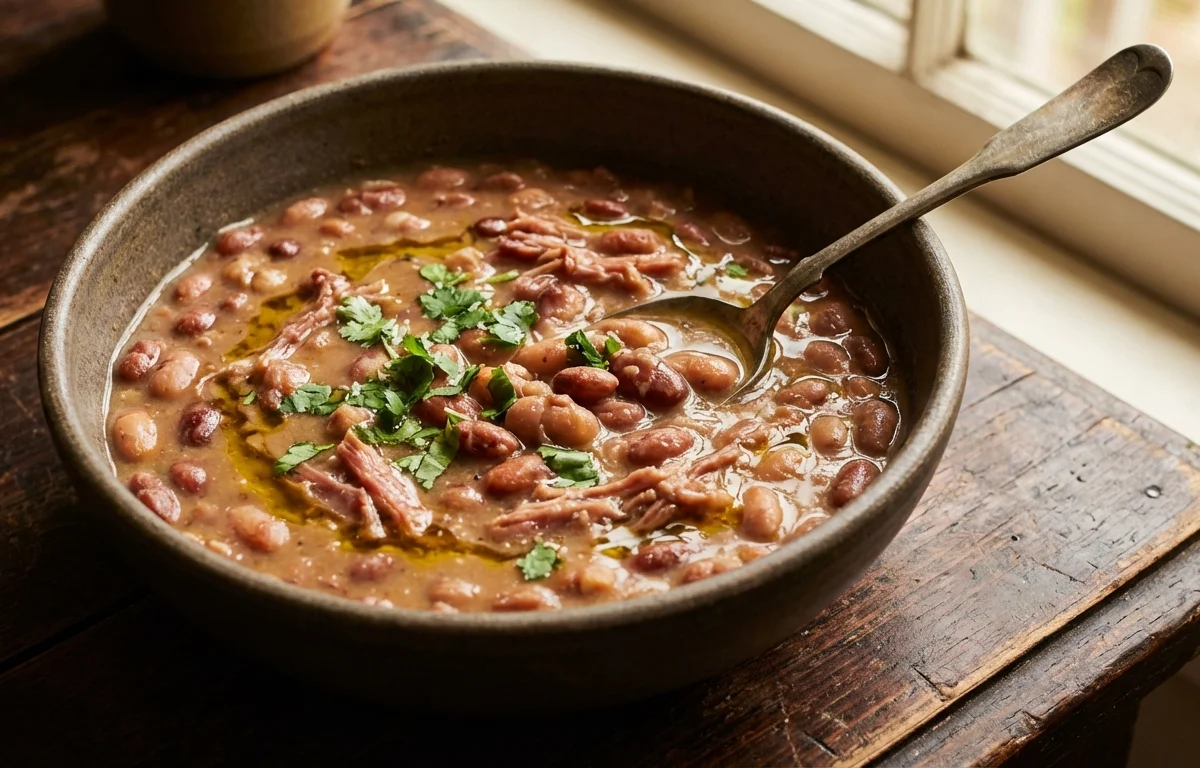
Pinto Beans
Hearty, creamy pinto beans slow-cooked with smoky bacon and aromatic spices. This Southern comfort food staple delivers tender beans in a rich, savory broth that gets better with every spoonful. Perfect as a main dish with cornbread or as a classic Tex-Mex side.
For 4 servings
- prep
Soak the pinto beans overnight.
Sort through dried pinto beans and discard any stones or shriveled beans. Rinse well under cold water. Place beans in a large pot, cover with 4 cups of water, and soak for at least 8 hours or overnight. Drain and rinse the soaked beans before cooking.
TIPSoaking reduces cooking time and helps the beans cook more evenly. If you forget the overnight soak, use the quick-soak method: bring beans and water to a boil, turn off heat, cover, and soak 1 hour. - saute · ~11 min
Cook the bacon and aromatics.
1.Heat the large pot over medium heat and add chopped bacon pieces.2.Cook bacon until crisp and fat renders out, about 5-6 minutes.3.Add diced onion to the pot and sauté until softened and translucent, 4-5 minutes.4.Add minced garlic, cumin powder, and smoked paprika; stir and cook until fragrant, about 30 seconds. - simmer · ~120 min
Simmer the beans until tender.
1.Add the drained soaked beans, 4 cups of fresh water, and bay leaves to the pot.2.Bring to a rolling boil, then reduce heat to low to maintain a gentle simmer.3.Cover with a lid, leaving it slightly cracked, and cook for 1.5 to 2 hours, stirring occasionally.4.Check tenderness after 90 minutes; beans should be creamy and soft when done.TIPDo not add salt during the first hour of cooking — it can toughen the bean skins. Wait until the beans are tender before seasoning. - simmer · ~15 min
Season and finish the beans.
1.Once beans are tender, stir in salt and black pepper.2.Remove bay leaves and discard.3.Simmer uncovered for an additional 10-15 minutes if you prefer a thicker broth, or add a splash of water for a thinner consistency.4.Taste and adjust seasoning if needed.TIPMash a few beans against the side of the pot with your spoon and stir them back in — this naturally thickens the broth without any starches or thickeners. - serve
Serve the pinto beans hot.
Ladle beans and their broth into bowls. Serve as a main dish with warm cornbread on the side, or spoon over rice as a hearty meal.
What to keep in mind.
6 tips from the recipe — small details that make a real difference to the final dish.
- 1Sort through dried beans carefully to remove small stones or debris before soaking.
- 2Reserve the bacon fat after rendering; a spoonful stirred in at the end adds deep smoky richness.
- 3Don't add salt or acidic ingredients (like tomatoes) until beans are fully tender to prevent tough skins.
- 4Mash a few beans against the pot wall and stir to naturally thicken the broth without flour or cornstarch.
- 5Cooked pinto beans freeze beautifully for up to 3 months in their cooking liquid.
- 6For even creamier beans, let them cool completely in the broth, then reheat gently.
Adapt it for your goals.
Vegetarian
Skip the bacon and sauté the onion in 2 tablespoons of vegetable oil. Add 1 teaspoon of liquid smoke with the spices to mimic the smoky depth. Perfect for plant-based meals.
spicy Tex MexSpicy Tex-Mex
Add 1 diced jalapeño with the onion and stir in 1/2 teaspoon of chipotle powder with the cumin. Great for serving over rice with salsa and sour cream.
herb infusedHerb-infused
Add a sprig of fresh epazote or a few sprigs of thyme along with the bay leaves. Epazote is a classic Mexican herb that reduces bean gas and adds an earthy, slightly citrus flavor.
extra smokyExtra smoky
Use smoked bacon and replace 1 cup of the cooking water with a dark beer or smoked stock. The malt and smoke deepen the savory broth for a heartier dish.
Why this is on our healthy list.
High in Plant Protein
Pinto beans provide a substantial amount of plant-based protein, making this dish a satisfying main for muscle repair and satiety.
Excellent Source of Fiber
A single serving of pinto beans delivers a significant dose of dietary fiber, which supports digestion and helps maintain steady blood sugar levels.
Rich in Folate
Pinto beans are naturally rich in folate, a B vitamin essential for cell growth and red blood cell production.
Low in Saturated Fat
This recipe uses a modest amount of bacon for flavor, keeping the saturated fat content low while still delivering a savory, satisfying broth.
Frequently asked questions
Yes. Use the quick-soak method: bring the beans and water to a boil, cover, remove from heat, and let them sit for 1 hour before draining and cooking.