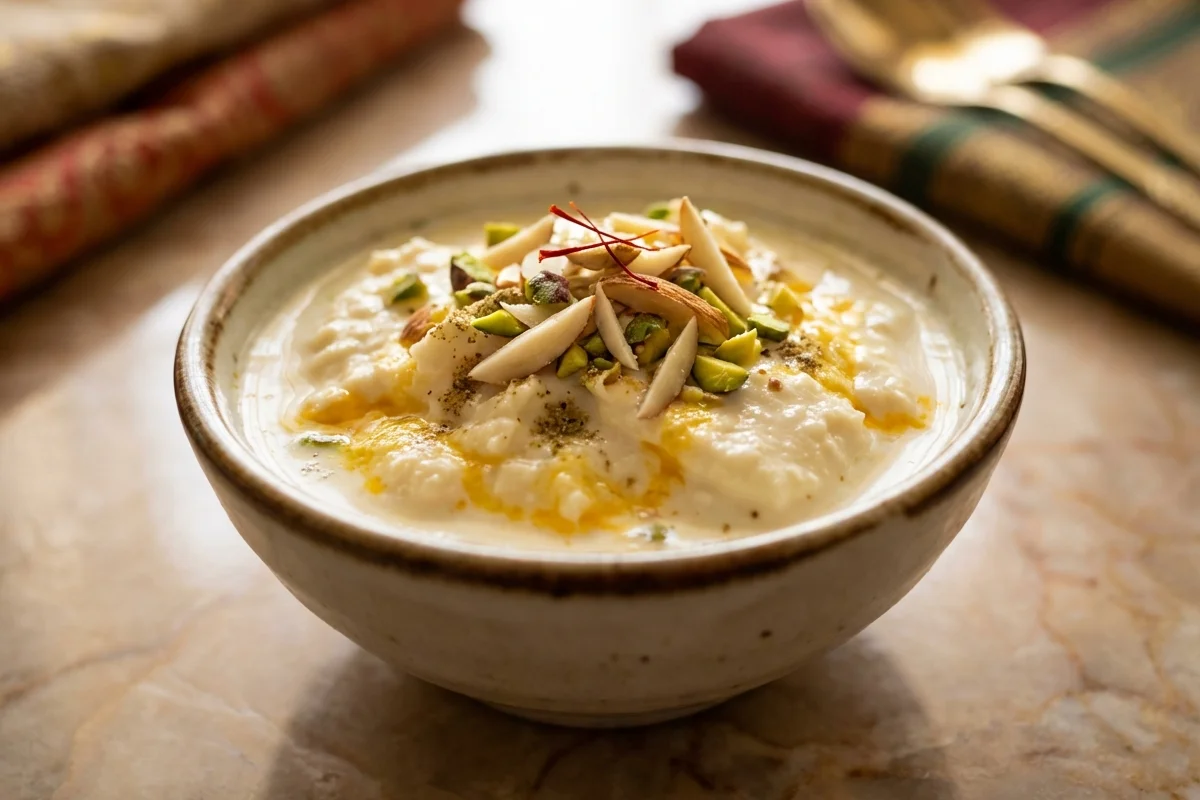
Rabri
Rich, slow-cooked milk dessert with delicate layers of cream folded back into thickened milk. Lightly sweetened and scented with cardamom, this festive Indian favorite is wonderful served chilled.
For 4 servings
- prep · ~10 min
Prepare the saffron and nuts.
1.Soak the saffron in 1 tbsp warm milk for 10 minutes.2.Soak the almonds, peel them, and slice them thinly.3.Slice the pistachios and lightly crush the cardamom seeds. - boil · ~8 min
Bring the milk to a gentle boil.
Pour the milk into a wide heavy pan and bring it to a gentle boil over medium heat, stirring now and then so it does not catch at the bottom.
TIPA wide pan helps the milk reduce faster and gives you more cream layers on the sides. - simmer · ~30 min
Reduce the milk and collect the cream.
1.Lower the heat and let the milk simmer gently.2.As cream forms on the surface and sides of the pan, move it to the edges with a spatula.3.Keep simmering and scraping the sides every few minutes until the milk reduces to about one-third.TIPKeep the heat low to medium-low so the milk thickens slowly without turning grainy or scorched. - mix · ~5 min
Sweeten and flavor the rabri.
1.Add the sugar and stir until fully dissolved.2.Add the crushed cardamom and saffron milk.3.Gently scrape the collected cream back into the thickened milk and fold lightly to keep some texture. - simmer · ~3 min
Finish with the nuts.
Add the sliced almonds and pistachios, then simmer for 2 to 3 minutes until the rabri looks thick but still pourable. It will thicken more as it cools.
- rest · ~20 min
Cool the rabri.
Take the pan off the heat and let the rabri cool to room temperature before chilling if you like.
- serve
Serve the rabri warm or chilled.
What to keep in mind.
7 tips from the recipe — small details that make a real difference to the final dish.
- 1Use the widest heavy pan you have so the milk reduces faster and forms more malai on the sides.
- 2Keep the simmer gentle; rapid boiling can scorch the milk and break the delicate cream layers.
- 3Scrape only the side cream back in at the end, not constantly, so the rabri keeps its classic lachha texture.
- 4Stop cooking when it looks slightly loose; rabri thickens noticeably after cooling and chilling.
- 5Dissolve the sugar only after the milk has reduced, or the reduction will take longer.
- 6Chill for a few hours before serving if you want the saffron, cardamom, and nut flavors to meld fully.
- 7Store refrigerated in a covered container and stir lightly before serving to redistribute the thickened milk.
Adapt it for your goals.
Low-sugar
Reduce the sugar for a less sweet rabri that lets the natural sweetness of reduced milk and saffron stand out.
malai richMalai-rich
Fold the collected cream back in very lightly and leave larger flakes intact for a more traditional lachhedar texture.
rose saffronRose-saffron
Add a few drops of rose water after cooking for a floral finish that pairs beautifully with saffron and cardamom.
basundi styleBasundi-style
Stir the cream back in more thoroughly for a smoother, more uniform texture instead of distinct cream layers.
Why this is on our healthy list.
Calcium-Rich Dairy Base
Whole milk makes this dessert a good source of dairy minerals associated with bone and teeth support.
Nourishing Fats and Protein
Milk, almonds, and pistachios contribute satiating fats and some protein, making the dessert feel substantial.
Nut-Based Micronutrients
Almonds and pistachios add vitamin E, minerals, and plant compounds along with pleasant crunch.
Frequently asked questions
Usually the heat is too high or the milk is boiling too hard. Keep it at a gentle simmer and stir the bottom occasionally to prevent scorching.



.webp)