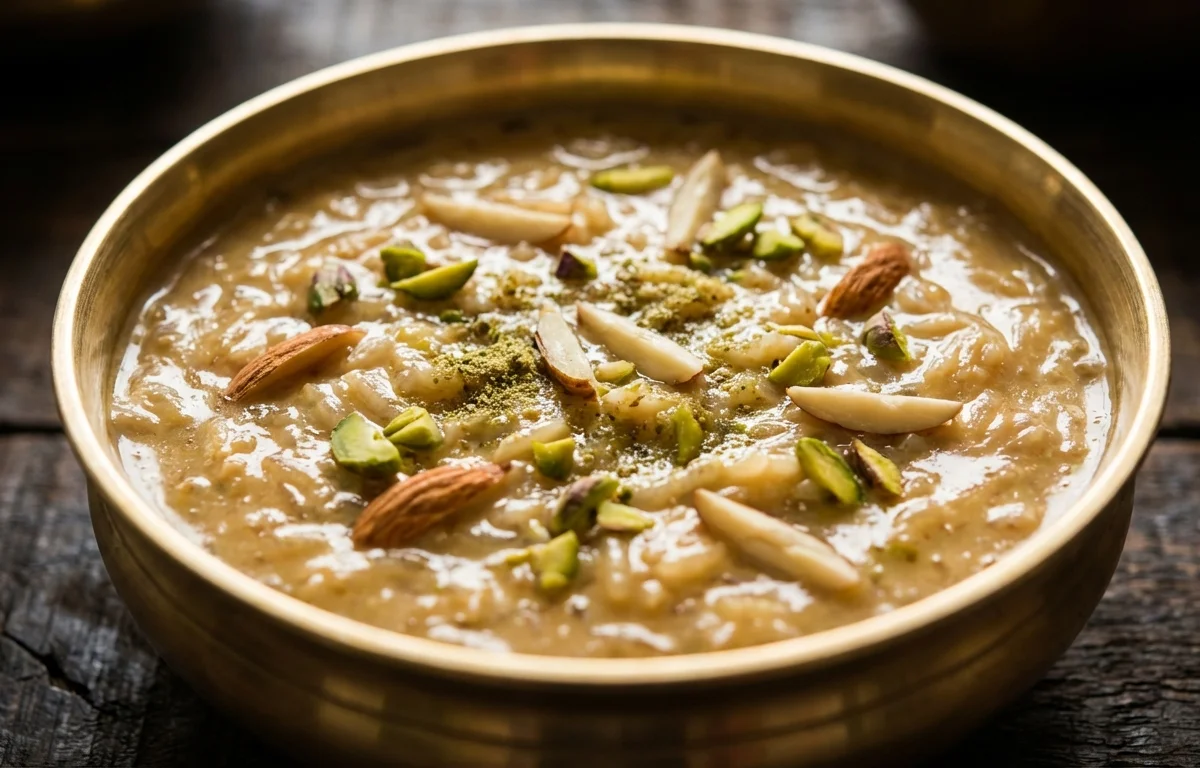
Rasia
A rustic sweet rice pudding from eastern India, Rasia is made by slowly cooking rice in milk with jaggery until creamy and fragrant. It has a deep caramel note and a comforting texture that works warm or chilled.
For 4 servings
- prep · ~20 min
Wash and soak the rice.
Rinse the rice until the water runs mostly clear, then soak it in fresh water for 20 minutes. Drain well before cooking.
- boil · ~8 min
Heat the milk with bay leaf and cardamom.
Add the milk, water, bay leaf, and crushed cardamom to a heavy pan. Bring it to a gentle boil over medium heat, stirring now and then so the milk does not catch at the bottom.
- simmer · ~30 min
Cook the rice in the milk.
1.Add the drained rice to the hot milk.2.Lower the heat and cook uncovered at a gentle simmer.3.Stir often and scrape the sides so the thickened milk goes back into the pan.4.Cook until the rice is very soft and the mixture looks creamy, about 25 to 30 minutes.TIPUse low heat once the rice goes in so the milk thickens slowly without splitting or burning. - rest · ~5 min
Cool slightly before adding jaggery.
Turn off the heat and let the pudding sit for 5 minutes. This keeps the milk smooth when the jaggery is mixed in.
- mix · ~3 min
Stir in the jaggery.
Remove the bay leaf, then add the grated jaggery and stir until fully melted and blended. The Rasia will deepen in color and become lightly caramel-like.
TIPDo not boil hard after adding jaggery, or the milk can curdle. - garnish
Top with cashews.
- serve
Serve warm or chilled.
What to keep in mind.
7 tips from the recipe — small details that make a real difference to the final dish.
- 1Use a heavy-bottomed pan so the milk reduces slowly without scorching before the rice softens.
- 2Drain the soaked rice well; extra water can thin the pudding and delay the creamy texture.
- 3Keep the simmer very gentle and stir the bottom and sides often to fold the milk solids back in.
- 4Let the pudding cool for a few minutes before adding jaggery, or the milk may split.
- 5If chilling, make it slightly looser on the stove since Rasia thickens noticeably as it cools.
- 6Toast the cashews lightly in a little ghee before topping for better crunch and a nuttier finish.
- 7If the pudding gets too thick later, loosen it with a splash of warm milk rather than water.
Adapt it for your goals.
Festive
Garnish with extra toasted cashews and a pinch more cardamom for a richer, celebratory finish.
veganVegan
Use full-fat coconut milk or a thick coconut-milk blend instead of dairy milk for a plant-based version with a pleasant coconut note.
lighter sweetLighter-sweet
Reduce the jaggery slightly to let the milk and cardamom stand out more for a less sweet everyday dessert.
nuts freeNuts-free
Skip the cashews if needed; the pudding still tastes complete because the jaggery and cardamom carry the flavor.
Why this is on our healthy list.
Calcium From Milk
Full-fat milk contributes calcium and dairy protein, making this dessert more nourishing than a sugar-only sweet.
Gentle Energy Boost
Rice and jaggery provide comforting, easy-to-digest carbohydrates that suit a simple, sustaining dessert.
Aromatic Spices
Cardamom adds fragrance without extra sugar and brings traditional warming spice character to the pudding.
Healthy Fats From Cashews
Cashews add some satisfying fat and texture, which makes each serving feel richer and more balanced.
Frequently asked questions
Adding jaggery to boiling milk can cause the dairy to curdle. A short rest keeps the mixture smooth while the jaggery melts in evenly.