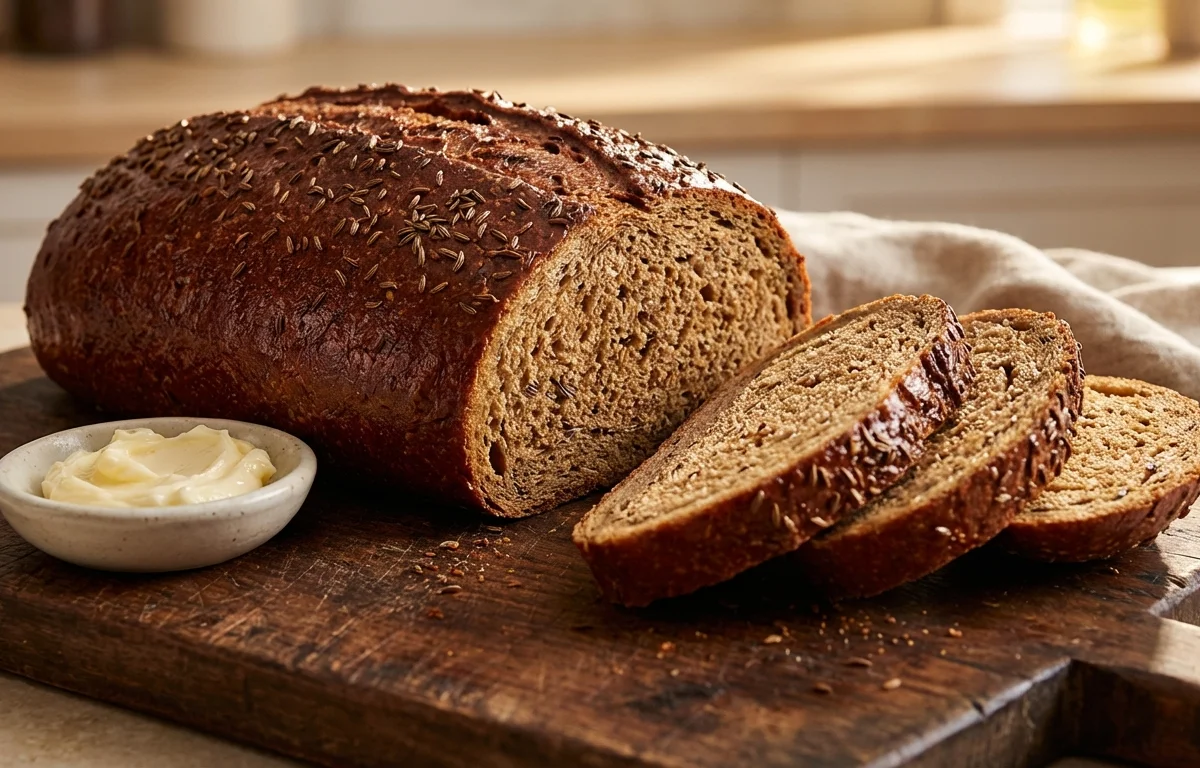
Rye Bread
A hearty, deeply flavorful loaf with a tender crumb and a crackling crisp crust. This classic American deli-style rye bread uses a touch of molasses for color and caraway seeds for that unmistakable earthy aroma. Perfect for sandwiches or simply toasted with butter.
For 12 servings
- prep · ~5 min
Activate the yeast.
1.Pour warm water (110°F) into the stand mixer bowl.2.Stir in molasses until dissolved.3.Sprinkle yeast over the water and let stand until foamy, about 5 minutes.TIPWater hotter than 120°F will kill the yeast. It should feel warm, not hot, to the touch. - mix · ~1 min
Combine the dry ingredients.
In a separate bowl, whisk together bread flour, rye flour, salt, and caraway seeds.
- knead · ~7 min
Mix and knead the dough.
1.Add the dry ingredients and vegetable oil to the yeast mixture.2.Attach the dough hook and mix on low speed until a shaggy dough forms.3.Increase speed to medium and knead until smooth and elastic, about 6 to 7 minutes.TIPRye flour has less gluten than wheat flour. The dough will be slightly tacky, not sticky. Avoid adding too much extra flour. - rest · ~60 min
Let the dough rise.
1.Shape the dough into a ball and place it in a lightly oiled bowl, turning to coat.2.Cover with a clean kitchen towel and let rise in a warm place until doubled in size, about 1 hour. - prep · ~45 min
Shape the loaf.
1.Gently punch down the dough to deflate.2.Shape it into a log and place it seam-side down in a greased 9x5 inch loaf pan.3.Cover with the kitchen towel and let rise until the dough crowns just above the pan rim, about 45 minutes. - bake · ~35 min
Bake the rye bread.
Preheat the oven to 375°F. Bake the loaf for 30 to 35 minutes, until the crust is deep golden brown and the loaf sounds hollow when tapped on the bottom.
- rest · ~60 min
Cool completely before slicing.
1.Remove the loaf from the pan immediately and let it cool on a wire rack.2.Let the bread cool completely before slicing to avoid a gummy crumb.TIPSlicing warm bread stops the crumb from setting properly. Patience rewards you with perfect sandwich slices.
What to keep in mind.
6 tips from the recipe — small details that make a real difference to the final dish.
- 1Weigh your flours for consistent results; rye flour compacts easily in a cup.
- 2Let the yeast foam for a full 5 minutes to ensure it's active before mixing.
- 3Knead until the dough is smooth and slightly tacky, not sticky; resist adding flour.
- 4Use a digital thermometer to check that your water is exactly 110°F for optimal yeast activation.
- 5For a crisper crust, place a small pan of boiling water on the oven's bottom rack during baking.
- 6Cool the loaf completely on a wire rack for at least an hour before slicing to prevent a gummy texture.
Adapt it for your goals.
Seeded rye
Add 2 tablespoons each of sunflower seeds and flaxseeds with the dry ingredients for extra crunch and nuttiness.
dark pumpernickel styleDark pumpernickel-style
Replace 1/4 cup bread flour with dark rye flour and add 1 tablespoon cocoa powder for a deeper color and more robust flavor.
low oilLow-oil
Omit the vegetable oil entirely; the molasses and rye's natural moisture will still yield a tender loaf with slightly less richness.
veganVegan
This recipe is already vegan—no changes needed. For a sweeter note, swap molasses for maple syrup.
jewish style deli ryeJewish-style deli rye
Add 1 teaspoon onion powder and 1 teaspoon garlic powder to the dry mix for the classic delicatessen flavor profile.
Why this is on our healthy list.
Rich in Dietary Fiber
Rye flour provides more soluble fiber than all-purpose wheat flour, which aids digestion and promotes a feeling of fullness.
Good Source of Manganese
Caraway seeds add a modest amount of manganese, a trace mineral important for bone health and metabolism.
Low in Added Sugars
With just 2 tablespoons of molasses for the entire loaf, this bread has minimal added sugar compared to commercial sandwich breads.
Contains Lignans
Rye is a natural source of lignans, plant compounds that may support heart health when eaten as part of a balanced diet.
Frequently asked questions
Rye flour has less gluten than wheat, so the loaf will be denser. Ensure your water is at the right temperature (110°F) and that your yeast is fresh and active.