Sindhi Koki
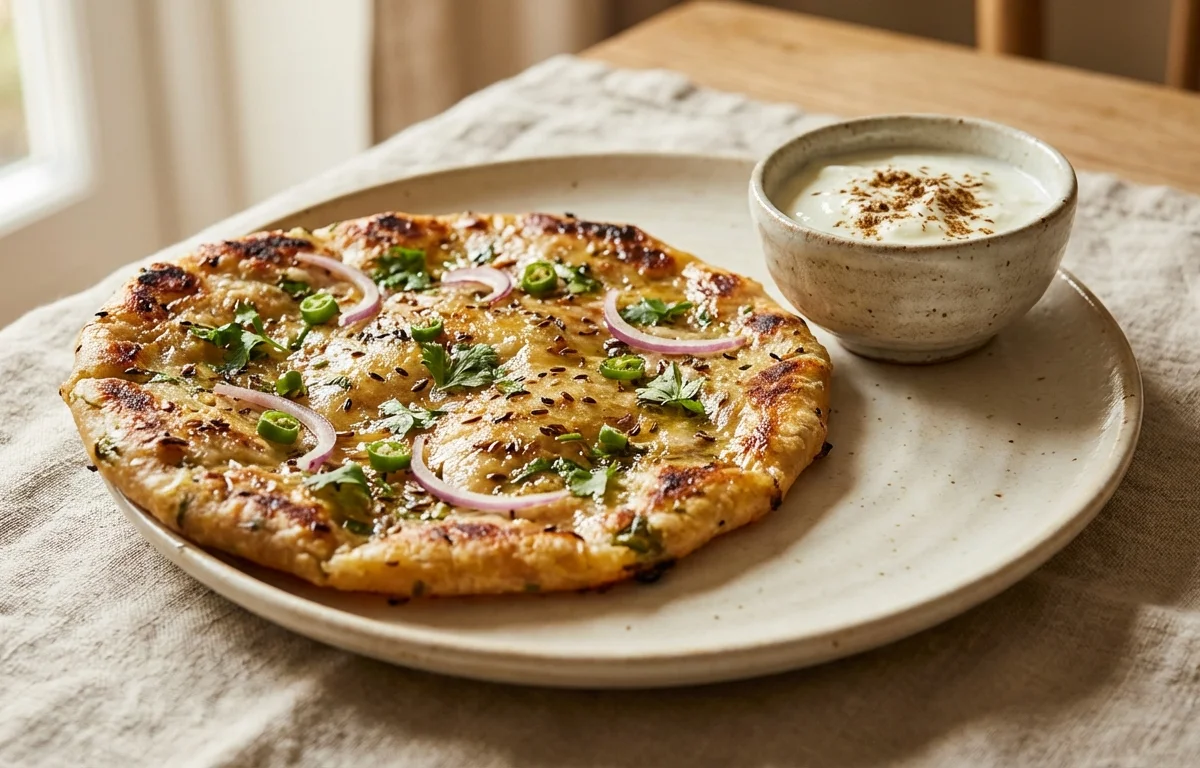
Sindhi koki is a crisp, layered onion flatbread made with whole wheat flour, spices, and fresh herbs. Traditionally cooked slowly on a tawa, it turns golden outside while staying tender in the middle and tastes wonderful with yogurt or pickle.
For 4 servings
- prep
Prep the onion, chili, and coriander.
Finely chop the onion, green chili, and coriander leaves so they mix evenly into the dough and the koki cooks properly on the tawa.
- knead · ~6 min
Make a stiff koki dough.
1.Add whole wheat flour, onion, green chili, coriander leaves, cumin seeds, carom seeds, red chili powder, and salt to a wide bowl.2.Rub in 2 tbsp ghee until the flour feels slightly crumbly.3.Add water little by little and knead into a firm dough.4.Knead for 3 to 4 minutes until the dough comes together and the onions are well distributed.TIPKeep the dough firmer than regular roti dough so the koki stays layered and cooks crisp. - rest · ~10 min
Rest the dough for 10 minutes.
- assemble · ~8 min
Shape the koki.
1.Divide the dough into 4 equal portions.2.Pat or roll one portion into a thick disc about 5 to 6 inches wide.3.Fold it once, then fold again to make loose layers.4.Roll it out gently into a thick flatbread with small cracks at the edges.TIPDo not roll it too thin; koki tastes best when slightly thick with a rustic shape. - fry · ~5 min
Cook the first koki on a hot tawa.
1.Heat a tawa over medium heat and place one rolled koki on it.2.Cook until light spots appear on the bottom, about 1 minute.3.Spread a little ghee around the edges and on top, then flip.4.Press gently and cook both sides until golden with brown spots, 4 to 5 minutes total.TIPPrick the koki lightly with a knife if needed so the center cooks evenly without burning the outside. - fry · ~15 min
Cook the remaining koki.
Repeat with the remaining dough portions, using the rest of the ghee as needed, and cook each koki over medium heat until crisp outside and cooked through.
- serve
Serve the Sindhi koki warm.
What to keep in mind.
7 tips from the recipe — small details that make a real difference to the final dish.
- 1Salted onions release moisture as the dough sits, so keep the rest short and cook soon after shaping.
- 2If the dough feels sticky from juicy onions, dust in a little extra atta rather than adding more water.
- 3Roll the koki thicker than roti; a thin one turns hard before the onion-rich center cooks through.
- 4Use medium heat throughout so the wheat dough and onion cook fully while the outside turns crisp and spotted.
- 5Lightly prick the rolled koki before or during cooking to help steam escape and prevent a doughy middle.
- 6For make-ahead, half-cook each koki without too much browning, cool, then finish on the tawa with ghee before serving.
- 7Leftover koki reheats best on a dry tawa, not in the microwave, to bring back the crisp edges.
Adapt it for your goals.
Vegan
Replace ghee with a neutral oil or peanut oil for a fully plant-based koki that still cooks up crisp.
milderMilder
Reduce or skip the green chili and red chili powder for a kid-friendly version that keeps the onion and spice-seed flavor.
stuffed styleStuffed-style
Add a little crushed pomegranate seed or extra coriander to the dough for a more aromatic, tangy Sindhi-style twist.
low oilLow-oil
Use less fat in cooking and roast the koki longer on a well-heated tawa; it will be less rich but still nicely toasted.
Why this is on our healthy list.
Whole Grain Goodness
Made with whole wheat flour, this flatbread offers more fiber and grain nutrients than refined-flour breads.
Digestive Spice Support
Cumin and carom seeds are traditional digestive spices that pair especially well with a hearty wheat-onion dough.
Herb and Onion Benefits
Onion, green chili, and coriander add plant compounds, freshness, and flavor without needing heavy sauces.
Frequently asked questions
The dough may be too wet, the koki may be rolled too thin, or the heat may be too high. Keep the dough firm and cook on medium heat with enough time to dry and brown.