
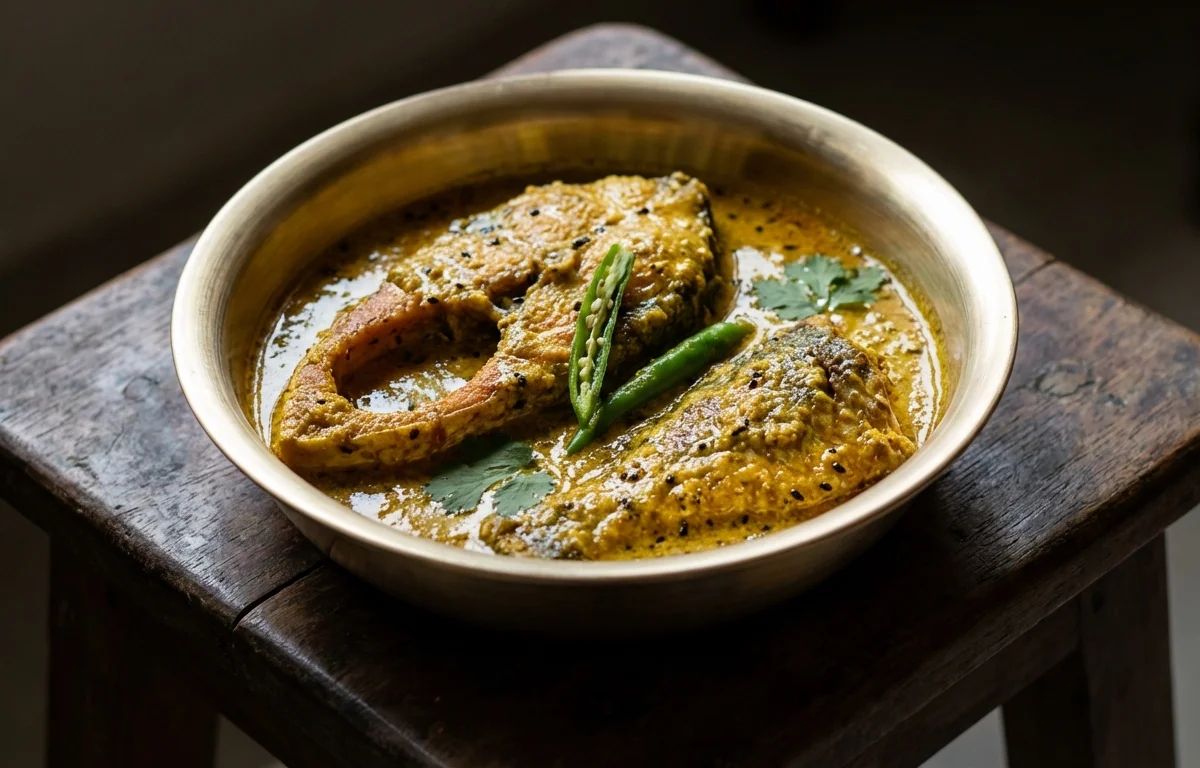
Sorshe Maach
Tender fish gently cooked in a sharp, nutty mustard gravy with green chilies and a drizzle of mustard oil. This Bengali favorite is simple, bold, and made to be eaten with hot plain rice.
For 4 servings
- prep · ~15 min
Soak the mustard seeds.
Soak the yellow mustard seeds and black mustard seeds in a little water for 15 minutes to soften them and mellow any bitterness.
TIPA short soak helps the mustard grind smoother and keeps the paste from turning harsh. - mix · ~3 min
Make the mustard paste.
1.Drain the soaked mustard seeds.2.Grind them with 3 green chilies, a little water, and a pinch of salt to a smooth paste.3.Add just enough water to keep the paste moving in the grinder. - prep · ~10 min
Season the fish.
Rub the fish with 0.5 tsp turmeric powder and 0.25 tsp salt. Set aside for 10 minutes.
- fry · ~4 min
Lightly fry the fish.
1.Heat 1 tbsp mustard oil in a wide pan until it just begins to smoke lightly, then lower the heat.2.Add the fish pieces in a single layer.3.Fry briefly on both sides until lightly sealed, about 1 minute per side.4.Remove the fish to a plate.TIPDo not cook the fish through here; a light fry keeps the pieces from breaking in the gravy. - temper · ~1 min
Make the tempering.
1.Add the remaining 1 tbsp mustard oil to the same pan.2.Add nigella seeds and let them sizzle for a few seconds.3.Add the remaining green chilies. - saute · ~3 min
Cook the mustard base.
Lower the heat and add the mustard paste to the pan. Stir in the remaining turmeric powder, the remaining salt, and 1.5 cups water. Mix well and cook gently for 2 to 3 minutes.
TIPKeep the heat gentle after adding mustard paste so the gravy stays smooth and pleasant, not bitter. - simmer · ~7 min
Simmer the fish in the gravy.
Slide the fish into the mustard gravy and spoon some sauce over the top. Cover and simmer on low heat until the fish is cooked through and the gravy lightly thickens, 6 to 8 minutes.
- rest · ~5 min
Rest the curry for 5 minutes.
- serve
Serve hot with plain rice.
What to keep in mind.
7 tips from the recipe — small details that make a real difference to the final dish.
- 1Grind the soaked mustard with very little water; a thin paste can make the gravy sharp rather than creamy.
- 2If your grinder heats up, pulse in short bursts so the mustard paste stays smooth and less bitter.
- 3Smoke the mustard oil lightly before frying the fish to tame its raw pungency without losing its signature flavor.
- 4Only sear the fish briefly; over-frying now will make it dry and more likely to break while simmering.
- 5Keep the flame low once the mustard paste goes into the pan, because high heat can turn mustard bitter.
- 6Rest the curry for 5 minutes before serving so the mustard, chili, and fish flavors settle into the gravy.
- 7This tastes even better with steamed rice after a short rest, but reheat very gently so the fish pieces stay intact.
Adapt it for your goals.
Steamed
Skip the pan-frying and steam the fish in the mustard paste mixture for a softer, more delicate bhapa-style result.
low oilLow-oil
Reduce the oil slightly and poach the fish directly in the mustard gravy; good if you want a lighter everyday version.
prawnPrawn
Use large prawns instead of fish steaks for a quicker mustard seafood curry with the same bold Bengali flavor.
milderMilder
Cut down the green chilies and use more yellow mustard than black for a softer heat and less assertive bitterness.
Why this is on our healthy list.
Protein-Rich Main Dish
The fish provides substantial protein, making this curry filling and supportive of muscle maintenance.
Uses Functional Spices
Mustard seeds, turmeric, green chilies, and nigella seeds add flavor along with naturally beneficial plant compounds.
Moderate Ingredient List
This dish relies on fish, spices, mustard, and a modest amount of oil rather than heavy cream or rich gravies.
Frequently asked questions
Usually the mustard was over-ground, overheated, or cooked on high heat. Soak the seeds, grind briefly, and simmer the paste gently.




-curry.webp)
.webp)